Best Roofing Material for CT Homes: Shingle, Metal, Slate
There is no single best roof for Connecticut, only the best fit for your house, your budget and how long you plan to stay. This guide helps you find it.
Sunday to Friday
For most Connecticut homes, architectural asphalt shingles are the best value: typically 20–30 years of service at the lowest upfront cost of the pitched-roof options. Metal makes sense if you plan to stay for decades and want snow to slide off; slate and cedar suit historic and high-end houses; and low-slope sections need an EPDM or TPO membrane rather than shingles.
Roofing materials compared for Connecticut
Costs are ballpark Connecticut figures for 2026 for a typical home; your own price is written up once the roof has been inspected, free of charge. Lifespans are typical ranges that local weather can shorten.
| Material | Ballpark cost (2026) | Typical lifespan | Best fit |
|---|---|---|---|
| Architectural asphalt shingles | $10,000–$25,000+ | 20–30 years | Most colonials, capes, ranches and split-levels |
| 3-tab asphalt shingles | Low end of the asphalt range | 15–20 years | Tight budgets, rentals, short ownership plans |
| Metal (standing seam or panels) | $20,000–$45,000+ | 40–70 years | Owners staying 20+ years, heavy snow, wooded lots |
| Slate | $35,000–$75,000+ for a full roof | 75–100+ years | Historic homes framed to carry the weight |
| Cedar shake | $20,000–$40,000+ | 20–40 years | Period and shingle-style homes with sun and airflow |
| EPDM or TPO membrane | $5,000–$15,000+ | EPDM 20–30, TPO 15–25 years | Flat and low-slope roofs, porches, additions |
How each material handles a Connecticut winter
Snow, ice and wind decide more about a Connecticut roof than summer heat does. Here is how each option copes with them.
Asphalt shingles
Shingles shed water but do not stop water that is pushed uphill, so they depend on an ice barrier membrane at the eaves and good attic ventilation to survive ice dams. Architectural shingles are heavier and hold up to nor’easter winds better than 3-tab.
3-tab shingles
The thinner, single-layer 3-tab shingle has less mass to resist uplift, so it tends to lose tabs in nor’easter gusts sooner than architectural shingles. On an exposed hilltop or open lot, that difference is worth paying for.
Metal
Snow slides off a metal roof, which reduces ice dams and roof load. The flip side is sliding snow: snow guards are needed above doors, walkways, decks and lower roofs, and a falling limb can dent a panel.
Slate
The stone itself shrugs off freeze–thaw, but it is heavy and cracks underfoot, so repairs take a roofer who knows slate. Ice dams can still push water past the lower courses, and the flashing decides how well the roof performs.
Cedar shake
Wood needs to dry between storms. On an open, sunny slope it weathers to a handsome gray; under trees with snow sitting for weeks, it grows moss and rots early.
EPDM and TPO
Low slopes cannot use shingles at all. A single-ply membrane with sealed seams keeps out standing water and melting snow, as long as drains stay clear and the edges and wall flashing are done right.
Roofing price check
Typical Connecticut ranges for common roofing jobs.
Cost per year: the fairest way to compare
Upfront price is only half the picture. A metal roof typically costs well above an asphalt roof on the same house, yet it can outlast two asphalt roofs. Divide each quote by the years you expect it to last and the gap narrows a lot, sometimes to nothing.
That math only helps you if you stay long enough to collect. Someone planning to move in seven years gets most of an architectural shingle roof’s value and little of a metal roof’s extra decades. Someone planning to stay for thirty years may come out ahead with metal. The cost pages for roof replacement, metal roofs and flat roofs explain what moves each price.
Resale is the other half. Buyers in most Connecticut neighborhoods expect architectural shingles and see them as neutral. Metal on a modern farmhouse or slate on a Victorian can add appeal, while an unusual material on a street of matching colonials may not.
Energy is a smaller factor than sales pitches suggest. A white TPO membrane or a light-colored metal roof stays cooler in July, which helps rooms directly under a flat roof; over a ventilated attic, insulation and airflow matter far more than the color of the roof.
Questions that narrow the choice
Answer these honestly and most houses come down to one or two sensible options.
- How long do you expect to own the house: under ten years, ten to twenty, or longer?
- How steep is the roof? Very low slopes need a membrane, not shingles, and very steep slopes add labor to any material.
- Is the house in a local historic district? A change of material may need the district commission’s approval first.
- Can the framing carry the weight? Switching to slate on a house that never had it requires a structural check.
- Do big trees hang over the roof? Shade argues against cedar and for keeping branches cut back whatever you choose.
- Where would sliding snow land? With metal, that decides where snow guards go.
- Are solar panels in your plans? Standing seam metal can take clamp-on mounts, and any new roof should go on before panels do.
- Does a section of the house need a different material, such as a flat-roofed rear addition?
Mixing materials on one house
Plenty of Connecticut houses already wear two or three roofing materials, and that is often the right answer. A typical colonial might have architectural shingles on the main roof, an EPDM membrane on a flat-roofed sunroom, and a metal roof over the front porch where snow needs to slide clear of the steps.
The key is matching material to slope and exposure, then getting the transitions right. Where a shingle roof meets a flat membrane, or where metal meets a wall, the flashing details are where leaks start. Plan those joints as carefully as the materials themselves.
For slate and cedar homes, mixing is often the practical route. Keeping the original slate on the main house and using a membrane on a hidden low-slope section preserves the character people see from the street while keeping the cost reasonable.
If your house is in a local historic district, ask your town before switching from slate or wood to another material, since many changes visible from the street need approval. Moving to a heavier material also needs a check of the rafters and decking first.
Before you commit, drive past houses near you that have the material and color you are considering, ideally some that are ten years old or more. That shows how it weathers in Connecticut conditions, which a brochure photo or a sample board cannot.
How A Class helps you choose a material
We install architectural and 3-tab asphalt shingles, metal roofing, cedar shake and EPDM and TPO flat roofs, and we repair slate, so there is no single product we need to steer you toward. Ring us on (203) 779-6787 or use the callback form to tell us which options you are weighing.
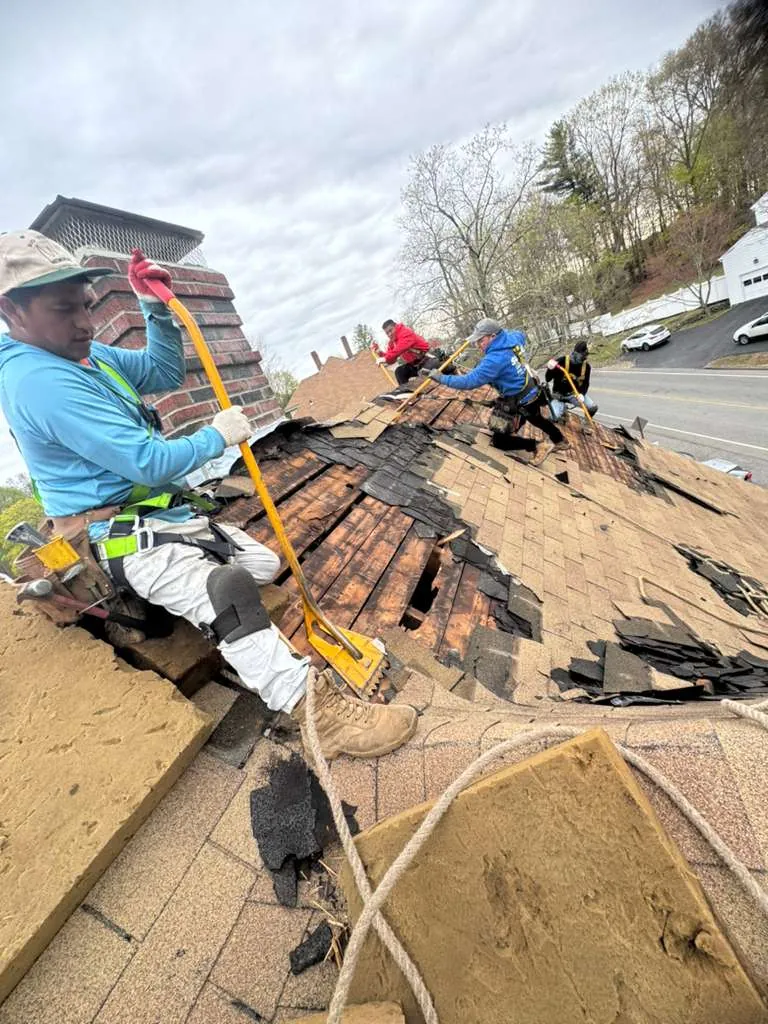
We look at the roof’s pitch, condition and surroundings, take drone photos, check the attic, and talk through how long you plan to stay and what matters most to you, whether that is upfront cost, low upkeep or the look from the street. You then get written prices for the options that genuinely fit, so you can compare them side by side. The visit and the estimates are free, and when the job is done the property is cleaned up before the crew leaves.
If a material is wrong for the house, such as cedar under a canopy of oaks or slate on framing never built for it, we will say so and explain why before you spend anything.
Prefer we call you?
Three quick taps and a real person from A Class Chimney calls you back to set up a free roof inspection.
- Free roof inspection and written estimate
- Photos of everything we find
- A written price before any work starts
- Licensed and insured in Connecticut
Sunday to Friday
What do you need?
When?
Where should we call you?
Free, no obligation. Privacy
Common roofing questions
Have us look at your roof
Free roof inspection, photos of what we find and a written price before any work. Licensed and insured in Connecticut.