
Flat Roof Cost in CT: EPDM & TPO Prices for 2026
Repair and replacement ballparks for rubber and TPO roofs on Connecticut porches, additions, garages and multi-family homes, with the details that change the number.
Sunday to Friday
Expect roughly $400–$1,500 to repair a flat roof in Connecticut and about $5,000–$15,000+ to replace it with EPDM or TPO (2026 ballparks), depending mostly on size, insulation and what sits under the old membrane. EPDM and TPO usually price within the same band. A firm written figure follows a free on-site look at the roof.
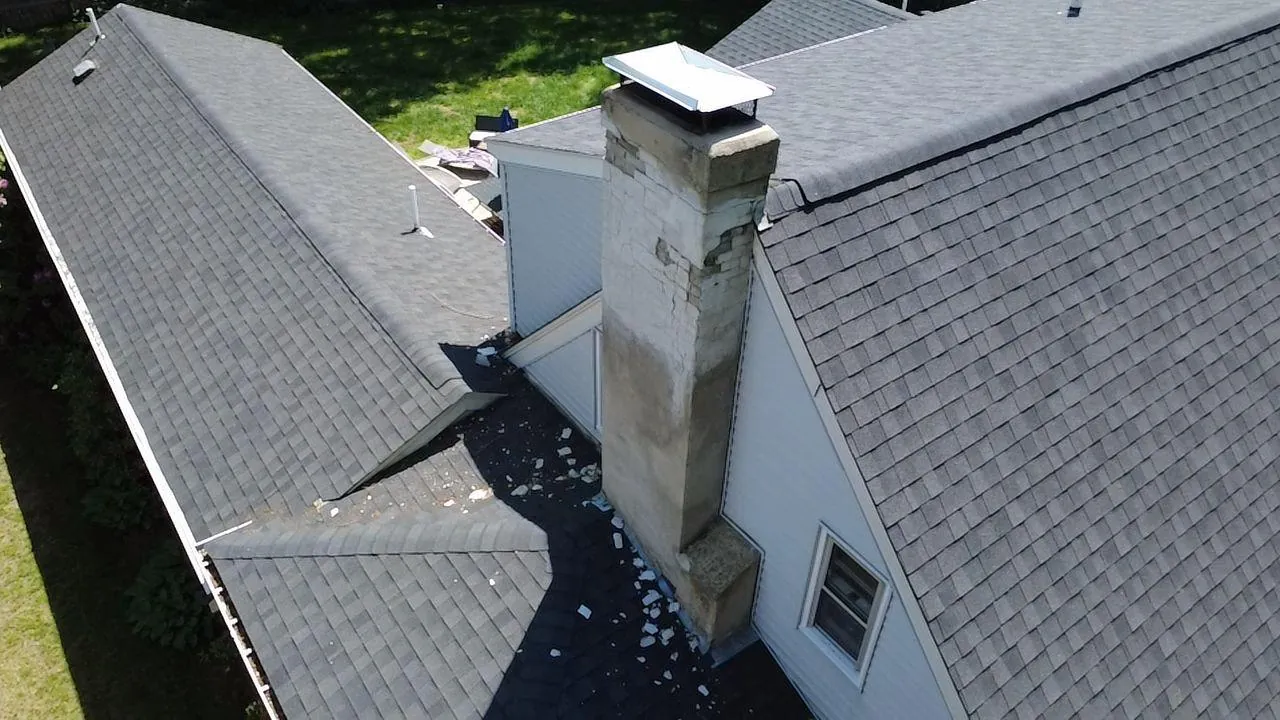
Flat roof prices in Connecticut (2026 ballpark)
These ranges are for low-slope roofs on typical Connecticut homes: porch roofs, rear additions, dormers, garages and the tops of two- and three-family houses. They are planning figures, not quotes. If the pitched part of the house needs work too, see roof replacement cost for those ranges.
| Job | Ballpark | What is usually involved |
|---|---|---|
| Seam, patch or blister repair | $400–$1,500 | Cleaning and priming EPDM for a patch, or heat-welding a TPO patch |
| Leak at a wall, drain or pipe | $400–$1,500 | Re-flashing where the membrane meets siding, a scupper or a vent |
| Full replacement with EPDM rubber | $5,000–$15,000+ | Tear-off, deck repair, insulation as needed, new rubber membrane |
| Full replacement with TPO | $5,000–$15,000+ | Tear-off, deck repair, insulation as needed, heat-welded seams |
EPDM vs. TPO side by side
Both are single-ply membranes and both land in the same ballpark band on a typical house. The differences show up over the years you live with them. If the roof sits over a bedroom or home office, the summer heat difference can matter more than the price.
| Feature | EPDM (rubber) | TPO |
|---|---|---|
| Typical lifespan | 20–30 years | 15–25 years |
| Seams | Glued or taped | Heat-welded with hot air |
| Usual color | Black, absorbs heat | White, reflects sun |
| Room below in summer | Can run warmer | Tends to stay cooler |
| Later repairs | Patches bond well to a cleaned, primed surface | Weathered TPO can be harder to weld a patch onto |
| Often chosen for | Porches, garages, simple shapes | Additions over living space, sunny exposures |
Roofing price check
Typical Connecticut ranges for common roofing jobs.
What sets the price of a flat roof
Low-slope roofs are usually small, so a few details swing the total a long way.
What comes off first
Many Connecticut flat roofs hide an old tar-and-gravel or modified bitumen layer under the most recent one. Each layer has to be stripped and hauled away before a new membrane can go down.
Wet insulation and decking
Water trapped under a membrane soaks insulation boards and softens the deck. Wet material has to be replaced, and the full extent often shows only once the old roof is opened.
Insulation and drainage
Adding insulation boards makes the room below more comfortable, and tapered boards can give a ponding roof the slope it never had. Both add material, but they solve problems a new membrane alone will not.
Edges, walls and tie-ins
Every spot where the membrane turns up a wall, meets a pitched roof or wraps an edge needs flashing work. A small porch roof tucked between two walls can take more detail than its size suggests.
Penetrations
Vent pipes, skylights, roof hatches and air-conditioning equipment each need their own flashing. A clean, empty roof is the simplest and least expensive case. Old abandoned vents or antenna mounts are worth removing during a replacement rather than flashing around them again.
Height and access
Carrying materials to the top of a three-story multi-family house, or working above a busy sidewalk in New Haven or Hartford, takes more time and protection than a one-story garage. Where a dumpster can sit also matters on tight city lots.
Repair or replace your flat roof?
A flat roof with one leak at a seam or a pipe, on a membrane that is otherwise flexible and well attached, is a repair job. That is the $400–$1,500 end of things, and a good repair on sound rubber can hold for years.
Replacement starts to make sense when several of these show up together: the roof is near or past its typical lifespan, EPDM has shrunk and is pulling away from walls and edges, TPO seams are opening in more than one place, water ponds in the same spots after every rain, or leaks cannot be pinned to a single source. Wet insulation under the membrane is another strong sign, because it keeps rotting the deck from below no matter how many patches go on top.
A simple check helps here. Look out at the roof from a window two days after a good rain: small puddles that have dried are normal, but water still standing after 48 hours points to a drainage or deck problem that will shorten any membrane’s life.
Ask for close-up photos of the seams and perimeter either way. A membrane that looks fine from a window can have open laps or shrinkage along the edges, and pictures make the repair-or-replace call far clearer than a description over the phone.
The work itself is described on our flat roof repair and replacement page, while the roof repair cost guide covers the pitched parts of the house.
Questions to settle before a flat roof is replaced
Low-slope quotes vary more than shingle quotes because so much depends on what is underneath. These questions put two quotes on an equal footing.
- Is the old roofing coming off down to the deck, and how many layers are there?
- Which membrane, EPDM or TPO, and what thickness?
- Is insulation being added, and is any of it tapered to correct ponding?
- How will wet insulation or soft decking be priced if it turns up?
- How are the edges finished: metal drip edge, a gutter edge, or an upturn on the wall with counterflashing?
- What detail goes at each pipe, skylight, drain and scupper?
- Where does the water go once it leaves the roof?
How Connecticut weather treats low-slope roofs
A flat roof does not shed snow the way a pitched roof does. Heavy wet snow can sit for days, and as it melts, water collects at drains and scuppers that may still be frozen. Wherever water ponds, freeze–thaw cycles work at the seams and flashing every winter.
Trees make it worse. Leaves, seeds and twigs collect at drains and along the edge where the roof empties into a gutter, so water backs up behind them. Ask whoever services your roof to clear drains and scuppers in late fall rather than walking out onto the membrane yourself, and make sure the gutters below a flat roof are sized for the volume it sends them.
If a low-slope section sits beneath a larger pitched roof, snow and ice sliding off the upper roof can pile onto it and batter the membrane. Our page on ice dams explains the related problem at the eaves of the main house.
If people or equipment use the roof
A flat roof that doubles as a deck, or carries an air-conditioning condenser, needs more than a bare membrane. Foot traffic, furniture legs and service visits wear and puncture single-ply roofing, so walkway pads or a separate deck structure above the membrane are worth planning from the start.
Equipment curbs and the lines running through the roof are frequent leak points. A replacement is the right moment to raise and re-flash those curbs properly instead of patching around them for another decade. If you plan to add a deck later, say so now, because it changes how the roof underneath should be built.
Pricing a flat roof with A Class
- Call with the basicsLet us know where the flat section is, roughly how big it is, and whether it is leaking now. Our number is (203) 779-6787, and a callback request works just as well.
- Free on-site checkWe look at the membrane, seams, edges and drains, take close-up photos on the roof and overhead shots by drone, and check inside for stains or sagging where we can.
- A written priceWhere a repair is realistic, the written price says so. If replacement is the better spend, the photos show you why before you commit to anything.
- The new membraneThe work follows the written scope, from tear-off and deck repair to the new EPDM or TPO and the flashing at every edge and penetration.
- Site clearedOld roofing, scraps and adhesive containers are cleared away, and the area below the roof is cleaned up before we leave.
Prefer we call you?
Three quick taps and a real person from A Class Chimney calls you back to set up a free roof inspection.
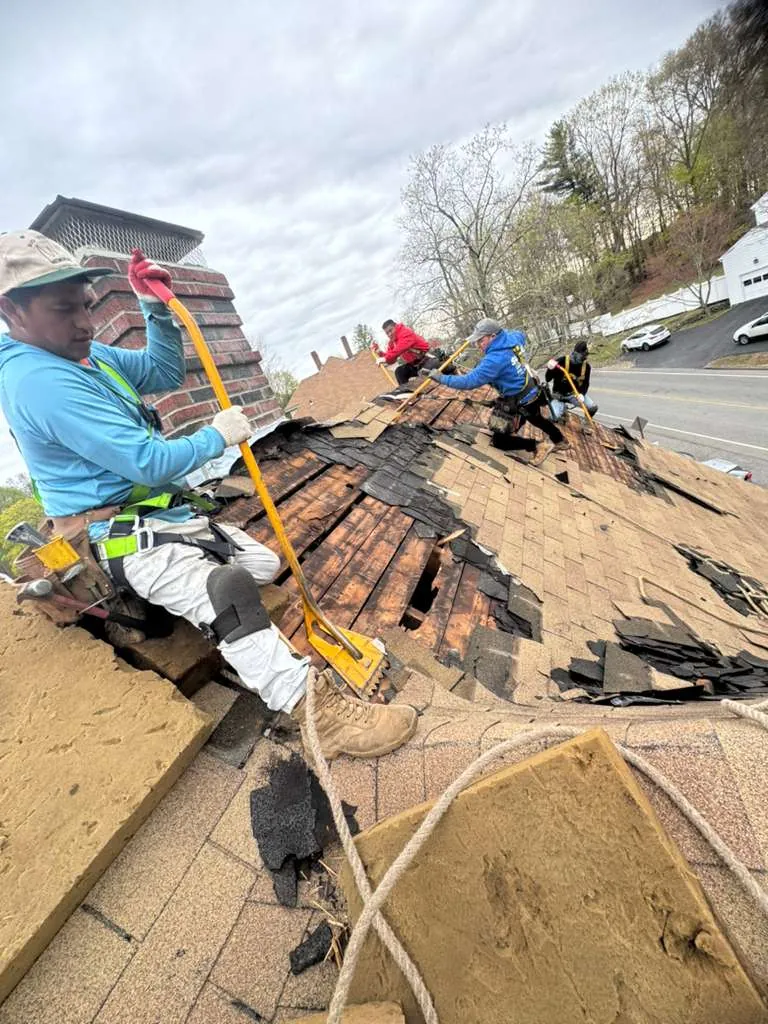
- Free roof inspection and written estimate
- Photos of everything we find
- A written price before any work starts
- Licensed and insured in Connecticut
Sunday to Friday
What do you need?
When?
Where should we call you?
Free, no obligation. Privacy
Common roofing questions
Related guides and services
Have us look at your roof
Free roof inspection, photos of what we find and a written price before any work. Licensed and insured in Connecticut.