
Flat Roof Repair & Replacement in CT: EPDM and TPO
Porch roofs, dormers, additions and city two- and three-family homes in Connecticut often have flat sections. They fail differently from shingles, and they get fixed differently too.
Sunday to Friday
Most flat roof leaks in Connecticut start at seams, at flashing where the roof meets a wall, or around drains where water ponds. A local problem on a membrane with life left is usually a repair at about $400–$1,500, while a roof with widespread seam failure, wet insulation or repeated leaks is usually better replaced with EPDM or TPO, at roughly $5,000–$15,000+ as a ballpark.
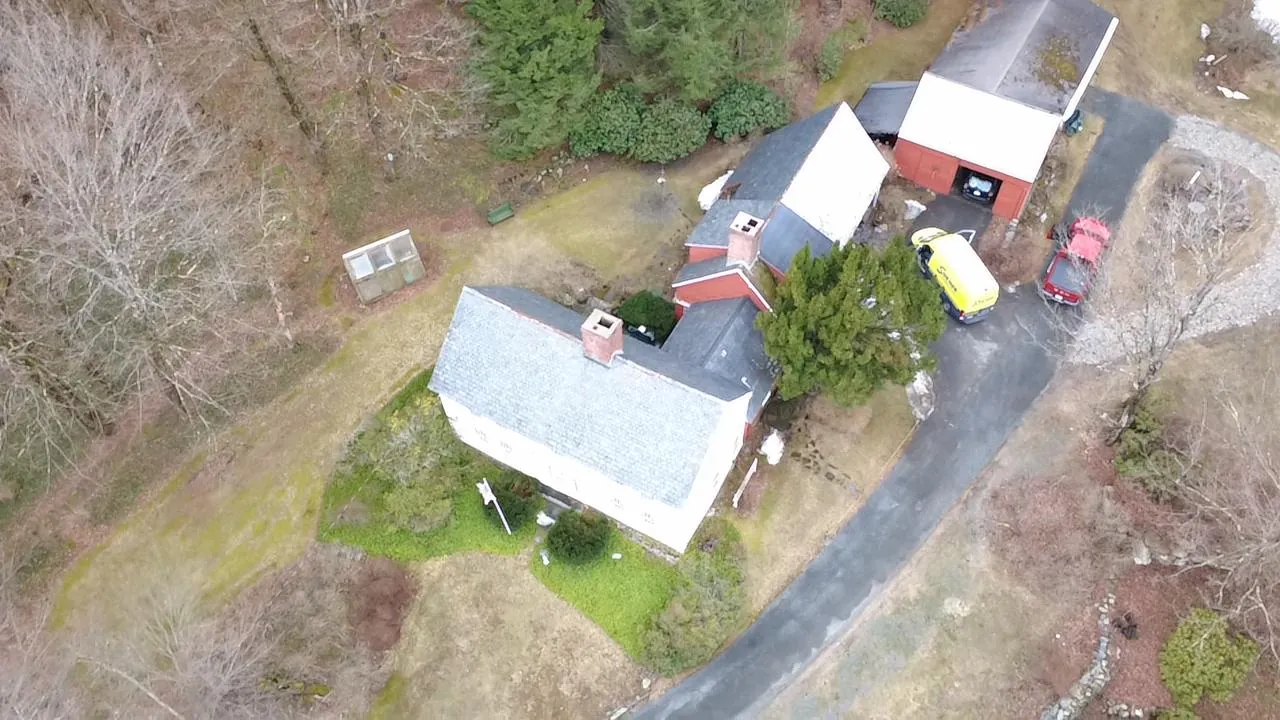
Where flat roofs show up on Connecticut homes, and why they leak
Truly flat roofs are rare. Most so-called flat roofs have a slight pitch toward a drain, scupper or gutter, and you find them on rear additions of capes and colonials, over porches and sunrooms, on shed dormers and garages, and across the tops of the two- and three-family houses that line streets in Hartford, New Britain and New Haven.
Because water moves slowly on a low slope, every weak point gets tested for hours instead of seconds. Snow that sits for weeks, melts in the afternoon and refreezes overnight keeps the surface wet through much of a Connecticut winter. Leaves from overhanging trees clog drains and leave water standing. The flashing where a flat section meets a sided wall or a chimney is often the first detail to give, and the drip inside can show up far from where the water got in, which is why tracing a roof leak properly matters before anyone patches.
On city multi-family houses, the flat roof usually covers the entire top floor, so a leak shows up on a tenant’s ceiling long before the owner sees anything. Owners of those buildings do well to have the roof looked at on a schedule rather than waiting for a phone call from upstairs.
EPDM or TPO: how the two membranes compare
Both are single-ply membranes, and both are sound choices for a house. The right one depends on the roof, what sits under it and how it gets used.
EPDM (rubber)
A black synthetic rubber sheet, usually laid in large pieces to keep seams to a minimum. It handles freeze–thaw cycles well and is straightforward to patch. Typical lifespan is 20–30 years. The dark surface soaks up heat, which matters more over a bedroom than over a porch.
TPO
A white or light gray membrane whose seams are welded with hot air, making them very strong once fused. It reflects sunlight, so rooms below run cooler in summer. Typical lifespan is 15–25 years, and repairs need compatible material and a heat welder.
Seams and details decide it
On either membrane, most failures happen at seams, corners, pipe penetrations, skylight curbs and wall flashing, not out in the open field. How those details are built matters more than which brand is on the roll.
Insulation underneath
A replacement is the moment to add rigid insulation board under the membrane. It helps the rooms below, and tapered board can build in slope toward a drain where water has been pooling for years.
Older tar-and-gravel and rolled roofs
Plenty of older flat sections in the state are built-up tar-and-gravel or mineral-surfaced rolled roofing. When those reach the end, they are usually torn off and replaced with EPDM or TPO rather than patched one more time.
Roofs that get walked on
If the flat section doubles as a deck, or HVAC technicians cross it a few times a year, ask about walkway pads or a protective layer. Membranes are tough, but they are not made for daily foot traffic or furniture legs.
Roof problem checker
Tick what you have noticed and see what it usually means.
Repair or replace? Reading the signs
Judge the roof as a whole, not only the spot that drips. These conditions usually push the decision one way or the other, and our article on how long a roof lasts in Connecticut puts the membrane’s age in context.
| What turns up on the roof | Usually points to | Why |
|---|---|---|
| One leak at a seam, boot or wall flashing; membrane still flexible | Repair | The material has years left, so fix the detail that failed |
| A small puncture from a branch or a dropped tool | Repair | A properly bonded patch restores the membrane |
| Water still standing two days after rain | Fix the drainage, or plan replacement | Ponding ages a membrane quickly and finds every weak seam |
| Seams opening in several places, or a shrinking membrane pulling at the edges | Replacement | The material itself is wearing out |
| Soft spots in the deck or wet insulation found under the membrane | Replacement | Trapped water rots decking and cannot dry out under a sealed roof |
| A membrane near the end of its typical lifespan with repeat leaks | Replacement | Patching ends up chasing leaks that keep moving |
What flat roof work costs in Connecticut
Size drives the price more than anything, followed by how many old layers come off, how much rotted decking turns up underneath, whether insulation is added, and how many skylights, vents, drains and walls have to be flashed. Access counts too: a roof over a third-floor porch on a tight city lot is a different job from a detached garage. Our flat roof cost guide breaks these factors down in more detail.
Treat the two numbers below as 2026 Connecticut ballparks for budgeting. The real figure for your roof goes in writing after a free visit, before anything is scheduled.
- Flat roof repair (seam, patch, pipe boot, wall flashing): $400–$1,500
- Flat roof replacement with EPDM or TPO: $5,000–$15,000+
Keeping a flat roof healthy between repairs
You can learn a lot about a flat roof without setting foot on it. An upstairs window that looks over the porch or addition roof is often the best inspection point you have.
- After heavy rain, check from a window: water still standing two days later points to a drainage problem
- Keep the gutter or scupper at the low edge flowing so water actually leaves the roof
- Have branches that hang over the roof trimmed back; they drop debris and scrape the membrane in wind
- Ask anyone working up there, such as HVAC, solar or antenna installers, to protect the membrane and tell you about any punctures
- Never let snow be cleared with metal shovels or ice picks, which slice through rubber and TPO
- Check the ceiling below after big storms and after thaws, when slow leaks tend to appear
- Have the seams, drains and wall flashing looked at every few years, and after any damaging storm
Curbs and chimneys are where flat roofs most often leak, because the membrane has to turn a corner and seal against another material. If the drip sits right below one, the fix may be at that detail rather than across the whole roof. See our pages on skylight repair and chimney flashing.
How we take care of a flat roof, start to finish
Whether it is a porch roof the size of a rug or the whole top of a three-family, the process runs the same way.
- First conversationTell us where the flat section is, what room or space sits under it and when it leaks. A call to (203) 779-6787 or a callback request is enough to get started.
- Inspection with photosWe check seams, flashing, drains and the deck for soft spots, and photograph everything, using a drone for roofs that are hard to see from the ground.
- A clear recommendationYou get a written price for the repair, or for replacement in EPDM or TPO if that is what the roof needs, with the reasons spelled out next to the photos.
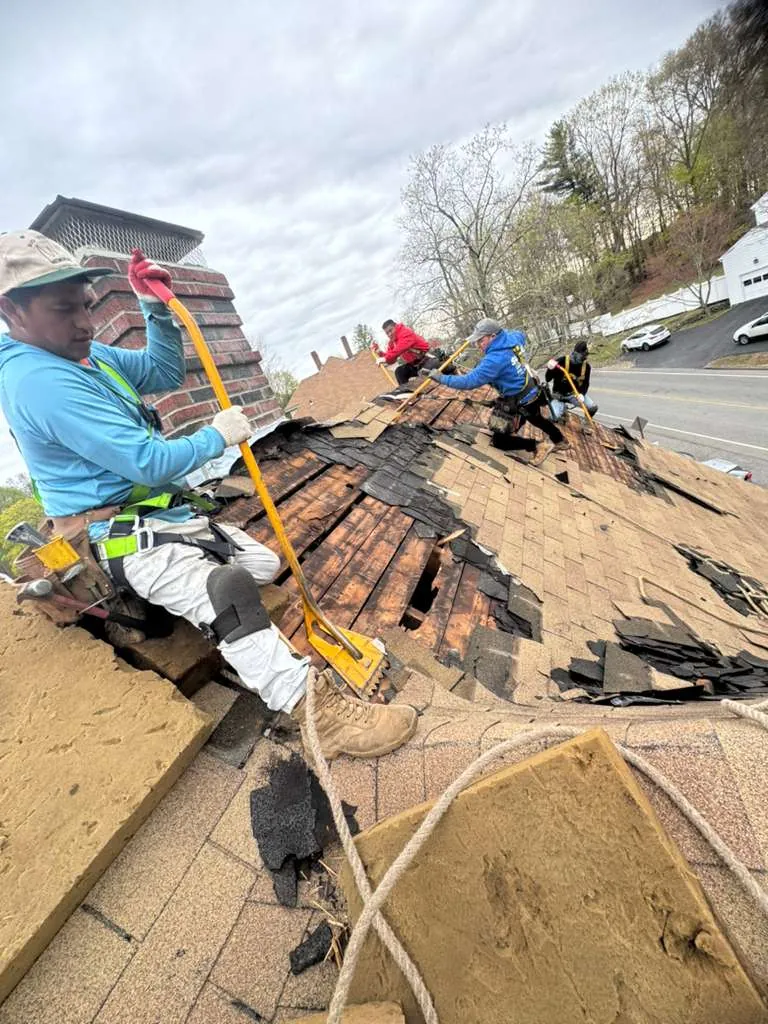
- Work, then cleanupThe crew protects the area below, completes the repair or the tear-off and new membrane, and clears away old material and debris before leaving.
Prefer we call you?
Three quick taps and a real person from A Class Chimney calls you back to set up a free roof inspection.
- Free roof inspection and written estimate
- Photos of everything we find
- A written price before any work starts
- Licensed and insured in Connecticut
Sunday to Friday
What do you need?
When?
Where should we call you?
Free, no obligation. Privacy
Common roofing questions
Have us look at your roof
Free roof inspection, photos of what we find and a written price before any work. Licensed and insured in Connecticut.