
Roof Replacement in Connecticut: Planning a New Roof
A plain guide to replacing the roof on a Connecticut house: when it is time, what a complete reroof includes, and the cold-climate details that decide how long the new roof really lasts.
Sunday to Friday
A roof replacement makes sense once the roof is close to the age its material typically lasts, leaks keep returning in different places, or shingles are curling, cracking and shedding granules across whole slopes. Done properly in Connecticut, it means stripping to the deck, fixing rotted wood, and installing ice barrier, underlayment, new flashing and balanced ventilation before the shingles go on. A Class starts with a free inspection, photos and a written price.
Replace or repair: what your roof is telling you
Look at the roof from the ground and, if it is safe to get there, from the attic. Then compare what you see with this guide.
| What you see | Usually points to | Why |
|---|---|---|
| A few shingles missing after a windstorm | Repair | The rest of the roof can still be sound |
| Curling, cupping or cracked shingles on every slope | Replacement | The shingles themselves are worn out |
| Bald patches and heavy granules in the gutters | Replacement | The shingles have lost their protective surface |
| One leak at a chimney, skylight or vent pipe | Repair | Flashing problems are local and fixable |
| Leaks in several unrelated places | Replacement | The whole system is failing, not one detail |
| Sagging between rafters or a spongy deck | Replacement plus deck repair | Water has damaged the wood under the shingles |
| Roof at or past its typical lifespan | Plan a replacement | Each repair buys less time than the last |
What a complete roof replacement includes
A new roof is a system, and a quote that only talks about shingles leaves most of it out. On a Connecticut asphalt reroof, these are the layers that should be accounted for in writing.
Tear-off to the deck
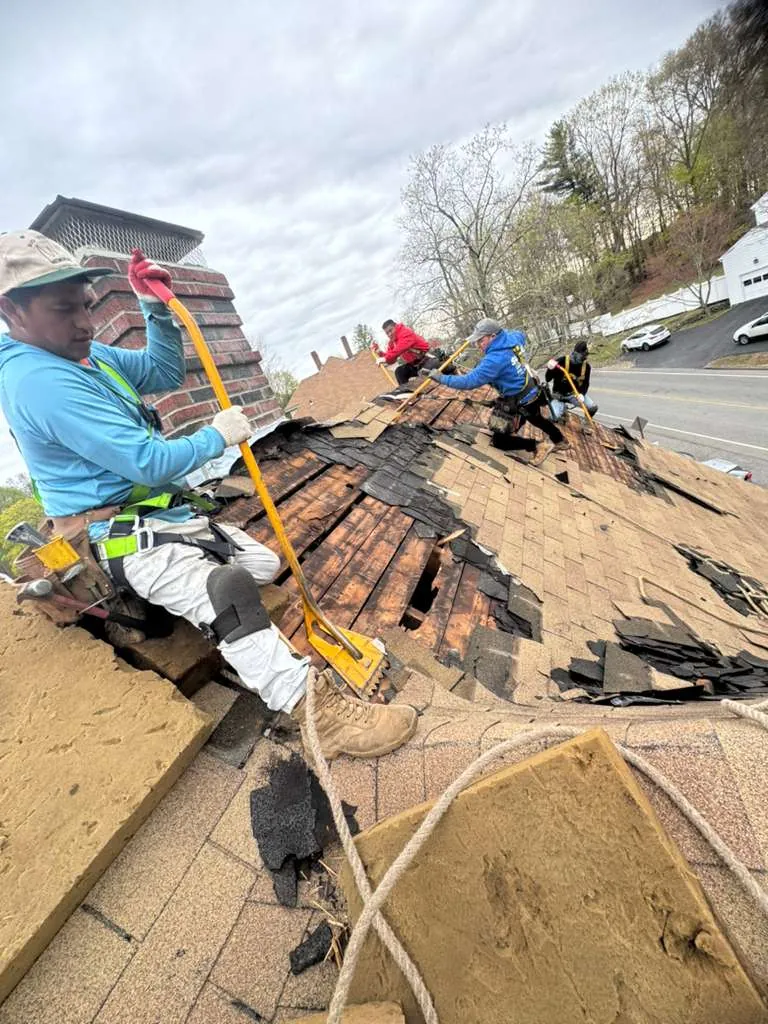
All old layers come off so the wood can be seen and judged. Stripping to the deck is the only reliable way to find rot, and it lets every new layer bond to a clean surface. On older houses it sometimes uncovers a forgotten layer of wood shingles, which has to go as well.
Deck repair
Soft or delaminated plywood is replaced, and gaps in old plank sheathing are dealt with so the new shingles have a solid, even base to be nailed into. Photos of any replaced boards should be part of what you receive.
Ice barrier and underlayment
In a climate like ours, an ice and water membrane at the eaves is a code item; it also earns its keep in valleys and around chimneys and skylights. The rest of the deck gets a synthetic or felt underlayment, lapped so water always runs over a seam rather than into it.
Flashing and drip edge
New drip edge at eaves and rakes, step flashing along sidewalls, fresh pipe boots, and proper chimney flashing. Reusing rusty old metal under new shingles is a shortcut that shows up later as a leak.
Ventilation
Air drawn in low at the soffits and let out high at the ridge keeps the attic cooler in summer and drier in winter. That protects the shingles from being baked from below and the deck from winter condensation, and many older Connecticut attics have far too little of it.
Shingles, ridge and clean-up
Starter strips along the edges, the shingles themselves, ridge caps over the vent, and finally a yard and driveway cleared of nails and debris.
Repair or replace?
Five quick questions for a rule-of-thumb answer.
Choosing a roofing material for a Connecticut house
Architectural asphalt shingles cover a large share of the colonials, capes and ranches in this state for good reasons: they handle wind and snow well, typically last 20–30 years and keep the cost reasonable. Three-tab shingles cost a little less and typically last 15–20 years. The asphalt shingle roofing page goes deeper on that choice.
Metal typically lasts 40–70 years and sheds snow, which suits owners who plan to stay put. Cedar shake fits shingle-style and some historic houses, and slate on an older home is often worth repairing rather than replacing. Low-slope porch roofs and rear additions usually get EPDM or TPO instead of shingles. Whatever you choose, the underlayment, flashing and ventilation points on this page apply just the same.
For a side-by-side view, see which roofing material suits Connecticut best; ballpark prices for each are on the roof replacement cost page. If your house sits in a local historic district, ask the town whether a change of roofing material needs approval before you settle on one.
Why a tear-off is worth it in this climate
Laying new shingles over old ones is permitted in some cases, up to the general limit of two layers, but it suits Connecticut poorly. The old layer hides soft decking, the new shingles telegraph every bump beneath them, and the ice and water membrane cannot bond to the wood at the eaves, which is exactly where ice dams push water back under the roof.
A reroof is also the cheapest moment to deal with the causes of ice dams. Adding ridge venting, opening soffit vents that were painted or insulated over, and noting where the attic needs more insulation are all far easier while the roof is open. If icicles and ceiling stains along exterior walls are part of your story, read our page on ice dams before you settle the scope.
Timing, permits and living at home during the work
If trouble shows up in summer, aim to have the new roof on before the leaves fall and the first nor’easters arrive. Shingles seal down in warm sun; a roof installed during a cold snap needs extra attention to sealing, and winter weather adds delays you cannot plan around. Having a written estimate in hand by midsummer leaves time to compare options without a deadline.
Many Connecticut towns expect a permit for reroofing work, though the rules vary. Ask your town’s building department early, so paperwork is not the thing that holds up your start date.
Most people stay home during the work. Expect noise and some vibration, move cars out of the driveway, take fragile items off the walls on the top floor, and keep children and pets away from the side of the house where old roofing is coming down. Our day-by-day installation guide walks through it in detail.
Choosing who replaces your roof
A roof is a large, once-in-decades purchase. Whoever you hire, these checks take little time and protect you.
- Confirm the contractor is registered as a home improvement contractor with the state Department of Consumer Protection
- Ask for proof of liability insurance and workers’ compensation coverage
- Get the full scope and price in writing before any work is scheduled
- Ask for photos of your roof’s current condition, not just a verbal opinion
- Find out how rotten decking or other surprises will be priced and approved
- Read recent reviews and ask how clean-up and property protection are handled
- Be wary of pressure to sign on the spot, especially after a storm
Replacing your roof with A Class: the sequence
- First conversationTell us the roof’s age, any leaks, and whether you already have a material in mind. The number is (203) 779-6787, and the callback form on this page works too.
- Free roof inspection with photosWe go over the roof by drone and on foot, photograph the shingles, flashing, chimney and vents, and look at the attic wherever there is access.
- Written estimateThe price arrives in writing, listing tear-off, membrane, underlayment, flashing, ventilation and how any rotted decking would be priced. You decide in your own time.
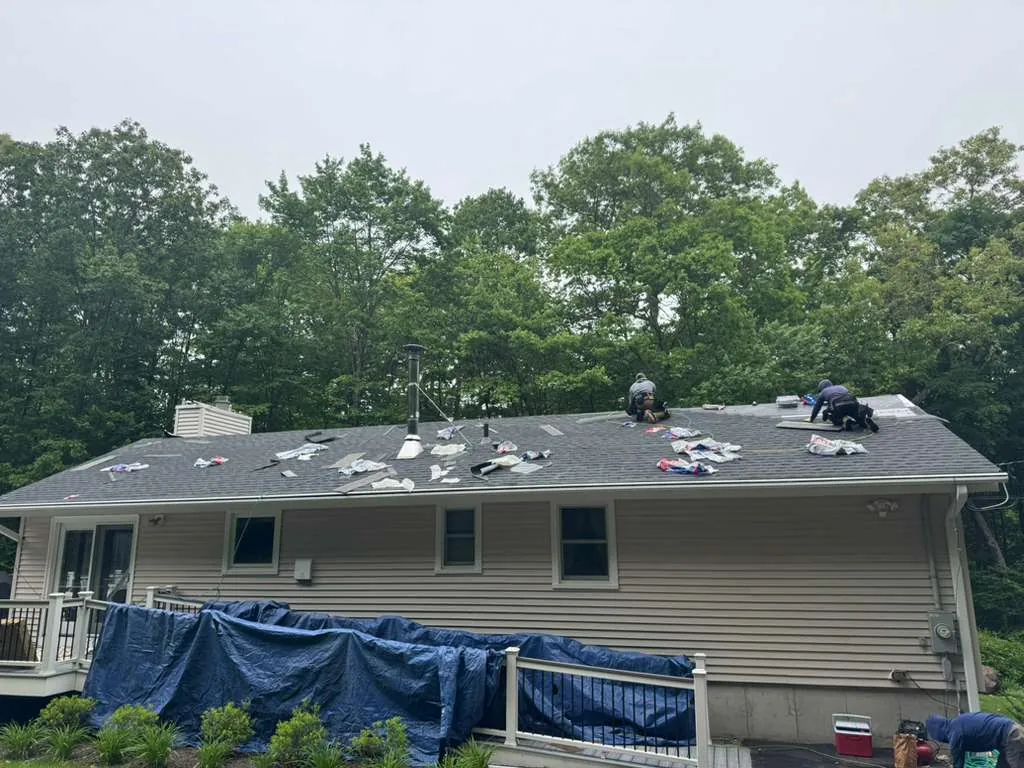
- InstallationPlantings are covered with tarps, the old roof is stripped, the deck is repaired as agreed, and the new roof is built up layer by layer.
- Clean-upNails, shingle scraps and debris are cleared from the lawn, beds and driveway before the job is called finished.
On a dry day, take a flashlight into the attic if you can get there safely. Dark stains on the underside of the roof boards, frost on nail tips in winter, a musty smell or daylight around the chimney all say something about the roof. Snap a few photos to share when you ask for a price.
Prefer we call you?
Three quick taps and a real person from A Class Chimney calls you back to set up a free roof inspection.
- Free roof inspection and written estimate
- Photos of everything we find
- A written price before any work starts
- Licensed and insured in Connecticut
Sunday to Friday
What do you need?
When?
Where should we call you?
Free, no obligation. Privacy
Common roofing questions
Have us look at your roof
Free roof inspection, photos of what we find and a written price before any work. Licensed and insured in Connecticut.