
Cedar Shake Roofing in CT: Repair and Replacement
Cedar gives a house a warm, natural look, and it asks for more care than any other common roof. Shade, moisture and debris decide how long it lasts in Connecticut.
Sunday to Friday
Cedar shake roofs typically last 20–40 years in Connecticut, with damp, shaded roofs at the low end. Split, cupped or missing shakes and worn flashing can usually be repaired, while widespread rot, moss-choked courses and brittle wood mean replacement, which runs about $20,000–$40,000+ as a ballpark.
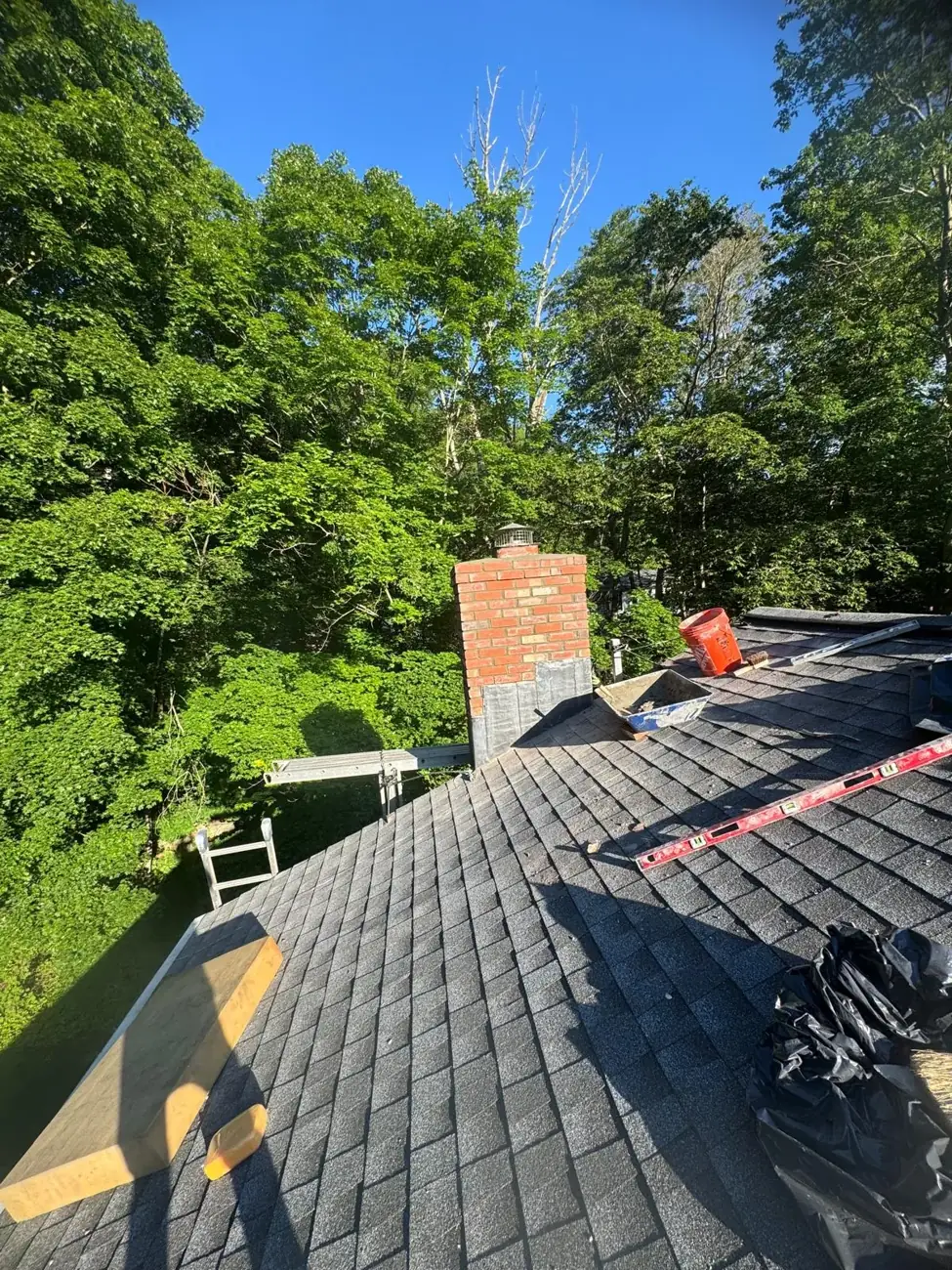
Shakes, shingles and why the difference matters
People use the two words interchangeably, but they describe different products. Cedar shakes are split, at least on one face, so they are thicker and rougher with deep shadow lines. Cedar shingles are sawn on both faces, thinner and more uniform, with the tailored look you see on many capes and shingle-style houses.
Both are usually western red cedar, which resists decay naturally, and both need to dry out between rains. That is the whole secret of cedar: a roof that dries quickly lasts, and a roof that stays damp under trees or packed with debris breaks down years early. Knowing which one you have also matters for repairs, because a thick shake patched with a thin sawn shingle stands out and sheds water differently.
Signs a cedar roof needs attention
Most of these are visible from the yard or an upstairs window. Two or three together on the same slope usually mean it is time for a closer look.
- Moss or a green film along the shaded side, especially between courses
- Shakes split all the way through, with the crack lined up over the joint in the row below
- Cupped or curling edges that let wind-driven rain get underneath
- Missing pieces or obvious gaps after a windstorm
- Soft, dark wood that crumbles at the edges, a sign of rot
- Pine needles and leaves packed into the gaps and valleys
- Rust streaks or stains running down from vents and flashing
- Stains on upstairs ceilings after a nor’easter
Repair or replace?
Five quick questions for a rule-of-thumb answer.
What Connecticut does to a cedar roof
Cedar copes with cold well; what hurts it here is moisture that does not leave. The big oaks, maples and white pines over so many Connecticut homes shade the roof, drop debris and keep the wood damp after each rain, and moss and lichen thrive in those conditions. Moss holds water against the wood and lifts the butt ends of the shakes, which speeds up rot.
Snow sitting on a north slope for weeks, followed by freeze–thaw, works water into every split. Wind-driven rain from a nor’easter finds each cupped or missing piece. And attics that run warm and humid push moisture up into the roof deck from below, which is why attic ventilation matters on cedar as much as on any roof.
Practical steps help: have branches trimmed back so the roof gets sun and air, keep gutters and valleys clear of debris, and never let anyone pressure wash the roof, which shreds the wood fibers. Our page on roof moss and algae covers gentler approaches.
Repair, or time for a new roof?
Cedar rarely fails all at once. The shaded slopes usually go first, so it is common for one face of the roof to need far more work than the others.
| Condition | Usually | Why |
|---|---|---|
| A few split, cupped or missing shakes | Repair | Individual pieces can be swapped and blended in |
| A leak at a chimney, skylight or wall | Repair the flashing | The wood around it may still have years of life |
| Moss across one shaded slope, wood still firm | Clean and repair, then improve sun and drainage | Catching it before rot sets in saves that slope |
| Soft, rotting shakes across several slopes | Replacement | Patching cannot keep pace once the wood is breaking down |
| A roof near the end of its typical 20–40 years with repeated leaks | Replacement | Patches start failing faster than new ones can be added |
| Shakes worn thin and eroded, especially on the sunny side | Replacement | The wood no longer has the thickness to shed water |
How a cedar repair is actually done
A damaged shake is split out with a chisel, and the nails that held it are cut with a thin blade slipped up under the course above, so the sound shakes around it are not disturbed. The new piece is cut to width with a small gap at each side for the wood to swell when wet, slid up into place and fastened so the nail heads end up covered by the row above.
Flashing at chimneys, skylights and valleys is replaced by lifting the shakes around it, relaying the sound ones and replacing the rest. Ridge caps take more weather than any other part of a cedar roof and often need attention at the same time. Moss and packed debris are cleared from the work area so the new wood starts out dry.
One more step belongs in any cedar repair plan: if a big tree keeps that slope in shade, have it trimmed by a tree service before or along with the work. Sun and moving air on the wood do more for a cedar roof than any patch or treatment, and the repair you pay for lasts longer once the slope can dry.
Cedar again, or something else?
When a cedar roof reaches the end, many owners choose cedar again for the look. A new cedar roof should be built to dry: a breathable underlayment or a ventilating mat under the wood, or spaced sheathing, plus attention to attic airflow. Treated cedar products made for better decay or fire resistance are also available, and worth asking about if your roof sits in heavy shade.
Others switch to architectural asphalt shingles for lower cost and upkeep, or to metal for longevity. Our guide to the best roofing material for Connecticut compares them. If your home is in a historic district, talk to the town’s historic district commission before changing the roofing material.
Cedar roofing costs in Connecticut
Plan on roughly $20,000–$40,000+ to replace cedar shakes on a typical Connecticut house, as a 2026 ballpark. The spread comes from roof size and pitch, split shakes versus sawn shingles, the grade of cedar, tear-off and decking repairs, and the flashing and ventilation details. Higher grades with straighter grain and fewer knots cost more, but they tend to stay flat and sound on the roof longer. Small repairs, such as replacing split pieces or a short run of flashing, usually fall in the general minor-repair range of $350–$1,500.
Whatever the job, the number you can plan around is the written one you get after a free look at the roof. For how cedar stacks up against other materials on price, see roof replacement cost in CT.
Getting a cedar roof looked at by A Class
Cedar repairs go best when the cause of the damage, usually shade or trapped moisture, is part of the plan.
- Reach outUse (203) 779-6787 or the callback form, and mention whether the roof is rough split shakes or smoother sawn shingles if you know.
- Free inspectionWe check the wood, the flashing at chimneys, valleys and skylights, and how wet the shaded slopes stay, with drone and on-roof photos.
- Options side by sideYou get a written price for repairs, or for replacement in cedar or another material, with the reasons laid out next to the photos.
- Work and cleanupThe crew protects plantings and siding, does the agreed work, and clears old wood and debris from the yard and gutters.
Prefer we call you?
Three quick taps and a real person from A Class Chimney calls you back to set up a free roof inspection.
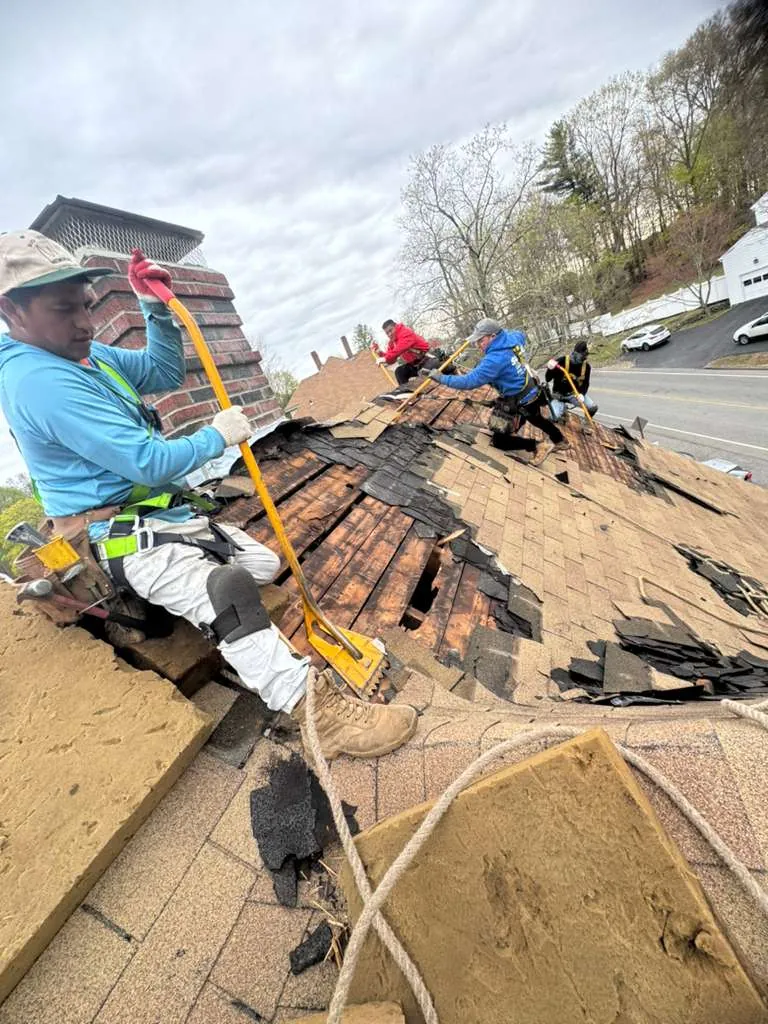
- Free roof inspection and written estimate
- Photos of everything we find
- A written price before any work starts
- Licensed and insured in Connecticut
Sunday to Friday
What do you need?
When?
Where should we call you?
Free, no obligation. Privacy
Common roofing questions
Have us look at your roof
Free roof inspection, photos of what we find and a written price before any work. Licensed and insured in Connecticut.