
Roof Insurance Claims in CT: How the Process Works
Coverage decisions belong to your insurer and the adjuster. Your part is a clear record of the damage; a roofer’s part is showing what failed and what the repair costs, in writing.
Sunday to Friday
Connecticut homeowners policies often cover sudden roof damage from wind, hail or a falling tree, while wear, age and slow neglect usually are not covered, and your insurer and adjuster make that call. Report the damage promptly, photograph it from the ground, stop further water damage, and get a free roof inspection with photos and a written estimate you can hand to the adjuster.
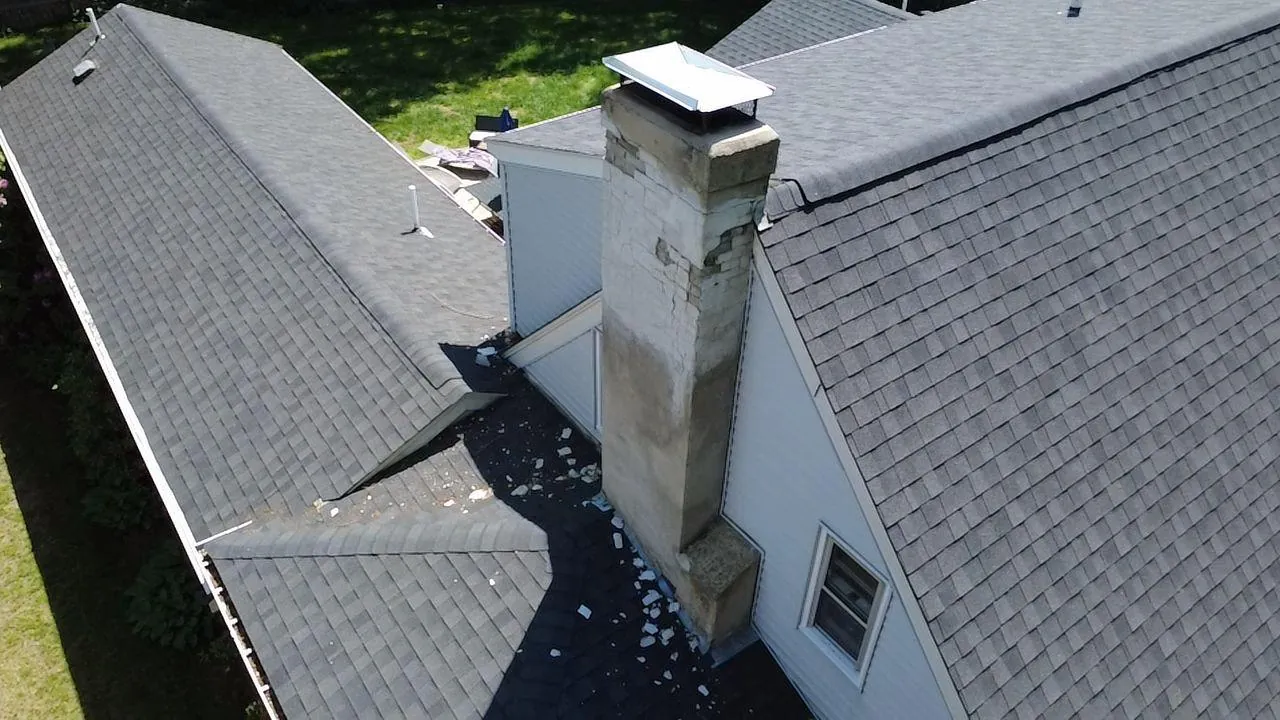
What policies usually treat as covered, and what they usually don’t
Every policy is worded differently, and only your insurer and the adjuster can say what yours pays for. Still, most roof claims turn on one question: did the damage happen suddenly, or did it build up over years? The table shows how common situations tend to be viewed and what evidence helps either way. For what the repair work itself involves, see our page on storm damage roof repair.
| What happened to the roof | How insurers often view it | Evidence that helps |
|---|---|---|
| Shingles torn off in a nor’easter or summer thunderstorm | Often treated as sudden wind damage | The storm date, photos of bare spots and of shingles lying in the yard |
| A falling tree or heavy branch struck the house | Often covered; limits for tree removal vary by policy | Photos of the tree in place before it is cut up, taken from a safe distance |
| Hail bruising or punctured shingles | Often covered, though wind is the more common culprit in Connecticut | Close-up roof photos plus dents in gutters, vents or a car from the same storm |
| Meltwater from an ice dam stained the ceilings | Interior water damage is sometimes covered; the roof itself may be treated differently | Photos of the ice at the eaves and of every wet ceiling and wall |
| An old roof with curling, bald shingles that started leaking | Usually excluded as wear and tear | Nothing changes that; get a realistic repair or replacement price instead |
| A slow leak that went unreported for months | Often limited or denied because of the delay | Reporting water damage as soon as you first notice it |
From the storm to a settled claim, in order
The sequence matters. Protect the house first, then build the record, and let the insurer reach its decision before permanent work begins.
- Stop further damageMost policies expect you to take reasonable steps to limit the damage, such as getting an opening covered and drying out wet rooms. Keep every receipt. Our page on emergency roof repair and tarping explains what to do while water is still coming in.
- Photograph from the ground and insideTake wide shots of each side of the house, close-ups of debris in the yard, and every stain or wet spot indoors. Your phone stamps the date, which ties the damage to a specific storm.
- Open the claimCall your insurer or agent, get a claim number, and ask exactly what they want from you. Write down the name of each person you speak with and the date.
- Get the roof itself documentedA professional roof inspection captures the slopes, flashing and vents you cannot see from the yard, measures the damaged areas and puts the repair cost on paper for the adjuster to compare.
- The adjuster’s visitThe adjuster inspects, writes a scope of loss and decides what the policy covers. Share the roofer’s photos and estimate, and ask how to submit more documentation if something seems to be missing.
- Approve the workOnce you know what the insurer will pay, you choose the repair, sign off on a written price, and the job is scheduled.
After-the-storm checklist
What to do, in order, after wind, hail or a fallen tree.
Deductibles, depreciation and who the check is made out to
Your deductible is the share of any covered loss you pay yourself. Look at your declarations page: some Connecticut policies, especially closer to the shoreline, carry a separate percentage deductible for hurricanes or named storms that can be far higher than the usual dollar amount. When the repair costs less than your deductible, filing may not make sense.
Policies also value a damaged roof differently. Replacement cost coverage aims to pay what it takes to repair or replace the damaged part today, while actual cash value coverage subtracts depreciation for the roof’s age. Many replacement cost policies pay in two stages, releasing the held-back depreciation once the work is finished and invoiced.
If you have a mortgage, the lender is often named on the claim check alongside you. Ask early how payments will be issued, so the money is not stuck in an envelope when the crew is ready to start.
What a roofer does in a claim, and what a roofer doesn’t
Our role is the roof. We inspect it, take drone and on-roof photos, point out which damage looks storm-related and which comes from age, and give you a written estimate. You decide what to send your insurer, and the adjuster decides what is covered.
To be clear about the limits: A Class is a roofing company, not a public adjuster, and it does not bargain with your insurer over the settlement. If you want someone to represent you in the claim itself, Connecticut licenses public adjusters for that work, and an attorney is the other route. Our job is to make sure the roof damage is clearly recorded and fairly described.
Fair description cuts both ways. If most of what we see is ordinary aging, we will say so plainly and price a repair or a replacement on its own merits. If the chimney was hit as well, our article on insurance and chimney repair covers that side of the claim.
Red flags when crews show up after a storm
After a nor’easter or the remnants of a hurricane cross the state, out-of-area crews often go door to door. A few are reputable, but others leave homeowners with poor repairs and a tangled claim. Slow down if you notice any of these.
- A crew you never called knocks and offers to climb up and look right now
- An offer to cover or waive your deductible, which your policy expects you to pay
- A request to sign a contract or assign your claim before you have seen a written price
- Pressure to tear off the roof before the adjuster has inspected
- Cash-only terms or a large payment up front
- No Connecticut home improvement contractor registration, which you can look up through the state Department of Consumer Protection
- Reluctance to put findings in writing or to let you keep the damage photos
Keep one folder, paper or digital, holding the declarations page, the claim number, the adjuster’s name and contact details, your storm-day photos, the roofer’s photos and written estimate, and receipts for tarping or drying. Add a dated note after every phone call. If the adjuster changes or a question comes up months later, that folder has the answer.
How we document a roof for your claim
The inspection and the written estimate cost nothing, whether or not you end up filing.
- Tell us about the stormWhen you call (203) 779-6787 or use the callback form, give us the storm date, what you have noticed inside, and whether a claim is already open with your insurer.
- Free roof inspectionWe check every slope, the flashing, vents and gutters, look at ceilings where water came in, and photograph what we find from the roof and by drone.
- Photos and written estimateYou receive the pictures and an itemized written price for the repair, with storm damage and age-related wear separated wherever we can tell them apart.
- Repairs once you decideAfter you have heard from your insurer and approved the price, the crew does the work, keeps plantings and walkways under tarps, and leaves the site clean.
Prefer we call you?
Three quick taps and a real person from A Class Chimney calls you back to set up a free roof inspection.
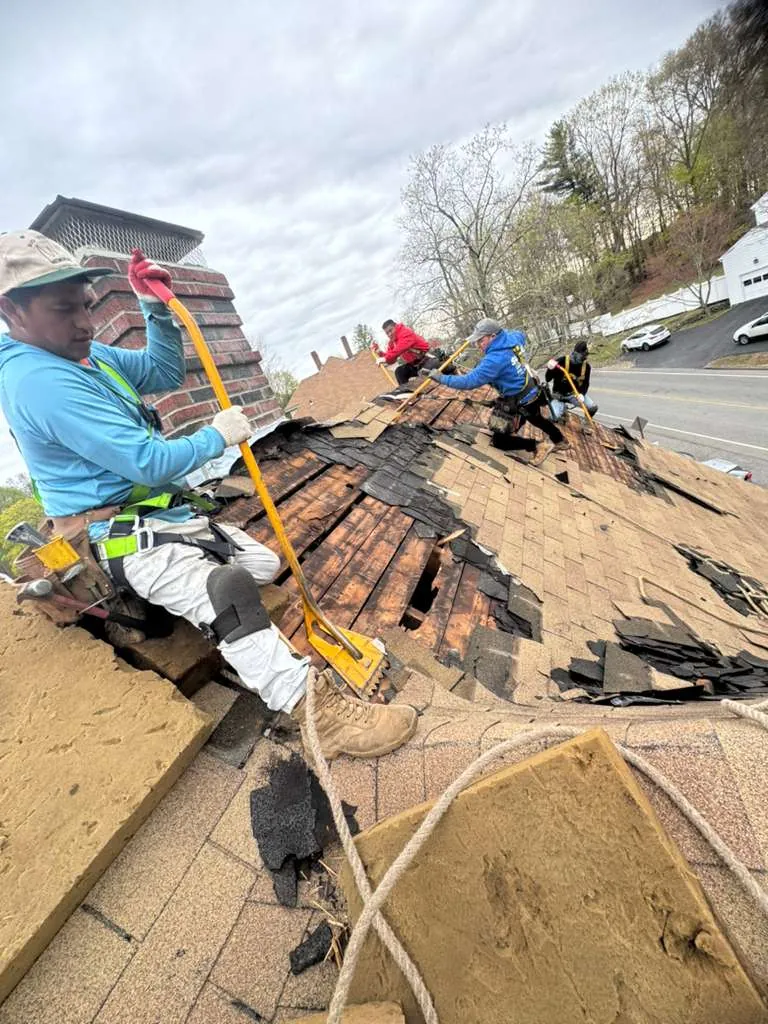
- Free roof inspection and written estimate
- Photos of everything we find
- A written price before any work starts
- Licensed and insured in Connecticut
Sunday to Friday
What do you need?
When?
Where should we call you?
Free, no obligation. Privacy
Common roofing questions
Have us look at your roof
Free roof inspection, photos of what we find and a written price before any work. Licensed and insured in Connecticut.