
Ice Dams on Your Roof: Causes, Leaks and Prevention in CT
An ice dam is a symptom of heat escaping into the attic. Getting rid of the ice deals with this winter; fixing the attic and the eaves deals with every winter after it.
Sunday to Friday
Ice dams form when heat leaking from the house melts snow on the upper roof and the meltwater refreezes at the cold eaves. Water then pools behind the ridge of ice and backs up under the shingles, leaking into ceilings and walls. Lasting prevention comes from air sealing, insulation and attic ventilation, plus an ice barrier membrane at the eaves whenever the roof is replaced.
How an ice dam forms
Ice dams need three things at once: snow on the roof, a roof deck warmed from below, and eaves that stay below freezing. Here is the sequence.
- Snow blankets the roofA thick layer of snow acts like insulation, holding in whatever heat reaches the underside of the roof.
- Heat escapes into the atticWarm air leaks up around attic hatches, recessed lights, plumbing stacks, chimney chases and the tops of interior walls. That warmth can raise the roof deck above freezing even when it is 20 degrees outside.
- Snow melts from underneathMeltwater trickles down the roof under the snowpack, out of sight, toward the edge of the roof.
- The eaves stay coldThe overhang sits outside the heated walls, so it stays as cold as the outdoors. The water refreezes there, and the ridge of ice grows a little with every cycle.
- Water backs up under the shinglesShingles are built to shed water running downhill, not to hold back a pond. Water trapped behind the dam works up under the shingles and into the roof edge, wall cavities and ceilings.
Why so many Connecticut houses get them
Connecticut winters swing above and below freezing again and again, and that freeze–thaw rhythm is exactly what builds a dam. Heavy, wet snowfalls followed by a few cold, clear nights are the classic setup, and a week of that can leave a foot of ice along the gutters.
The housing stock makes it worse. Capes with finished upstairs rooms have sloped ceilings and knee walls with little room for insulation, so heat goes straight into the roof. Older colonials often have unsealed attic floors and bath fans venting into the attic. Low-slope additions and porch roofs drain slowly, and valleys collect deep snow.
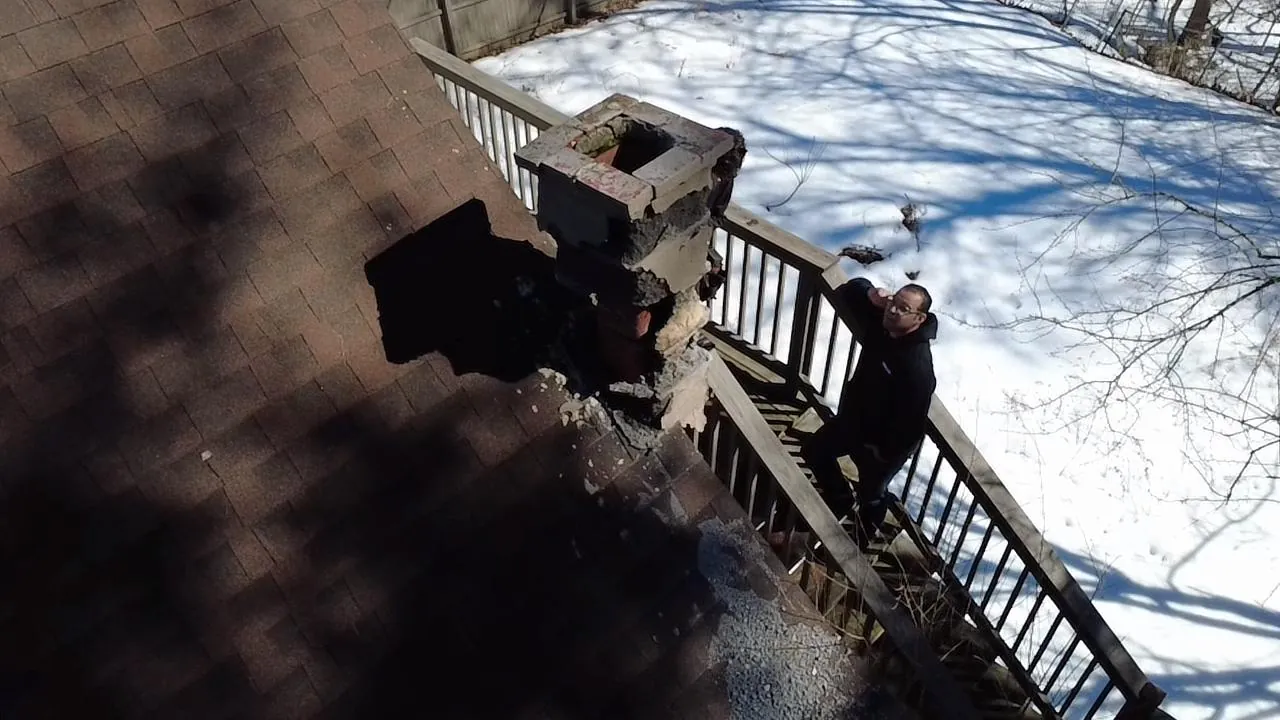
Chimneys deserve a mention too. Snow piles up on the uphill side of a wide chimney, and the warm chase beside it melts that snow. A chimney cricket helps divert that water and snow around the chimney instead of letting it sit.
Roof problem checker
Tick what you have noticed and see what it usually means.
Signs your house has an ice dam problem
The easiest test comes the morning after a snowfall: compare your roof with the neighbors’. Bare patches or stripes on your roof while theirs are still white mean heat is escaping in those spots.
- A thick ridge of ice along the gutters or roof edge, not just a few thin icicles
- Icicles hanging from the soffits or forming behind the gutters
- Water stains or peeling paint on exterior walls just below the eaves
- Damp spots on ceilings near outside walls during a thaw
- Stained or wet insulation at the edges of the attic
- Frost on nail tips or on the underside of the roof boards in the attic
- Bare patches or stripes in the snow above warm rooms, while the rest of the roof stays white
- Gutters pulling away from the house under the weight of ice
What to do during a freeze, safely
Your first job is to keep water away from belongings. Move furniture and electronics away from the drip, catch water in buckets, and lay towels at the base of walls. If a ceiling starts to bulge, keep people out from under it and get a professional over. If water is dripping from a light fixture or close to outlets, clear the room of people and phone 911 at any sign of sparks, a burning smell or other electrical danger.
Outside, a long-handled roof rake used from the ground can pull the bottom few feet of snow off the roof, which takes away the water supply for the dam. Stay well clear of overhead power lines, leave an inch or two of snow on the shingles so the rake does not tear them, and never climb a ladder onto an icy roof.
Do not chip the ice with hammers, hatchets or shovels; that breaks shingles and gutters faster than the ice does. Do not throw rock salt on the roof either, since the runoff harms plantings and corrodes metal. When ice has to come off, hire a crew that removes it with low-pressure steam.
Permanent fixes, in order of impact
Removing ice treats the symptom. These steps remove the cause, and the first three do most of the work.
Air seal the attic floor
Sealing the gaps where warm air rises into the attic matters most. Energize Connecticut’s Home Energy Solutions program is a good place to start for an energy assessment that finds those leaks.
Insulate to a proper depth
Once the air leaks are sealed, bring the attic insulation up to a full, even depth, with baffles at the eaves so it does not block the soffit vents.
Ventilate from soffit to ridge
Cold outside air entering at the soffits and leaving at the ridge keeps the roof deck close to outdoor temperature. Our page on roof and attic ventilation explains the options.
Vent bath fans and dryers outdoors
Fans that dump warm, moist air into the attic feed both ice dams and mold. Their ducts should run all the way outside.
Ice barrier at the next reroof
A self-adhering membrane under the shingles at the eaves does not stop dams from forming, but it keeps backed-up water out of the house. Cold-climate codes call for it, and a roof replacement is the time to install it properly.
Heat cables as a last resort
Heating cables can keep a drainage path open over a known trouble spot. They use electricity, need careful installation and do nothing about the heat loss behind the problem.
Damage that shows up after the thaw
Once the ice melts, the hidden cost becomes visible. Wet insulation loses much of its value and can take weeks to dry, wall cavities can grow mold, and the roof sheathing at the eaves may soften. Gutters that carried hundreds of pounds of ice are often bent or pulled loose; our gutter repair and installation page covers fixing them.
Take photos of stains and damage as soon as you see them, and read your homeowners policy. Insurers may treat sudden interior water damage differently from wear on the roof itself, and the insurer and adjuster make that call. Report it promptly, and have the roof edge, flashing and attic checked before next winter so the same leak does not return.
How A Class deals with ice dam leaks
When water is coming in, the number is (203) 779-6787, or you can request a callback; tell us where the water is showing up and what the roof edge looks like from the ground. If a snow-covered roof hides the cause, the first visit focuses on the attic and the eaves, with the full roof checked once it clears.
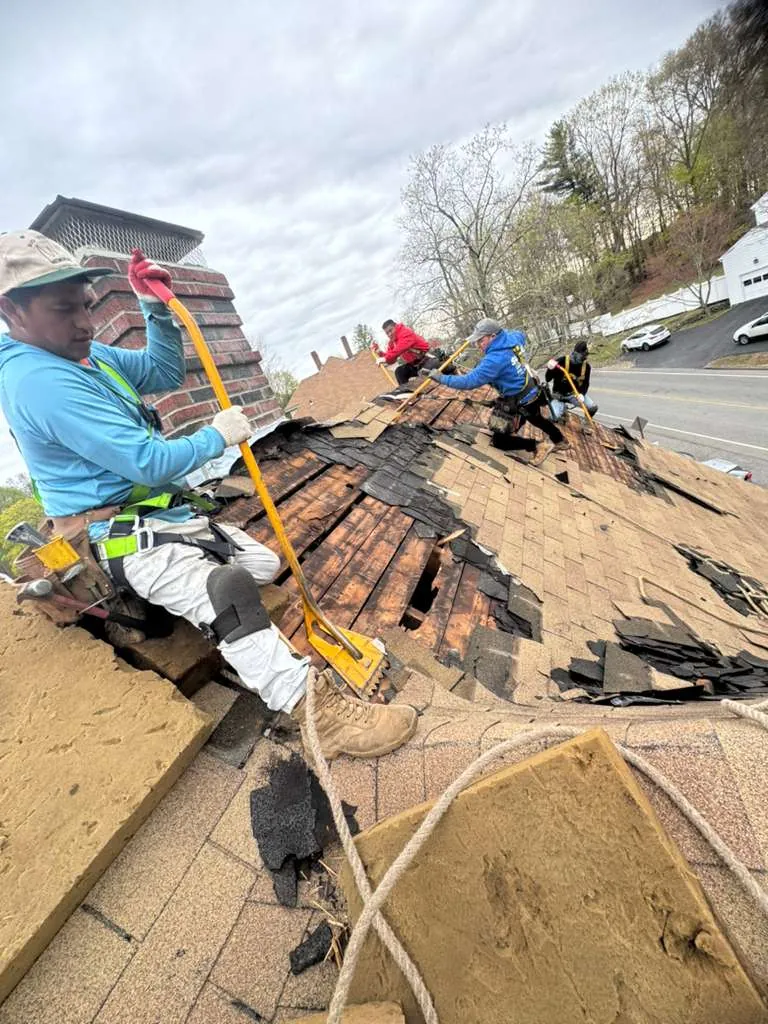
We photograph the eaves, valleys and flashing from the drone and on the roof where conditions allow, then look in the attic for the heat and moisture behind the problem. The photos come to you along with a written price for the roof-side work, such as damaged shingle repair, a ventilation upgrade (ballpark $500–$2,000) or, on a reroof, a full ice barrier at the eaves. Exact figures follow the free inspection.
Insulation and air sealing are a separate trade, and we will point out where the heat loss appears to be so you can address it. Skylights are a common winter leak point as well; see skylight repair if water is coming in around one.
Prefer we call you?
Three quick taps and a real person from A Class Chimney calls you back to set up a free roof inspection.
- Free roof inspection and written estimate
- Photos of everything we find
- A written price before any work starts
- Licensed and insured in Connecticut
Sunday to Friday
What do you need?
When?
Where should we call you?
Free, no obligation. Privacy
Common roofing questions
Have us look at your roof
Free roof inspection, photos of what we find and a written price before any work. Licensed and insured in Connecticut.