
Repair or Replace Your Roof? How to Decide in CT
Most roofs can be repaired more times than people expect, and a few should not be patched at all. These are the criteria a roofer uses to tell which is which.
Sunday to Friday
Repair when the roof is well inside its typical lifespan and the damage comes from one area or one cause, such as a wind-torn section or a failed vent collar. Replace when the shingles are worn out across whole slopes, leaks keep appearing in new places, the decking is soft, or the repair money would buy only a few more years on an aging roof.
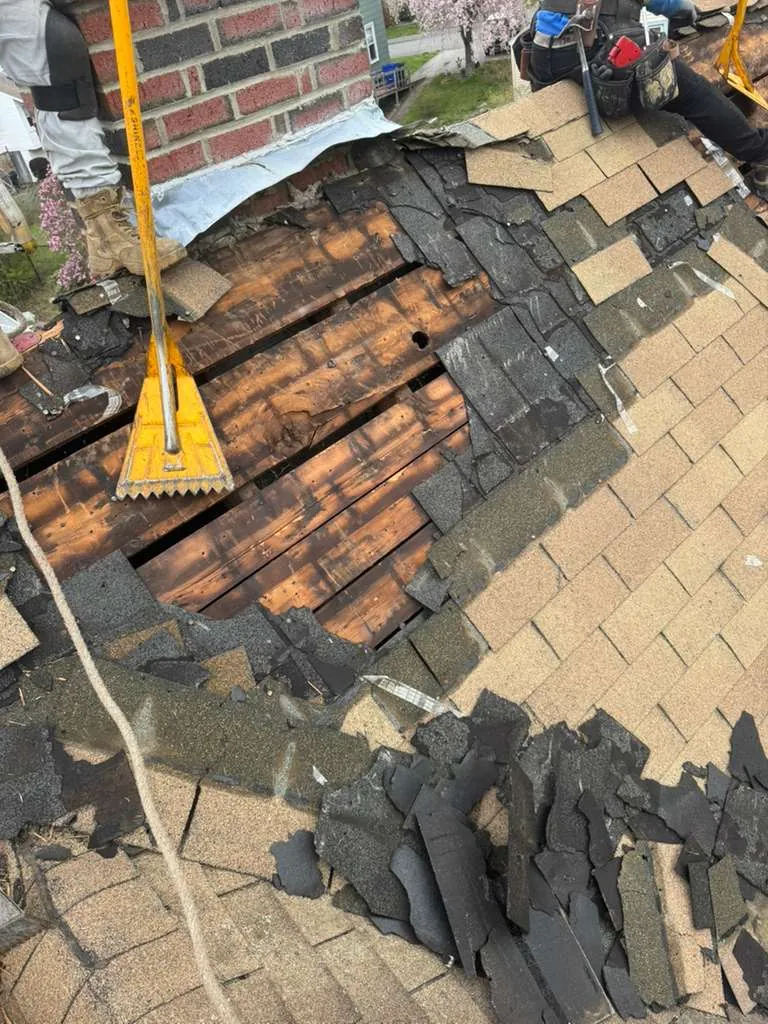
Start with age, then look at how far it has spread
Two questions decide most cases: how old the roof is, and how much of it is affected. A 9-year-old architectural shingle roof that lost a strip of shingles in a nor’easter is a repair, almost without exception. A 24-year-old roof with curling across the south slope and a fresh leak every spring is a replacement that is being put off.
Age alone is not the whole story. A hot, poorly vented attic or constant shade can wear a roof out early, while a well-ventilated roof in open sun may outlast the usual range. Check your roof’s age against typical figures in our guide to how long a roof lasts, then look at how much of the surface actually shows wear.
Then consider what sits underneath. A roof can look tired from the street and still rest on solid decking, which keeps the repair option open. One that looks passable but feels spongy near the eaves has moved into replacement territory, whatever the shingles look like.
A side-by-side decision guide
Find the row that matches what you are seeing. When your answers land in both columns, the decking and the cost comparison further down usually settle it.
| Question | Points toward repair | Points toward replacement |
|---|---|---|
| How old is the roof? | Less than about two-thirds of its typical life | Near or past the typical range for its material |
| Where is the damage? | One area or one cause: a flashing joint, a vent collar, a wind-torn patch | Spread over several slopes, or turning up somewhere new each season |
| What do the shingles look like? | Flat and gritty away from the damaged spot | Curled, cupped, cracked or bald across whole slopes |
| How is the decking? | Firm, with attic staining limited to one spot | Soft or sagging areas, rot visible from the attic |
| How many layers are on it? | One | Two already, so another overlay is generally not allowed |
| Can the shingles be matched? | Same style still sold, or the patch is out of sight | Discontinued style on a front slope you care about |
| How long will you stay? | Selling within a year or two and the roof is sound | Staying ten years or more |
Repair or replace?
Five quick questions for a rule-of-thumb answer.
The cost comparison, using real ranges
Ballpark Connecticut figures for 2026: a minor repair runs $350–$1,500, a larger repair involving decking or a valley $1,500–$4,000, and a full asphalt shingle replacement on a typical home $10,000–$25,000+. What your own roof will cost is written down only after it has been seen, and that look is free. The details are on our roof repair cost and roof replacement cost pages.
The most useful way to compare is cost per year. Divide the repair price by the number of years it realistically buys, then divide a replacement price by the expected life of the new roof. If the repair works out more expensive per year, it is the weaker deal even though the check is smaller.
Watch for repair money that disappears at tear-off. Paying for a larger repair on a roof that will be replaced within three years means paying twice for the same square feet, so on an older roof keep repairs to what is needed to stay dry until the replacement. While the replacement is being planned, spend on stopping water, not on cosmetic fixes.
Problems that look like replacement but usually are not
These are the situations where a homeowner is most often told, or assumes, that the whole roof has to go.
A leak beside the chimney
Water near a chimney usually comes from the flashing or the masonry rather than the shingles around it. Repairing the chimney flashing fixes it without touching the rest of the roof.
Wind damage on a younger roof
Shingles torn off a roof under about 15 years old are normally a section repair. Photograph the damage before anything is fixed in case you open an insurance claim.
Dark streaks
Black streaks running down a slope are algae. They affect looks, not whether the roof keeps water out.
One hard winter of ice dams
Ice dam leaks point to heat escaping into the attic. The lasting fix is insulation, air sealing and ventilation, and the roof may need only local repair where water got in.
An old skylight leaking
Skylights often fail before the roof around them. Replacing the unit or its flashing is usually a separate, smaller job.
A drip at a plumbing vent
The rubber collar around a vent pipe usually cracks years before the shingles around it wear out. Replacing that collar is one of the smallest repairs a roof can need.
The middle options people forget
Repair and full replacement are not the only choices. On many Connecticut houses one of these fits better than either. Each one depends on the rest of the roof being in reasonable shape.
Replace one slope
South- and west-facing slopes take the most sun and wear out first. When the rest of the roof is sound, replacing only the worn slope can make sense, especially on the back of the house where a slight color difference will not matter.
Replace the low-slope section only
Porch roofs, dormers and rear additions with little pitch often fail long before the main roof. Converting a shingled low-slope area to an EPDM or TPO membrane fixes the cause instead of patching it again.
Repair now, replace on your schedule
A roof found worn out in December can often be repaired to get through winter and replaced in spring, when the weather is better and you have had time to compare materials and prices.
Re-flash during the repair
If a roof keeps leaking at walls, dormers and chimneys, new flashing at those joints can buy years on shingles that are otherwise fine.
Fix the attic along with the roof
When a hot, damp attic is what aged the shingles, adding proper intake and ridge venting during a repair slows the wear on what remains. A ventilation upgrade is a ballpark $500–$2,000 job.
When you are unsure, ask for a written repair price and a written replacement price from the same inspection. Two numbers next to the same set of photos make the choice much clearer than arguing with a single quote.
Questions to ask anyone who recommends a new roof
A replacement recommendation should come with reasons you can see. These questions bring them out, whoever is quoting.
- Which slopes show the wear, and can I see a photo of each one?
- Is the decking soft anywhere, and how did you check?
- Is my leak coming from the shingles or from flashing at a wall, chimney or vent?
- How many layers are on the roof now?
- What would a repair cost, and how many years would it realistically buy?
- What is the risk if I wait one more winter?
- Does the replacement price include tear-off, ice barrier at the eaves, new flashing and ventilation?
How A Class helps you make the call
Maybe you have two opinions that disagree, or none at all. Tell us what raised the question, whether a leak, a storm, a home sale or just the roof’s age, by calling (203) 779-6787 or leaving a callback request.
We photograph the roof from the drone, walk it where that is safe, and check the attic, then go through the photos with you alongside our recommendation. When the honest answer is a repair, you get a repair price in writing. When it is a replacement, that comes in writing too, and where the case is close you can have both. Our roof inspection page explains the visit in more detail.
Nothing is booked until you have agreed to a written price. The inspection and estimate are free, and if the work goes ahead, plantings are covered during the job and the site is cleaned before the crew leaves.
Prefer we call you?
Three quick taps and a real person from A Class Chimney calls you back to set up a free roof inspection.
- Free roof inspection and written estimate
- Photos of everything we find
- A written price before any work starts
- Licensed and insured in Connecticut
Sunday to Friday
What do you need?
When?
Where should we call you?
Free, no obligation. Privacy
Common roofing questions
Have us look at your roof
Free roof inspection, photos of what we find and a written price before any work. Licensed and insured in Connecticut.