
Roof Repair in Connecticut: Shingles, Flashing & Leaks
Missing shingles, a cracked vent boot, a valley that drips in heavy rain: most roof problems on Connecticut homes can be fixed if they are caught early and traced to the real source.
Sunday to Friday
Most roof problems on Connecticut homes, such as wind-lifted shingles, failed pipe boots, loose flashing and worn valleys, can be repaired without replacing the roof as long as the rest of it is sound. A Class repairs asphalt shingle, flat, slate and cedar roofs throughout its service area in Connecticut, and every job begins with a no-cost inspection, photographs and a price in writing.
Common roof problems and how they are usually fixed
Most repair calls start with a symptom, not a diagnosis. This table matches what Connecticut homeowners tend to notice with what is most often behind it, and what the fix usually looks like. Use it to describe what you are seeing when you get in touch.
| What you notice | Most likely cause | Usual repair |
|---|---|---|
| Shingle pieces in the yard after a windstorm | Old seal strips let go, or shingles were brittle | Replace and hand-seal the missing shingles |
| Small stain under a bathroom or hallway ceiling | Cracked rubber boot on a plumbing vent | New vent boot, with shingles re-laid around it |
| Drip along an exterior wall in late winter | Meltwater trapped behind an ice dam at the eaves | Repair the damage, then fix attic heat loss and ventilation |
| Stain where a lower roof meets a wall | Missing step flashing or kick-out flashing | Re-flash the wall joint |
| Leak below a valley in heavy rain | Worn or badly cut valley | Rebuild the valley over new membrane |
| Water near the chimney | Chimney flashing, crown or masonry | Handled as a chimney repair |
| Rotting fascia or water running down the siding | Clogged or poorly pitched gutters | Clean, re-pitch or replace the gutter run |
Roof repairs we handle on Connecticut homes
Repairs on older Connecticut houses rarely involve just one material, so it helps when one company handles shingles, flashing, flat porch roofs and chimneys.
Asphalt shingles
Wind-damaged, creased or missing shingles on 3-tab and architectural roofs, matched as closely as the existing roof allows and sealed down so the next gust does not lift them.
Flashing and vent boots
Step flashing at sidewalls, pipe boots, and the other metal details where most leaks actually start. For leaks at the chimney, our chimney flashing repair page explains that work.
Valleys and decking
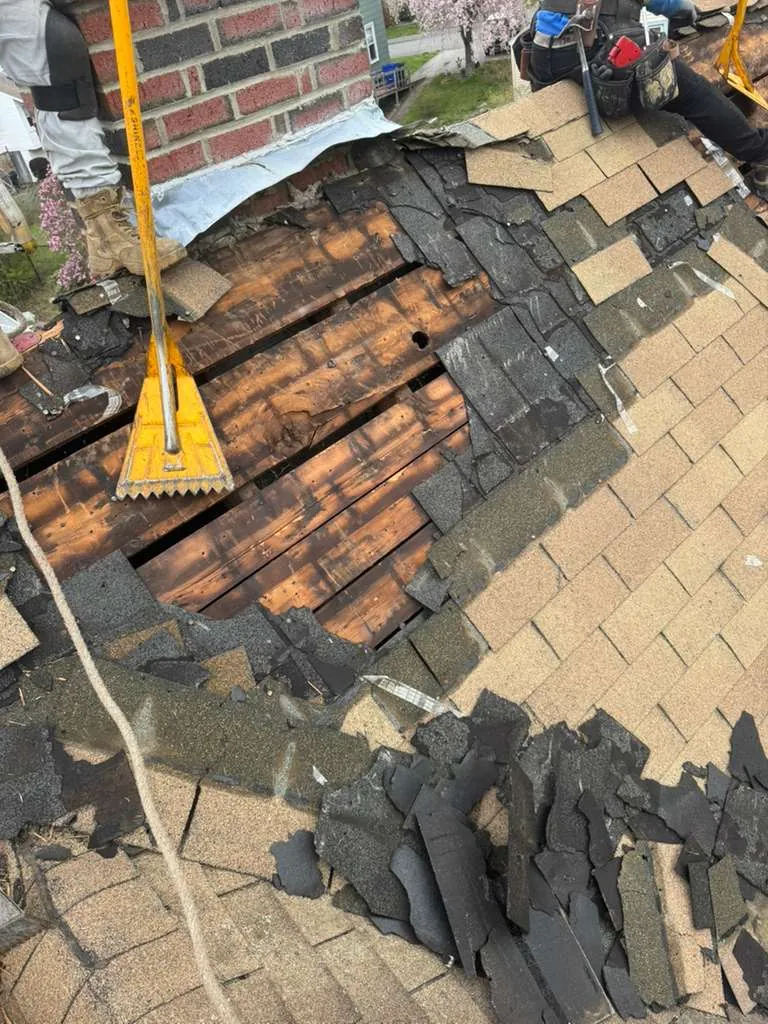
Worn valleys rebuilt, and soft decking sections cut out and replaced when water has been getting in for a while. These are the larger repairs, and the photos show you why they are needed before you agree to them.
Flat and low-slope roofs
EPDM rubber and TPO seams, patches, edges and drains on porches, additions and multi-family roofs. More detail is on our flat roof repair page.
Slate and cedar
Broken slates and failed flashing on older homes, and split or missing cedar shakes, each repaired with materials that suit the roof. Our slate roof repair page covers how single slates are replaced.
Ventilation and drainage
Ridge vents, attic ventilation and gutter repairs that stop heat and water from damaging the roof from below and at the edges. These are often the fix behind a repair that keeps coming back.
Roof problem checker
Tick what you have noticed and see what it usually means.
When to repair, and when to stop repairing
A repair is the right call when the damage is local and the roof around it still has life. A branch that scuffed one slope, a cracked pipe boot, or a single leak at a skylight are all jobs to fix and move on from. So is a valley that has started leaking on an otherwise healthy roof.
Repairs stop making sense when problems show up all over the roof at once. If shingles are curling on every side, granules are washing into the gutters, and you have patched more than one leak in the past couple of years, the money is better put toward replacement. Our guide on repairing versus replacing a roof goes through the decision step by step.
Between those two sits the roof with a few good years left that you are not ready to replace. There, a modest repair that keeps water out of the deck is often the smartest spend, because it protects the wood the next roof will be nailed to.
What separates a lasting repair from a patch
Roof cement smeared over a leak is the repair that fails most often. It looks fine for a season, then freeze–thaw cracks it open and the water comes back, usually having done more damage in the meantime.
A lasting repair fixes the cause. Damaged shingles are slid out and replaced with new ones nailed in the right place and sealed down; flashing is replaced and layered so water runs over it, not behind it; soft decking is cut out and replaced with sound wood. Exposed nail heads get sealed or replaced, and any neighboring shingle that cracks while being lifted is replaced too.
It is also worth asking why the problem happened in the first place. Shingles that keep blowing off one slope may have been short on nails or set too high. Winter leaks at the eaves that return every year usually trace back to attic ventilation and insulation, not to the shingles themselves. Fixing the reason is what keeps you from paying for the same repair twice.
Repair issues common on older Connecticut houses
Much of the housing stock around Hartford and New Haven predates modern roofing details. Older capes and colonials often have plank sheathing instead of plywood, sometimes with a layer of original wood shingles still underneath the asphalt. Repairs on these roofs take more care, because nails need solid wood to bite into and the boards may have gaps between them.
Victorians and some colonials have built-in wooden gutters, often called Yankee gutters, set into the roof edge. When their linings fail, water soaks into the cornice and the walls below, and the stain can look exactly like a roof leak. Low-slope additions from the 1960s and 1970s tied into steep main roofs are another frequent trouble spot, because the joint between a shallow roof and a steep one is hard to flash well.
Five minutes of notes that speed up any repair
You do not need to go on the roof to help. These notes, gathered from the ground and inside the house, make a repair visit faster and more accurate. They also help separate a true roof leak from condensation, plumbing or a window problem, which can look the same on a ceiling.
- Where the water or damage shows, and which room sits below it
- When it shows: during any rain, only in wind-driven rain from one direction, during snowmelt, or on cold dry mornings
- Dated photos of ceiling stains, with a coin or tape measure in the frame for scale
- Ground-level photos of the roof, zoomed in with your phone
- The roof’s approximate age and any paperwork from past repairs
- Whether the attic is reachable, and what is stored near the leak
- Any recent work on the roof, chimney, solar panels, satellite dish or gutters
What happens when you call A Class for a repair
- We listen firstUse (203) 779-6787 or the callback form. We ask where the problem shows, how old the roof is, and whether water is coming in right now, so the visit is planned around what matters most.
- Free inspection, documentedA tech looks at the problem area and the roof around it, with drone and on-roof photos, so you see what we see instead of hearing about it secondhand.
- Written repair priceYou get the price in writing before work starts, with anything urgent separated from items that can wait for another season.
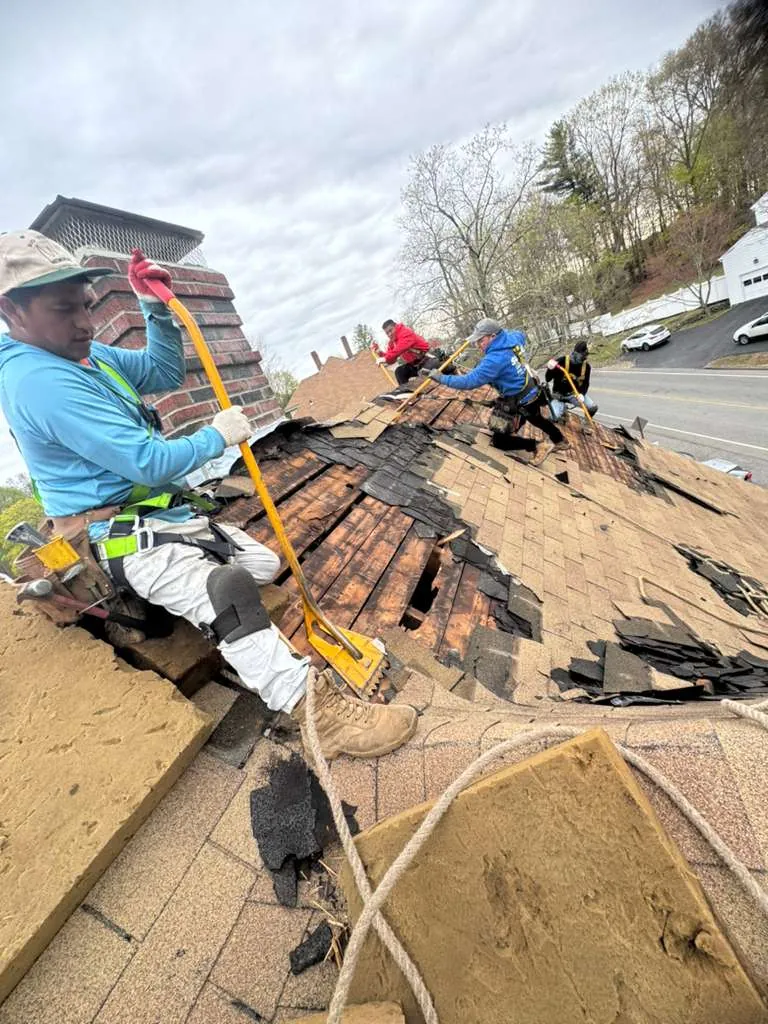
- The repairWork follows the written scope, with the house and plantings protected while the crew is on the roof. If something unexpected turns up once the roof is opened, you see photos and a price before the scope changes.
- Clean finishOld shingles, nails and debris are cleared from the roof edge and the yard before we pack up.
A fall from a roof can change a life, and wet or mossy shingles are slippery even on a gentle slope. Use binoculars or your phone’s zoom from the yard, and leave the climbing to someone with fall protection. If a ceiling is sagging with water, keep everyone out of that room until help arrives.
Prefer we call you?
Three quick taps and a real person from A Class Chimney calls you back to set up a free roof inspection.
- Free roof inspection and written estimate
- Photos of everything we find
- A written price before any work starts
- Licensed and insured in Connecticut
Sunday to Friday
What do you need?
When?
Where should we call you?
Free, no obligation. Privacy
Common roofing questions
Related guides and services
Have us look at your roof
Free roof inspection, photos of what we find and a written price before any work. Licensed and insured in Connecticut.