
Storm Damage Roof Repair in CT: Wind, Hail & Fallen Trees
What to do after high winds, hail or a fallen limb: the safety calls, the ground-level checks, temporary protection and the photos your insurer will want to see.
Sunday to Friday
After a storm, stay off the roof, check it from the ground for missing or lifted shingles, bent flashing and fallen limbs, and look inside for new stains. If a tree is on the house or wires are down, get everyone out and call 911. A Class tarps open areas, photographs the damage and gives you a written estimate you can share with your insurer.
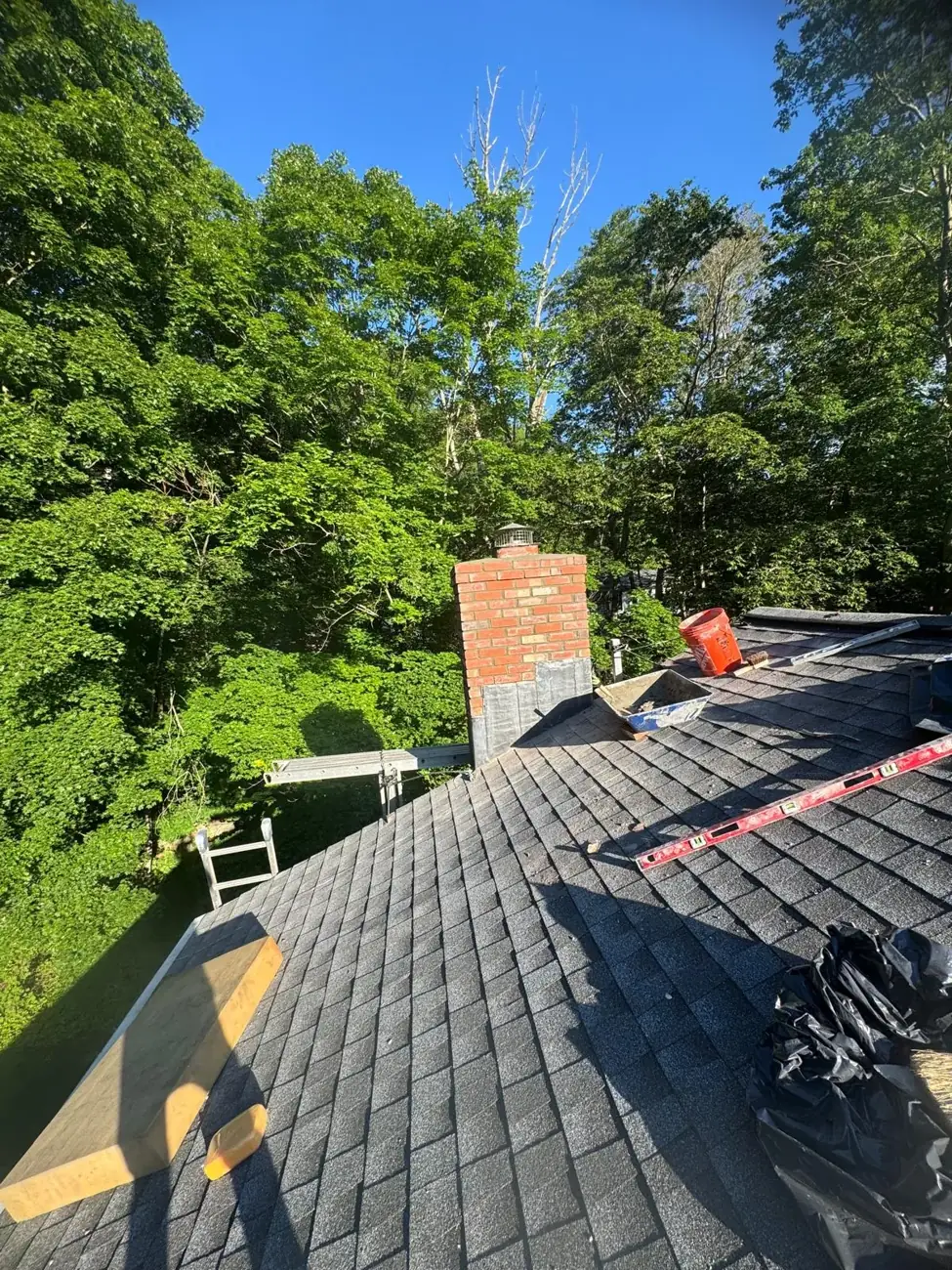
The first hour after a storm hits your roof
Work through these in order. Safety comes before the roof, and the roof can wait a few hours if it has to.
- If a tree is on the house, you hear cracking, or ceilings are sagging, get everyone out and call 911
- Treat every downed wire as live, stay well clear of it, and report it to your electric utility
- Do not climb onto the roof, or go into the attic under a section a tree has hit
- Inside, move valuables away from leaks and catch dripping water in buckets
- Take dated photos and video of the damage, inside and out, before anything is moved or cleaned up
- Call your insurer to report the damage and ask what they need from you
- Arrange temporary protection such as a tarp if water can get in, and keep every receipt
Removing a tree or a heavy limb from a roof is work for a tree service with the right equipment and insurance. Cutting a loaded limb can release it suddenly onto you or further into the house. Let them take the weight off first; the roof can be assessed and covered once it is clear.
How wind, hail and trees damage a roof
Each kind of storm leaves its own marks. Knowing them helps you describe the damage and spot what a quick glance misses. Several can happen in the same storm.
Wind
Gusts lift shingle edges and break the seal strip. The shingle may settle back down but carry a crease across it that lets water in later. Ridge caps, rake edges and corners take the most wind, flashing can peel back, and chimney caps sometimes blow off entirely.
Wind-driven rain
Rain pushed sideways during a nor’easter finds gaps that ordinary rain never reaches. A single storm can expose weak flashing that was already there, so new stains do not always mean new damage.
Hail
Hail bruises shingles and knocks off granules, leaving dark spots. It is less common in Connecticut than in the Plains states, but summer thunderstorms bring it, and dents in gutters and vent caps are often the easiest sign to spot.
Fallen limbs and trees
Even a limb that bounces off can crack shingles or puncture the deck. A whole tree can break rafters, which is structural damage and not a roofing repair alone. Trees also hit chimneys; see emergency chimney repair if the chimney took the blow.
Debris and drainage
Leaves and twigs blown into valleys and gutters cause backups in the next rain, and a gutter torn loose dumps water against the foundation. Our gutter repair page covers putting that right.
After-the-storm checklist
What to do, in order, after wind, hail or a fallen tree.
Ground-level signs worth a closer look
Walk around the house with binoculars or your phone’s zoom. These signs tell you whether to call now or book a look soon. If you are unsure, having the roof looked at costs you nothing.
| What you see | What it may mean | How soon to act |
|---|---|---|
| Shingles or shingle pieces in the yard | Exposed underlayment or bare deck | Before the next rain |
| Rows of lifted or flapping shingle edges | Broken seal strips, possible creasing | Soon |
| A limb resting on or through the roof | Puncture or broken framing | Now; keep clear of the area below |
| Bent or missing flashing, or a missing chimney cap | Water entry at the chimney or walls | Soon |
| Dents in gutters, downspouts or vent caps | Possible hail strikes on the shingles too | Book an inspection |
| New ceiling stains or drips inside | Water already getting in | Now |
Temporary protection and emergency tarping
When shingles are missing or a limb has opened the roof, the goal is to keep the next rain out until a permanent repair can be made. A proper tarp is carried over the peak of the roof, so rain running down the slope cannot slip under its upper edge, and it is secured so a gust cannot turn it into a sail. As a 2026 ballpark, emergency tarping runs $300–$1,000, depending on size, height and access.
Policies commonly ask you to protect the property from further harm once a loss has happened, so keep receipts and photos of any temporary work. Please do not climb up to tarp it yourself after a storm, when roofs are wet, littered with debris and possibly weakened. Our emergency roof repair page explains what happens on that first visit.
Once the roof is covered, the clock slows down. A tarp buys time to get a proper inspection, a written estimate and an answer from your insurer, rather than rushing into a permanent repair with the first contractor who knocks. Check the tarp after the next windy night and tell whoever installed it if a corner has lifted.
Documenting storm damage for your insurer
Storm damage from wind, hail and fallen trees is often covered by homeowners insurance, while wear and age usually are not. Your insurer and its adjuster decide what is covered and what is paid, and policies differ, so read the parts about roof damage and your deductible.
What helps is clear evidence. A Class photographs storm damage with drone and on-roof pictures and gives you a written estimate for the repair, which you can pass to your insurer along with your own photos. Our part is the evidence and the repair price; the claim itself, and any discussion of what gets paid, stays between you and your insurer. For the step-by-step process, see roof insurance claims in CT.
Your own photos carry weight too. Shoot the whole house from each side first, then closer views of each damaged area, then details such as creased shingles, dented vents and interior stains. Take them before any clean-up and keep the original files with their dates.
Report damage promptly. Policies often set time limits for claims, and a delay can make it harder to show which damage the storm caused and which came later.
Be careful with door-to-door offers after a storm
After big storms, contractors from out of the area sometimes go door to door offering quick roof deals. Some do fine work; others are gone by the time a problem shows up. Before signing, look up the contractor’s home improvement registration with the Connecticut Department of Consumer Protection, ask for a local address, and get the full scope and price in writing.
Do not sign anything that hands control of your insurance claim to a contractor, and be cautious about large payments up front for work that has not started. A trustworthy contractor will give you time to read the estimate and talk to your insurer before you commit. Asking for local references and reading recent reviews takes little time and tells you a lot.
After a storm: working with A Class
- Get in touchTell us what happened, whether wind, hail or a tree, and whether water is coming in. Phone (203) 779-6787 during office hours, or leave a callback request on this page whenever the storm ends.
- Temporary protection if neededIf the roof is open, emergency tarping comes first, to keep weather out while the permanent repair is planned.
- Free inspection with photosWe document the damage with drone and on-roof photos, including what you could not see from the ground.
- Written estimateYou receive a written price for the repair that you can share with your insurer alongside your own pictures.
- Repair and clean-upOnce you decide to go ahead, the roof is repaired to the written scope, and the debris from the work is cleared away.
Prefer we call you?
Three quick taps and a real person from A Class Chimney calls you back to set up a free roof inspection.
- Free roof inspection and written estimate
- Photos of everything we find
- A written price before any work starts
- Licensed and insured in Connecticut
Sunday to Friday
What do you need?
When?
Where should we call you?
Free, no obligation. Privacy
Common roofing questions
Have us look at your roof
Free roof inspection, photos of what we find and a written price before any work. Licensed and insured in Connecticut.