
Roof Leak Repair in CT: Find the Source, Fix It Right
A ceiling stain rarely sits right under the hole. Here is what to do in the first hour, where roof leaks in Connecticut usually begin, and how they are traced and fixed.
Sunday to Friday
Roof leaks usually start at flashing around chimneys, walls, skylights and vent pipes, at valleys, at wind-damaged shingles or behind ice dams, and the water often travels along rafters before it shows on a ceiling. Contain the water, stay away from wet light fixtures, and have the leak traced from the outside. Expect a typical leak repair to land around $400–$1,500 (2026 ballpark), confirmed in writing after a free look.
The first hour of a leak: what to do inside
These steps limit the damage while you arrange a repair. None of them involve going onto the roof, and most take only a few minutes.
- Move furniture, electronics, rugs and anything valuable out of the drip zone
- Set a bucket or storage tub under the drip with a towel inside to stop splashing, and lay more towels around it
- If water is near a light fixture, outlet or ceiling fan, keep everyone out of the room
- If the ceiling is bulging with water, stay out from under it and call a roofer rather than poking at it
- If water and electricity are mixing, you smell burning, or the ceiling or roof is sagging badly, leave the house and call 911
- Take dated photos of the stain, the water and anything damaged, for your records and any claim
- If you can reach the attic safely, put a container under the drip and note where the water first appears on the roof boards
Where the stain is, and where the leak usually starts
Water runs along rafters, roof boards and pipes before it drips, so the stain is a clue, not an address. These are the usual suspects for each pattern.
| Where you see water | Usual source |
|---|---|
| Ceiling beside the chimney, or on the chimney breast | Chimney flashing, a missing cricket, or the chimney itself |
| Around a skylight shaft | Skylight flashing, failed seals, or condensation on the glass |
| Small round stain over a bathroom or hallway | Cracked rubber boot on a vent pipe |
| Along an outside wall, late in winter | An ice dam pushing meltwater under the shingles |
| Mid-ceiling after wind-driven rain | Lifted or missing shingles, exposed nails, or a worn valley |
| Where a lower roof or porch meets the house | Step flashing at the wall, or a missing kick-out |
| Only on cold, dry mornings | Condensation from attic moisture rather than a roof leak |
Roof problem checker
Tick what you have noticed and see what it usually means.
How a roof leak is traced to its source
Tracing starts below the stain and works uphill. In the attic, water leaves a trail: darkened roof boards, rusty nail tips, stained rafters and matted insulation. Insulation near the stain is lifted carefully, because it can hide a wet board directly above. The highest wet point is usually close to where water gets through the roof, though it can still be a few feet away.
The outside is then checked above that point and everything uphill of it: flashing at walls, chimneys and skylights, vent boots, valleys, and shingles for creases, cracks or nails that have backed out. Drone photos show the parts of the roof you cannot see from the yard, and on-roof photos show the detail up close.
Some leaks appear only when rain comes hard from one direction, as it does in a nor’easter, or only during snowmelt. Knowing the conditions that bring the leak on often matters as much as knowing where it shows. Leaks at a skylight and at a chimney are especially easy to confuse with each other when the two sit close together.
Connecticut leak patterns through the year
Leaks follow the weather. When yours shows up narrows down the cause before anyone climbs a ladder.
Nor’easters
Wind-driven rain off the ocean pushes water sideways under flashing and lifted shingle edges, so leaks appear on the side of the house facing the storm and nowhere else.
Late-winter thaws
Ice dams at the eaves trap meltwater that backs up under shingles and drips along exterior walls, often days after the last snowfall. Our page on ice dams covers the cause.
Summer downpours
Short, heavy storms overwhelm worn valleys and clogged gutters, and water backs up at the roof edge faster than it can drain away. Leaks that only appear in cloudbursts usually point to drainage, not to holes.
Fall leaves
Leaves and pine needles pack valleys and gutters, slowing drainage until water finds a way under the shingles at the lowest point.
Hurricane remnants
Long, soaking rain with gusty wind tests every weak detail on a roof at once, which is why leaks often show up in several rooms after one of these storms.
Freeze–thaw spells
Water that gets into a small gap freezes overnight, expands and opens the gap a little wider with each cycle, so a slow drip in March can be a steady leak by April.
What a roof leak repair costs
As a 2026 Connecticut ballpark, a roof leak repair usually costs $400–$1,500. A new vent boot or re-sealed flashing sits near the low end; a leak that needs a stretch of flashing rebuilt or shingles replaced across an area sits higher.
If the leak has gone on long enough to rot decking, or the valley needs rebuilding, the job moves into the larger repair range of $1,500–$4,000. Emergency tarping, when a storm has left the roof open, is a separate ballpark $300–$1,000. The full price list is on our roof repair cost page, and every figure is confirmed in writing after the free look.
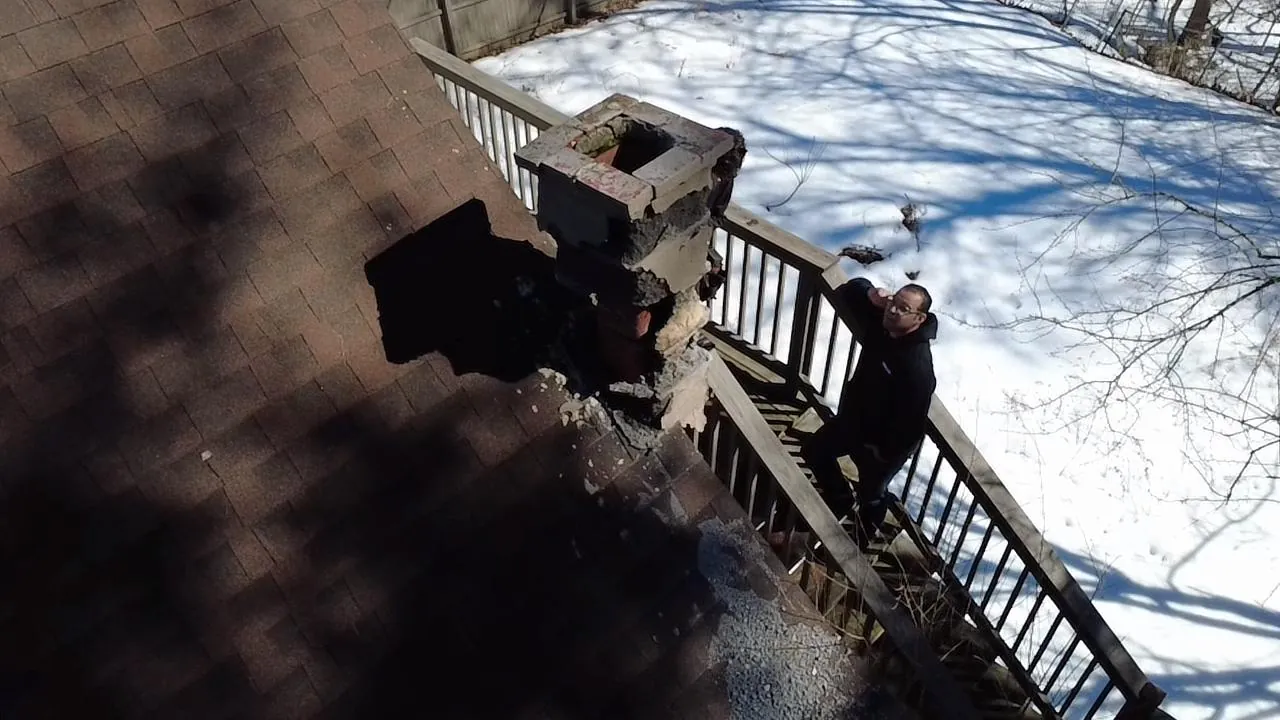
Leaks at the chimney are priced with chimney work. If the water shows near the chimney breast, start with why your chimney may be leaking, because flashing, the crown and the masonry each call for a different fix.
Material and access move the number too. Leaks on slate or cedar roofs, or on a steep third-story slope, tend to cost more than the same problem on a one-story asphalt roof, because of the care and the setup involved.
Stopgaps that help, and ones that backfire
Inside the house, the useful stopgaps are simple: catch the water, protect what sits below it, and keep air moving to dry things out. A box fan and a dehumidifier aimed at a wet ceiling or carpet do more good than anything you could attempt on the roof in the rain.
Outside, the classic mistake is a homeowner on a ladder with a tube of roof cement in wet weather. Sealant will not bond to wet shingles, the ladder footing is poor, and a blob of tar over the wrong spot can make the real source harder to find later. When water is pouring in, the right temporary cover is a tarp put on properly by someone with fall protection.
Do not poke or drill into a bulging ceiling yourself. Keep people out from under it, move what you can, and get a professional on the phone. If the stain keeps spreading, set a container below it anyway and keep the room clear.
Your leak, start to finish with A Class
- Make the callReach us on (203) 779-6787, or leave your details in the callback form, and tell us where the water shows, when it started and whether it is dripping at this moment.
- Free leak inspection, with photosWe trace the leak from inside and out and photograph the entry point, so you can see the problem rather than take it on trust.
- A price in writingYou get a written price for the permanent repair, plus temporary protection if the weather will not wait for it.
- Fix and clean upThe repair is made to the written scope with the work area protected, and old materials and debris are cleared away when we finish.
Write down the date, the weather, the wind direction if you know it, and whether it was rain or melting snow each time the leak shows. Three or four entries often point straight at the cause and shorten the inspection. Add a photo of the stain each time so you can see whether it is growing.
Prefer we call you?
Three quick taps and a real person from A Class Chimney calls you back to set up a free roof inspection.
- Free roof inspection and written estimate
- Photos of everything we find
- A written price before any work starts
- Licensed and insured in Connecticut
Sunday to Friday
What do you need?
When?
Where should we call you?
Free, no obligation. Privacy
Common roofing questions
Have us look at your roof
Free roof inspection, photos of what we find and a written price before any work. Licensed and insured in Connecticut.