
Free Roof Inspection in CT: What a Roofer Checks
A proper inspection looks at the shingles, flashing, vents, gutters and attic as one system, then shows you photos of what was found, good and bad.
Sunday to Friday
A roof inspection is a close look at the roof surface, the flashing at chimneys, walls and pipes, the gutters and the attic underneath, with photos of anything that needs attention. Book one after a major storm, before buying or selling a house, before adding solar panels, or once an asphalt roof passes about 15 years. A Class does the inspection and written estimate free of charge across Greater Hartford, Middlesex County and Greater New Haven.
When a roof inspection is worth booking
Most Connecticut roofs get no attention until water shows up on a ceiling. By then the cause has usually been working for a season or two, often at a flashing joint or a cracked pipe collar that a short visit would have caught in the fall.
A planned inspection earns its keep in three ways: it lets you fix a small problem before snow season, it lets you plan a replacement on your own schedule instead of during an emergency, and it keeps you from buying a house whose roof needs replacing the year you move in.
- After a nor’easter, a hurricane remnant or any wind that left limbs on the house or shingle pieces in the yard; see our storm damage repair page if you already see damage
- Before you buy a home, and before you list one
- Before solar panels, a new skylight or a dormer goes on, since those are costly to remove if the roof under them is near the end
- Every fall once an asphalt shingle roof is past roughly 15 years old
- When you notice ceiling stains, granules collecting at the downspouts, or thick ice along the eaves
- When you are holding a repair quote and a replacement quote and need a tiebreaker, which is exactly what our repair or replace guide walks through
What a roofer checks, outside and in
A thorough inspection covers six areas. Skipping any one of them is how leaks get blamed on the wrong part of the roof.
Shingles and the roof surface
Missing, cracked, curled or cupped shingles, bald patches where the granules have worn away, tabs that lift because the seal strip has let go, and nails backing out. On slate and cedar, the inspector looks for broken, slipped or split pieces.
Flashing
The metal where the roof meets a chimney, a sidewall, a dormer or a skylight is among the most common leak points on any house. Problems specific to the chimney are covered on our chimney flashing repair page.
Pipe collars and vents
The rubber collars around plumbing stacks dry out and split after years of sun and cold, sending water straight down the pipe. Ridge vents, box vents and exhaust hoods are checked for damage and for whether they actually move air.
Valleys and low spots
Valleys carry more water than any other part of the roof, and shallow sections over porches or additions drain slowly. Both get a close look for worn shingles, packed leaves and soft decking.
Gutters, downspouts and drip edge
Gutters that overflow or sag push water behind the fascia and into the roof edge. The amount of granules sitting in them is a practical clue to how much life the shingles have left.
The attic
From inside you see what the outside hides: stained sheathing, damp insulation, frost on nail tips in January, daylight at the ridge. It is also where attic ventilation problems show up first.
Repair or replace?
Five quick questions for a rule-of-thumb answer.
Drone photos versus walking the roof
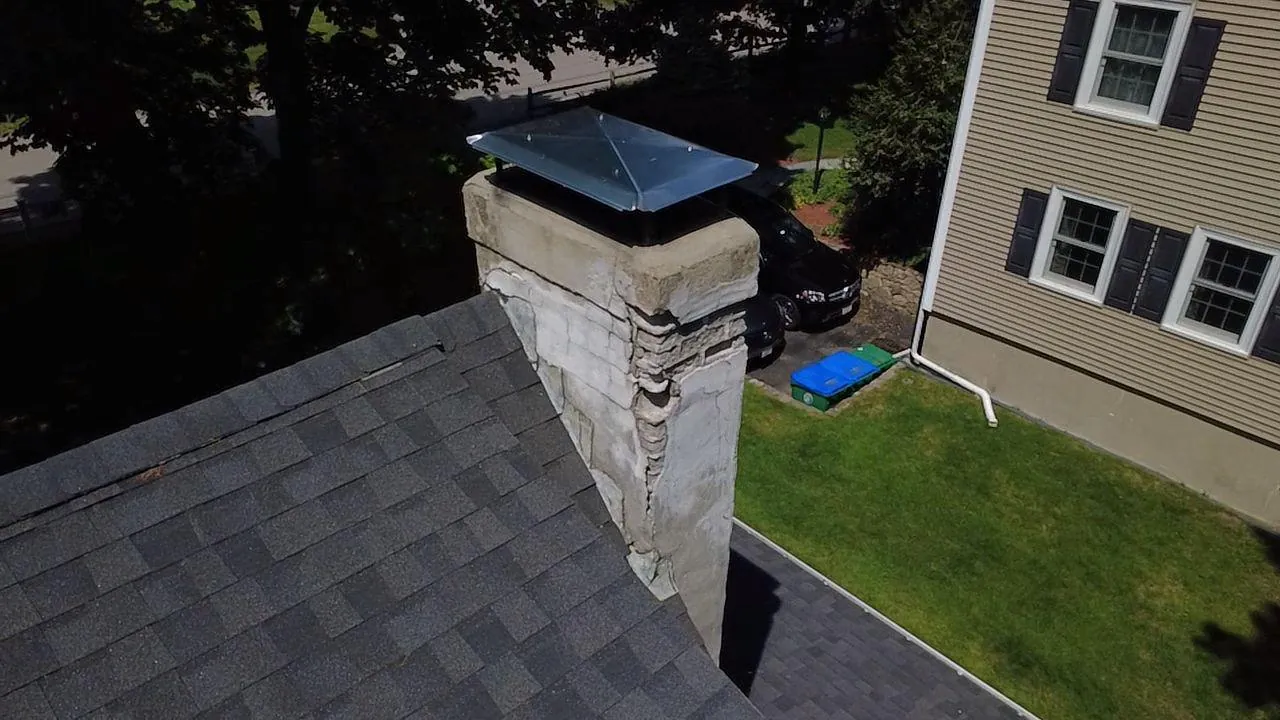
A drone photographs every slope without anyone stepping on it. That matters on steep colonial and Victorian roofs, on slate that can crack underfoot, and on wet or frosty mornings. It also gives you clear pictures of areas you could never see from the yard.
Walking the roof, where it is safe, finds what a camera cannot: a spongy patch of decking, shingles that lift by hand because they never sealed, a loose piece of step flashing. A good inspection uses both and then finishes in the attic.
Leave the climbing to people with harnesses and roof experience. From the ground, binoculars on a bright afternoon show a lot, and a flashlight in the attic the day after a hard rain shows even more.
Spring and fall: the two best inspection windows
A spring visit, once the snow is gone, catches what winter did: shingles lifted by nor’easter winds, flashing loosened by ice, gutters bent by the weight of ice along the eaves, and stains from ice dam leaks that only showed during a thaw. Repairs made in spring have the whole building season to get done.
A fall visit looks ahead. Leaves are cleared from valleys and gutters, vent collars and flashing are checked before freezing weather makes small gaps bigger, and the attic is checked for the ventilation that keeps ice dams down. If you can only manage one inspection a year, make it the fall one.
Roof inspection before buying a house
A general home inspector covers the whole house in one visit, and the roof portion is often done from the ground, a ladder or a drone. That is a useful screen. A roofer answers the narrower question buyers care about: roughly how many years remain, and what the next repair or replacement will cost.
Ask the seller how old the roof is and whether there are receipts. Your town’s building department may also have a permit on file from the last replacement, which gives you a starting date. Compare that age against typical roof lifespans by material.
Book the roofer early in your inspection period so a written estimate exists before the deadline passes. Negotiating from a written number is far easier than negotiating from a line that says the roof is near the end of its life. How a credit or repair is written into the purchase contract is a question for your agent and attorney.
Sellers can use the same visit before listing. Fixing a slipped flashing or a cracked vent collar ahead of time, with a receipt to show, leaves a buyer’s inspector less to question, and if the roof is due, you can choose between replacing it and pricing it into the asking figure.
What common findings usually mean
Most inspection findings fall into a handful of groups. Ballpark Connecticut ranges for 2026 are shown where a price applies; your exact figure comes in writing after we have seen the roof, at no charge. Streaks alone are covered in our guide to black streaks and moss.
| Finding | What it usually means | Typical next step (ballpark) |
|---|---|---|
| A few missing or cracked shingles, one split pipe collar | Local wear or wind damage on a roof with years left | Minor repair, $350–$1,500 |
| Soft decking, a worn valley, damage in several places | Water has been getting in for some time | Larger repair, $1,500–$4,000 |
| A ceiling stain traced to one entry point | A single leak, often at flashing or a vent | Leak repair, $400–$1,500 |
| Curling, cracking and bald patches across whole slopes | The shingles have reached the end of their service life | Replacement, $10,000–$25,000+ on a typical asphalt roof |
| Damp insulation, frost or mold on attic sheathing | Warm, moist air is trapped under the roof | Ventilation upgrade, $500–$2,000 |
| Dark streaks with no other damage | Algae growth, a cosmetic issue | No roof repair needed |
After big storms, crews from other states sometimes knock on doors offering free roof inspections. Before anyone goes up, ask for their Connecticut home improvement registration number and look it up with the state Department of Consumer Protection, and do not sign anything on the doorstep.
How A Class runs a roof inspection
Most inspections begin with a short conversation at (203) 779-6787, or a callback if you prefer, covering a few questions: the roof’s age if you know it, where you have seen stains or damage, and whether this is about a purchase, a storm or general peace of mind. Those answers tell the inspector where to spend the most time.
On site we fly the drone over every slope, go up where the pitch and weather make it safe, check flashing, vents and gutters, and look in the attic when there is access. You get the photos with a plain explanation of what they show, including the parts that are in good shape.
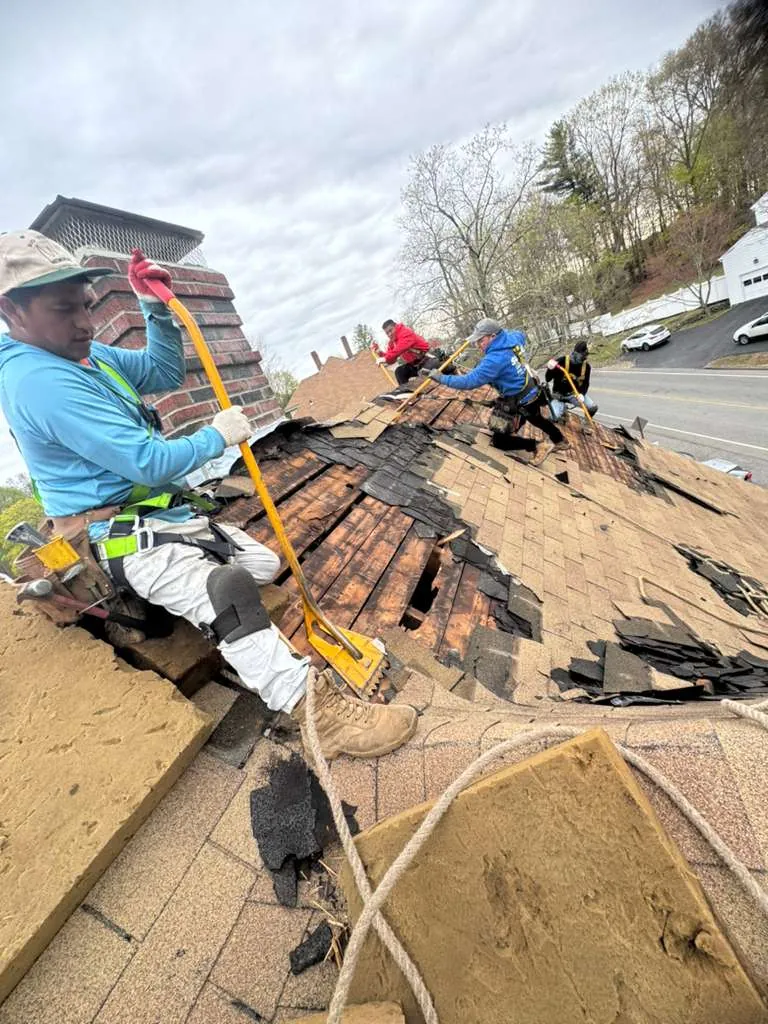
If something needs work, you receive a written price before anything is scheduled, and the visit and estimate cost nothing. When a job does go ahead, the crew covers plantings, protects the property and leaves the site clean.
Prefer we call you?
Three quick taps and a real person from A Class Chimney calls you back to set up a free roof inspection.
- Free roof inspection and written estimate
- Photos of everything we find
- A written price before any work starts
- Licensed and insured in Connecticut
Sunday to Friday
What do you need?
When?
Where should we call you?
Free, no obligation. Privacy
Common roofing questions
Related guides and services
Have us look at your roof
Free roof inspection, photos of what we find and a written price before any work. Licensed and insured in Connecticut.