
Skylight Repair, Replacement & Installation in CT
Skylights bring light into Connecticut homes through long gray winters. When one drips, the cause is usually flashing, a failed glass seal or condensation, and each has a different fix.
Sunday to Friday
Start by working out whether it is a true leak or condensation: drips only during rain or snowmelt point to flashing or seals, while drips on cold, dry days usually mean condensation. Skylight leak repair typically runs $400–$1,200, and replacing an older skylight with a new unit and flashing runs about $1,500–$4,000 per skylight as a ballpark.
Leak or condensation? How to tell
Skylights get blamed for plenty of water that is not a roof leak at all. Note when the dripping happens, because timing is the most useful clue you have.
| What you notice | Likely cause | Typical fix |
|---|---|---|
| Drips during rain, worst in wind-driven storms | Flashing failed, or was never a proper kit | Reflash, or replace the skylight with new flashing |
| Water during snowmelt or while ice builds up | Snow and ice backing up against the uphill side | Better flashing and ice and water membrane around the frame; check attic heat loss |
| Drips on cold, dry winter mornings | Moist indoor air condensing on cold glass | Lower indoor humidity, improve air movement, or upgrade the glass |
| Fog or moisture trapped between the panes | The insulated glass seal has failed | Replace the glass or the whole unit |
| Stains on the drywall shaft but no visible drip | A slow leak, or condensation inside the shaft | Inspect the flashing and the shaft insulation |
| Cracked glass, or a crazed and yellowed plastic dome | Impact or old age | Replace the unit |
Why skylights leak on Connecticut roofs
A skylight is a hole in the roof, and it depends entirely on the flashing around it. Many older skylights went in with roof cement and bent pieces of aluminum instead of a matched flashing kit, and those details tend to fail within one roof cycle. Wind-driven rain from a nor’easter tests the uphill side hardest, and snow piling against the frame in winter holds water there for weeks.
The skylight itself ages too. Seals between the glass panes fail and fog up, plastic domes turn brittle and cloudy, and gaskets on venting models dry out. A skylight installed along with the last roof is often near the end of its life just when that roof is.
Trees add their own trouble. Leaves and pine needles collect against the uphill side of a skylight, hold water against the flashing and rot the curb from outside, and a skylight under oaks or white pines usually needs its surroundings kept clear more often than one under open sky.
Water around a skylight can look a lot like any other roof leak, so confirming the source comes first. Our page on roof leak repair explains how water travels along rafters and decking before it shows up on a ceiling.
Roof problem checker
Tick what you have noticed and see what it usually means.
Repair, reflash, or replace?
If the skylight unit is in good shape and the leak is at the flashing, reflashing it with proper step flashing or a matched kit, plus ice and water membrane around the frame, is often enough. That kind of skylight leak repair usually falls in the $400–$1,200 range as a ballpark.
Replacement makes more sense when the glass is fogged, the dome is cracked or cloudy, the frame has rotted, or the roof around it is being replaced anyway. New flashing on an old skylight that will fail in a few years does not save money. A replacement skylight, installed with new flashing, typically runs $1,500–$4,000 per skylight as a ballpark.
If a new roof is coming, plan the skylights at the same time. Pulling and reflashing a skylight later means cutting into new shingles. Our page on roof replacement in Connecticut covers how that timing fits into a reroof.
Types of skylights worth knowing
The type you have shapes how it leaks and how it gets fixed.
Fixed
Does not open. The simplest design with the fewest parts to fail, and the most common type in older houses.
Venting
Opens by hand crank or motor to let out hot air and humidity, which helps in bathrooms and kitchens. More moving parts and gaskets to look after.
Curb-mounted
Sits on a raised wooden box built on the roof. Common on older installations and on flat and low-slope roofs, where the curb lifts the glass above standing water.
Deck-mounted
Fastens directly to the roof deck with a flashing kit that weaves into the shingles. A lower profile, and the usual choice on pitched roofs today.
Glass versus plastic
Most current skylights use insulated, low-E glass. Older plastic domes yellow, craze and lose heat, and they are a common reason for replacement.
Condensation: the winter drip that isn’t a leak
In a Connecticut January, a skylight is often the coldest surface in the house. Warm, moist air from showers, cooking and drying laundry condenses on the glass and frame, then runs down the shaft as if the roof were leaking. You will notice it most on cold, clear mornings with no rain anywhere in sight.
Running bath fans, keeping indoor humidity moderate, letting room air reach the skylight well, and insulating the shaft walls all help. If the skylight still has old single-pane glass or a plastic dome, an insulated glass unit keeps the inner surface warmer and far less likely to sweat. Poor attic ventilation can add to moisture trouble around the shaft as well.
On the next cold, dry morning when the skylight drips, wipe the glass and frame dry and tuck a folded paper towel along the bottom of the frame. If it is soaked again within a few hours with no rain or melting snow outside, you are looking at condensation, and the fix starts with indoor humidity rather than the roof.
Before you add a new skylight
Cutting a new opening is a bigger job than swapping an old unit, and it is priced after a free look at the roof and the room. These questions shape both the cost and whether it is a good idea.
- Is a rafter in the way? Cutting one means framing in a header to carry the load
- Which way does the slope face? South and west skylights add heat in summer
- Will snow drift against it, or does a chimney or dormer sit just above it?
- How long is the light shaft from roof to ceiling, and will it be insulated?
- Do you want it to open, a shade, or both?
- Is the roof due for replacement soon? If so, add the skylight then
- Does your town want a building permit for a new roof opening? The building department can tell you
From drip to dry: how A Class handles skylights
The goal of the first visit is a firm answer about where the water comes from, because that decides everything that follows.
- Call with the detailsPhone (203) 779-6787 or ask for a callback, and tell us when the dripping happens and roughly how old the skylight is.
- Inside and outWe look at the flashing, frame, glass and shaft, photograph the skylight from the roof, and sort out leak from condensation before recommending anything.
- A written recommendationYou get a written price to repair and reflash, replace, or add a new skylight, along with the reasoning behind it.
- Work and a clean roomThe crew protects the room below, completes the work and seals the roof around the skylight, and cleans up both inside and outside.
Prefer we call you?
Three quick taps and a real person from A Class Chimney calls you back to set up a free roof inspection.
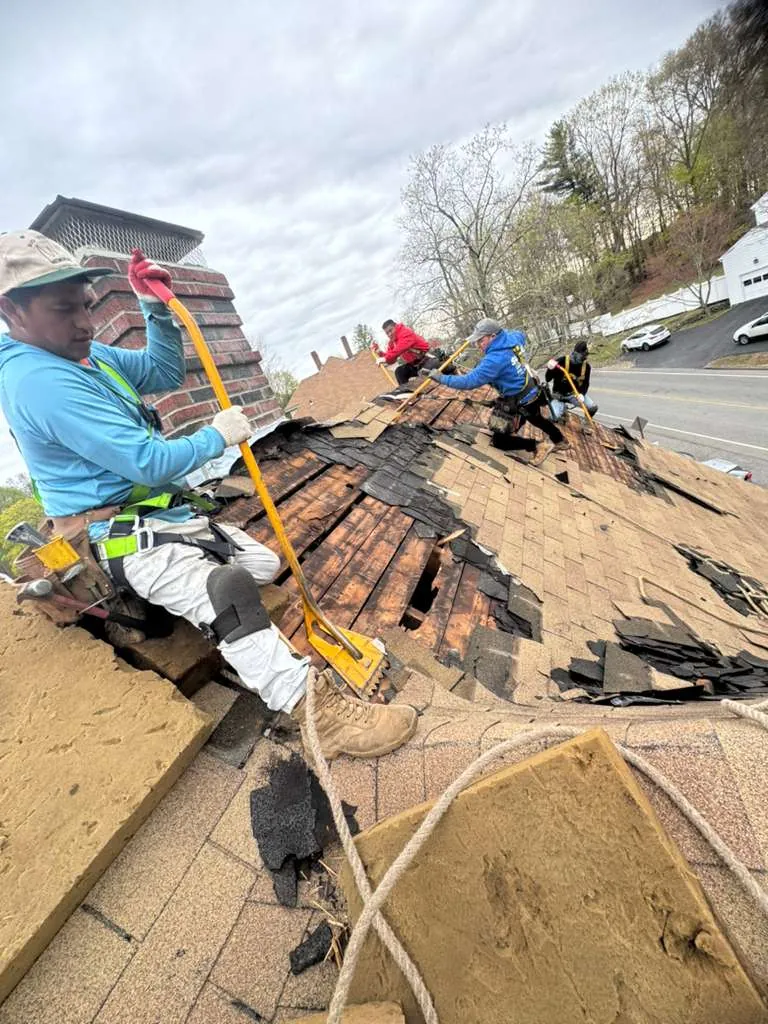
- Free roof inspection and written estimate
- Photos of everything we find
- A written price before any work starts
- Licensed and insured in Connecticut
Sunday to Friday
What do you need?
When?
Where should we call you?
Free, no obligation. Privacy
Common roofing questions
Have us look at your roof
Free roof inspection, photos of what we find and a written price before any work. Licensed and insured in Connecticut.