
Chimney Cricket (Saddle) Installation in CT
Water that pools behind a chimney eventually finds a way in. A cricket, also called a saddle, turns that flat pocket into a small ridge that sends water around both sides.
Sunday to Friday
A chimney cricket, or saddle, is a small peaked structure built on the uphill side of a chimney so rain, snow and debris flow around it instead of piling up against the back. It’s generally called for on chimneys wider than 30 inches that don’t sit at the roof ridge, and it often cures stubborn leaks at the back of the chimney. It’s framed and sheathed, covered with metal or roofing, and tied into the chimney flashing.
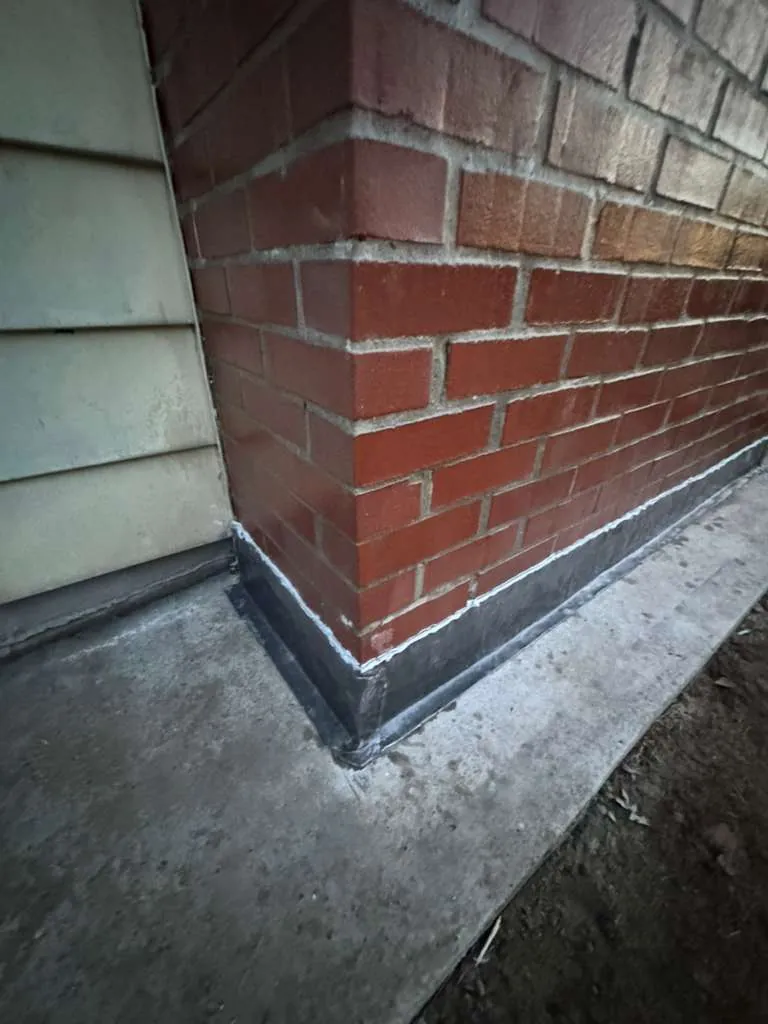
Why the back of a chimney leaks
A chimney in the middle of a sloped roof acts like a dam. Water running down the roof hits the uphill face of the chimney and has to turn sideways. On a narrow chimney it gets around quickly. On a wide one it slows, pools, and drops leaves and grit that hold moisture against the flashing.
Connecticut winters make it worse. Snow drifts against the back of the chimney, melts during the day and refreezes at night, and the ice works its way under flashing and shingles. A nor’easter then drives rain into the same corner.
If you see stains on a ceiling or on attic framing just downhill of the chimney, the back side is a prime suspect. Our guide to why chimneys leak covers the other possible sources so you can rule them out.
Signs your chimney could use a cricket
Leaks that return after flashing work
If the flashing has been redone and the back still leaks, the problem may be how much water sits there, not the metal itself.
A wide chimney mid-slope
Chimneys wider than about 30 inches across the slope that don’t reach the ridge are the classic candidates.
Debris collecting behind it
Leaves, pine needles and shingle grit gathering in the uphill corner show that water is slowing down there.
Lingering snow and ice
Snow that drifts behind the chimney and stays long after the rest of the roof has cleared.
Soft decking near the chimney
Stained or spongy roof boards on the uphill side, visible from the attic with a flashlight.
A new roof on the way
The easiest time to add a cricket is when the roof is open anyway.
Leak locator
Pick where the water shows up to see the likely sources.
What the code says, in plain terms
The International Residential Code, which Connecticut’s building code is based on, calls for a cricket when a chimney is more than 30 inches wide measured parallel to the ridge and doesn’t intersect the ridge. The cricket is flashed like the rest of the chimney and covered with sheet metal or the same material as the roof.
Plenty of older Connecticut homes were built before that rule, or had the cricket left off, so a wide chimney without one is not unusual. That doesn’t mean one must be added tomorrow, but if the back of the chimney leaks, a cricket is usually the repair that deals with the cause instead of the symptom.
Your local building official has the final say on code questions for a specific project. Our Connecticut chimney codes guide explains how the different rules fit together.
Does your chimney need a cricket?
Where the chimney sits on the roof and how wide it is decide most cases. Measure the width from the ground or from a photo; there’s no need to go up.
| Chimney situation | Cricket? | Why |
|---|---|---|
| Straddles the ridge | Not needed | Water already flows away on both sides. |
| Mid-slope, 30 inches wide or less | Usually not | Water gets around a narrow chimney quickly; well-installed flashing does the job. |
| Mid-slope, wider than 30 inches | Yes, generally | Water and snow pool against the back; this is the case the code addresses. |
| Narrow, but leaks at the back anyway | Worth considering | Heavy snow, low roof pitch or valleys feeding the area can justify one. |
| Wide chimney with a new roof planned | Strongly recommended | Adding it now costs less than opening a new roof later. |
How a cricket is built
- Open the roof behind the chimneyShingles and old flashing come off the uphill side, and the decking is checked and replaced where it’s soft.
- Frame the cricketA small triangular frame is built against the back of the chimney, with a center ridge that splits water to either side.
- Sheathe and underlayPlywood goes over the frame, followed by a self-adhering waterproof underlayment that laps up onto the chimney and out onto the roof.
- Cover with metal or roofingSheet metal is common for its durability and clean valleys; some crickets are shingled to match the roof.
- Flash it into the chimneyStep flashing and counter flashing tie the cricket and the roof into the masonry, with the counter flashing set into the mortar joints.
- Weave the roof back inShingles are worked back around the cricket and the valleys on each side are finished so water flows past the chimney.
Cricket, flashing, or both?
Flashing seals the joint between the chimney and the roof. A cricket reduces how much water reaches that joint in the first place. On a narrow chimney, good flashing alone is usually enough. On a wide chimney with a leak at the back, new flashing without a cricket can hold for a while, then fail again under the same pooling water and ice.
We don’t publish a ballpark for crickets on their own, because the job depends on chimney width, roof pitch and roofing material. For reference, flashing repair or replacement typically runs $400–$1,500 in Connecticut as a 2026 ballpark, and a cricket adds framing and roofing on top of that. You’ll get a firm written number after the $59 on-site inspection. Our flashing and leak repair page covers the flashing side in detail.
Planning a new roof? Ask for the cricket and chimney flashing to be done at the same time. Building it into a new roof is simpler than cutting into fresh shingles later, and the chimney top can be checked while everything is open. Our roofing and water protection page explains how the chimney and roof work together.
How A Class plans and installs a cricket
It starts with finding where the water really gets in. Call (203) 779-6787 or ask for a callback, and if you can, note where inside the house the stain or drip shows up. On the $59 inspection visit we look at the chimney from the attic and the roof, and photograph the back of the chimney; a drone shot often shows the pooling pattern clearly.
If a cricket is the right fix, your written price covers the framing, the metal or roofing, and new flashing, along with the photos that show why it’s needed. We protect the plantings below and clean up roofing debris when the job is complete. If the crown or masonry is also letting water in, we’ll tell you, so you’re not fixing only half the leak.
Prefer we call you?
Three quick taps and a real person from A Class Chimney calls you back to set up a $59 on-site inspection.
- $59 on-site visit and written estimate
- Photos of everything we find
- A written price before any work starts
- Licensed and insured in Connecticut
Sunday to Friday
What do you need?
When?
Where should we call you?
Free, no obligation. Privacy
Common questions
Have us take a look
$59 on-site visit, photos of what we find and a written price before any work. Licensed and insured in Connecticut.