
Roof Replacement Cost in CT: 2026 Prices by Material
Ballpark 2026 ranges for replacing the roof on a Connecticut home, the line items that push a quote up or down, and how to read two estimates side by side.
Sunday to Friday
For an asphalt shingle roof on a typical Connecticut house, plan on roughly $10,000–$25,000+ (2026 ballpark); metal, cedar and slate sit well above that. Roof size, pitch, the number of old layers, rotted decking and flashing details decide where in that range you land. Your exact figure is written up after a free inspection of the roof.
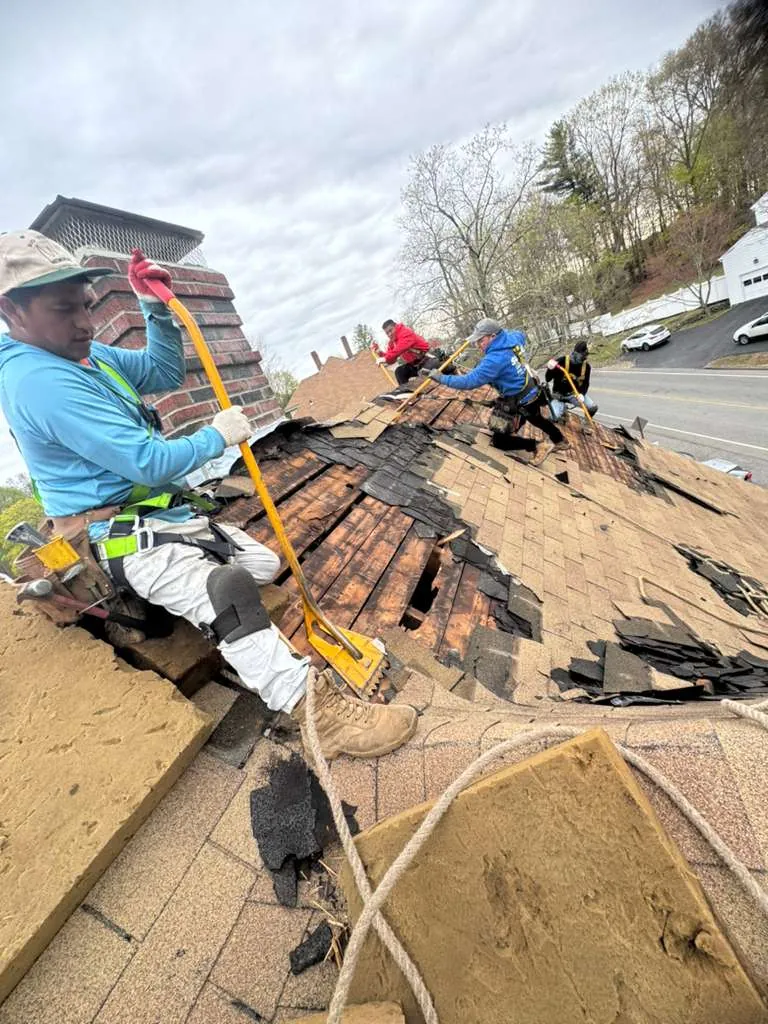
Roof replacement cost in CT by roof type (2026 ballpark)
These ranges cover replacing the whole roof on a typical Connecticut house, not an overlay or a partial job. Treat them as planning numbers. The figure you can actually budget on comes in writing after a free visit, once the roof has been measured and photographed.
| Roof type | Ballpark, whole roof | Typical lifespan | Where it usually makes sense |
|---|---|---|---|
| Asphalt shingles (3-tab or architectural) | $10,000–$25,000+ | 15–20 yrs (3-tab), 20–30 yrs (architectural) | Typical suburban colonials, capes and raised ranches |
| Flat / low-slope (EPDM or TPO) | $5,000–$15,000+ | EPDM 20–30 yrs, TPO 15–25 yrs | Porch roofs, rear additions, dormers, multi-family tops |
| Metal | $20,000–$45,000+ | 40–70 yrs | Owners staying long term; roofs that collect heavy snow |
| Cedar shake | $20,000–$40,000+ | 20–40 yrs | Shingle-style and historic houses |
| Slate, full replacement | $35,000–$75,000+ | 75–100+ yrs | Historic homes where the slate itself has truly failed |
Six things that move a reroof quote
Two houses with the same footprint can land at opposite ends of the asphalt range. These are the reasons, roughly in order of how much they matter.
Size and complexity
Roofers measure in squares of 100 square feet, but the shape matters as much as the area. A plain gable ranch goes quickly. A cape with shed dormers, or a colonial with hips, valleys and a porch roof, means far more cutting, flashing and waste.
Pitch and height
A steep Victorian or a three-story house needs roof jacks, harnesses and sometimes staging, and every bundle has to be carried higher. Steep slopes are slower to work safely, and labor is the largest share of a reroof.
Layers coming off
Codes generally cap an asphalt roof at two layers of shingles. If your house already has two, both have to be stripped, which adds labor and disposal weight. A single old layer is the simplest starting point.
Decking under the shingles
Rot from past ice dams, soft plywood near the eaves, or the gapped plank boards common on pre-war houses only become fully visible once the shingles are off. That is why the decking line in an estimate deserves a close read.
Flashing and penetrations
Chimneys, skylights, plumbing vents and every wall where a roof meets siding need new flashing. A wide masonry chimney may also need a cricket behind it; our chimney flashing page covers those details.
Ventilation and ice barrier
Building codes for cold regions call for an ice and water membrane along the eaves, while many older attics are short on airflow. Improving attic ventilation on its own is a ballpark $500–$2,000, and it fits most naturally into a reroof.
Roofing price check
Typical Connecticut ranges for common roofing jobs.
Architectural or 3-tab: where the difference goes
Most of the asphalt range is driven by the house, not the shingle. The shingle still matters. Three-tab shingles are flat, single-layer and typically last 15–20 years. Architectural, or dimensional, shingles are laminated and heavier, typically last 20–30 years, and hold up better to the gusts that come with nor’easters.
On most Connecticut reroofs the price gap between the two is small next to the extra years, which is why architectural shingles are now the usual choice. Three-tab can still make sense on a detached garage or a house you plan to sell soon. Our asphalt shingle guide sets the two side by side.
The plus sign on $10,000–$25,000+ is there for a reason. Large colonials, steep roofs with several gables, two layers of old shingles and extensive deck repair can push a job past the top of the range.
How to compare two roof replacement quotes
A lower number is only cheaper if it buys the same roof. Put the quotes side by side and check that each one answers these points in writing. If one quote is silent on an item, ask rather than assume.
- Full tear-off or an overlay, and how many existing layers are coming off
- Which shingle line and type, architectural or 3-tab, and the color
- Where the ice and water membrane goes: eaves only, or also valleys and around the chimney and skylights
- What underlayment covers the rest of the deck
- New drip edge, step flashing and pipe boots, or reused old metal
- Ventilation: a ridge vent, and enough intake at the soffits to feed it
- How replacement decking will be priced if the tear-off reveals rot
- Whether gutters, skylights or chimney flashing are included or listed separately
- Protection for landscaping and the driveway, and clean-up at the end
Ways to keep the bill down without cutting corners
The cheapest roof is the one replaced before water reaches the decking. A roof that has leaked through a few winters often needs whole sheets of plywood replaced, and on a big colonial that line adds up quickly.
Choose the shingle on its merits rather than its marketing. A standard architectural line handles Connecticut weather well; designer shingles that imitate slate or shakes cost more and are worth it mainly if the look matters to you.
Keep what is still sound. Gutters in good shape can often come down and go back up, and a skylight with years left in it can be re-flashed instead of replaced. Where you should not economize is in the parts you never see after the job: ice barrier, flashing and ventilation decide whether the roof reaches its full lifespan or fails early at the edges.
Insurance, timing and whether to replace at all
Homeowners insurance generally does not pay to replace a roof that has simply worn out. Sudden damage is a different matter: wind, hail and fallen trees are often covered, but your insurer and its adjuster decide what gets paid. If a storm is the reason you are pricing a roof, read how roof insurance claims work in CT before signing anything.
Season affects scheduling more than price. Asphalt shingles seal down best with some warmth, so the stretch from late spring into early fall is the most forgiving window, and fall calendars tend to fill as people try to finish before snow. Pricing a roof a season ahead gives you time to compare quotes calmly.
If the roof still has years left and the trouble is confined to one area, a repair may be the smarter spend. If you are weighing the two, our repair-or-replace guide sets out clear criteria.
How A Class prices and replaces your roof
- Start with a callRing (203) 779-6787, or leave your number for a callback, and let us know the roof’s rough age and what made you start looking. A rough idea of the house size helps.
- Free inspection, photographedWe look the roof over with drone and on-roof photos, count the layers, check the flashing and, where there is access, look in the attic for stains, daylight and ventilation.
- An itemized written priceYou get the price in writing with the material, layers, membrane, flashing and ventilation spelled out, plus how any decking would be handled. Nothing is scheduled until you decide.
- Tear-off and new roofThe old roofing comes off, the deck is checked and repaired as agreed, and the new roof goes on in the order the written scope describes.
- Clean-upTarps protect plantings during the work, and the yard and driveway are cleared of roofing debris before the crew leaves.
A frequent surprise on Connecticut reroofs is rotten wood under old shingles, especially at the eaves of houses that have had ice dams. A quote that states how replacement decking is priced protects you from a vague change order halfway through the job.
Prefer we call you?
Three quick taps and a real person from A Class Chimney calls you back to set up a free roof inspection.
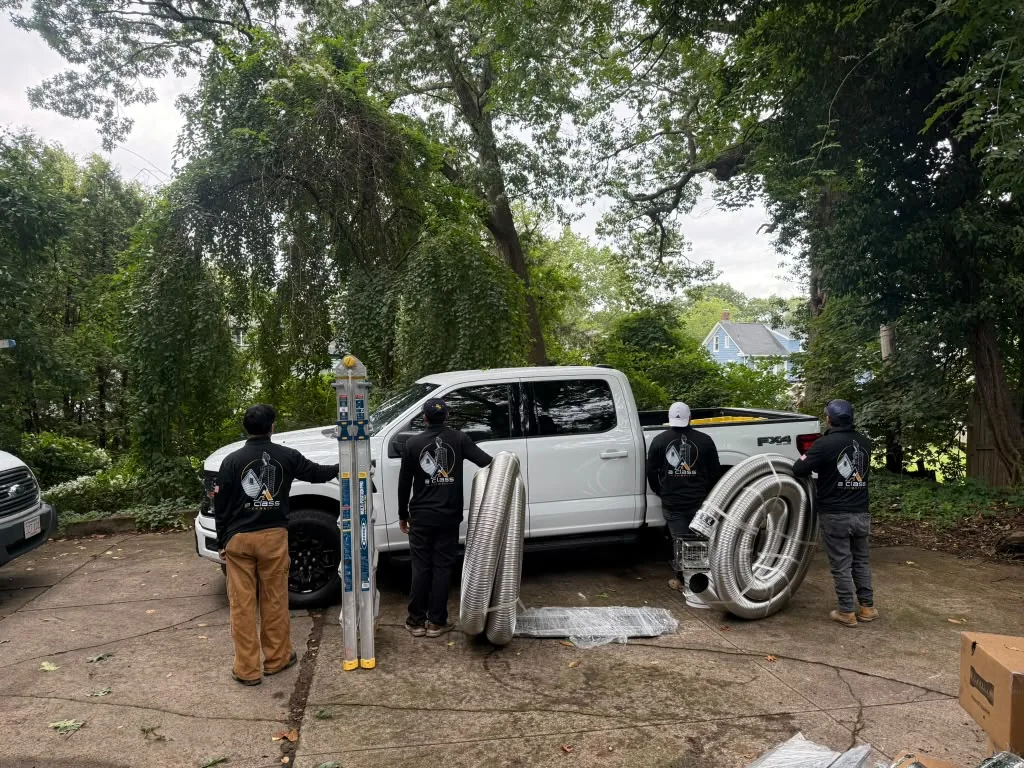
- Free roof inspection and written estimate
- Photos of everything we find
- A written price before any work starts
- Licensed and insured in Connecticut
Sunday to Friday
What do you need?
When?
Where should we call you?
Free, no obligation. Privacy
Common roofing questions
Have us look at your roof
Free roof inspection, photos of what we find and a written price before any work. Licensed and insured in Connecticut.