Oil Furnace & Boiler Chimney Service in CT
Your heating technician takes care of the burner. The chimney that carries its exhaust needs its own attention, and in Connecticut, where oil heat is common, it often gets overlooked.
Sunday to Friday
An oil furnace or boiler chimney should be inspected every year and cleaned when soot and scale build up, because oil exhaust is acidic and slowly eats away at clay tile and mortar. Debris collecting at the base of the flue can block venting and push carbon monoxide back into the house. A cleaning with a Level 1 inspection runs about $150–$350 as a ballpark.
Why oil heat is hard on a chimney
Oil combustion leaves soot, and the exhaust carries sulfur compounds and water vapor. When that exhaust cools inside the flue, some of the vapor condenses into a weak acid. Year after year, the acid softens mortar joints and the glazed face of clay flue tiles, which begin to flake and break down.
Newer, more efficient oil boilers and furnaces can make this worse in an old chimney. They send cooler exhaust up the flue, so more of it condenses, especially in a large masonry flue originally sized for an older, hotter-running unit, or in a chimney on an outside wall that stays cold all winter.
The flakes of soot and deteriorated tile, usually called scale, drop to the bottom of the flue. Over the years they pile up at the base, below the point where the smoke pipe enters the chimney, and can grow until they partly block the opening the exhaust needs.
In many Connecticut basements the oil boiler and the water heater vent into the same flue. That setup can work when the flue is sized for both and a heating technician has set it up correctly, but it also means a clogged base or a failing liner affects two appliances at once.
Warning signs, and who to call for each
An oil heating system has two halves: the appliance and the chimney. Knowing which half a symptom points to saves you a wasted visit.
| What you notice | What it may mean | Who should look at it |
|---|---|---|
| Flakes, soot or tile pieces at the chimney cleanout door | Scale building up at the base of the flue | Chimney technician |
| White staining or crumbling brick near the top of the chimney | Acidic condensation working into the masonry | Chimney technician |
| A rusted or corroded chimney cap | Acidic exhaust attacking the metal | Chimney technician |
| Soot around the smoke pipe or barometric damper | The burner or draft may not be set correctly | Heating technician first, then a flue check |
| Puffback: soot blown into the basement or living areas | A burner misfire, sometimes with a partly blocked flue | Heating technician, plus a chimney inspection before relying on the system |
| CO alarm sounds | Exhaust may be entering the living space | Leave the house and call 911 |
Chimney symptom checker
Tick what you have noticed and see what it usually means.
Our part of the job, and your heating tech’s part
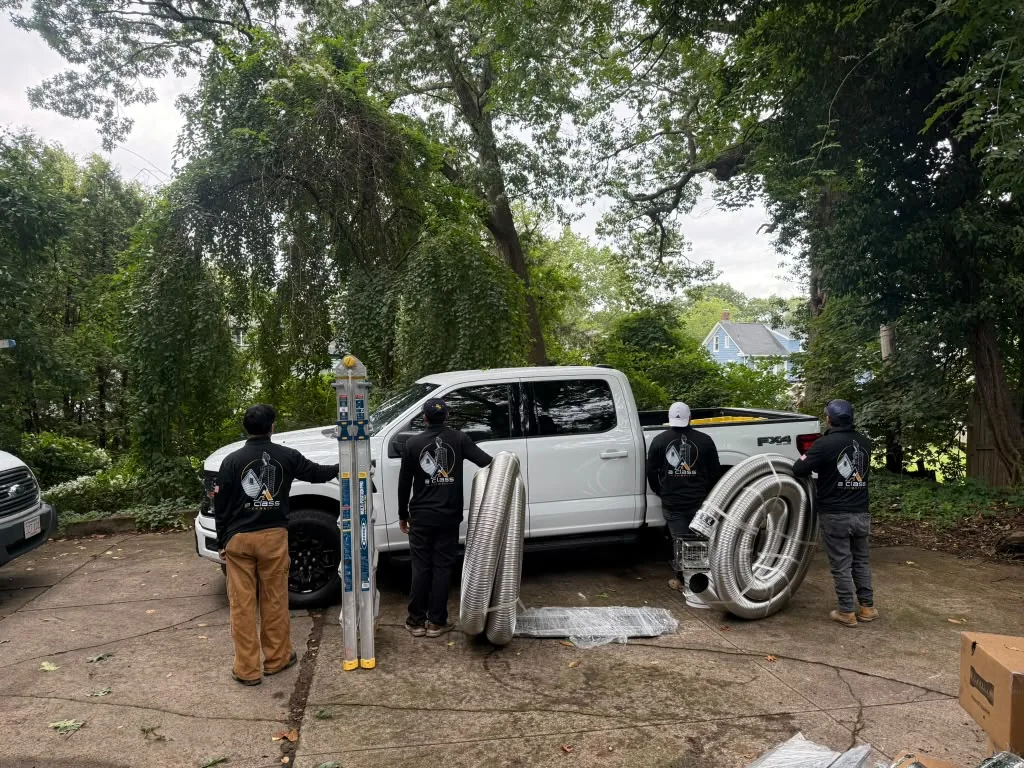
A Class works on the chimney side only. We inspect and clean the flue, clear scale from the base, check the cap, crown and masonry, and install stainless-steel liners when the old flue is no longer sound. We do not repair, tune or replace oil burners, furnaces or boilers.
Your licensed heating technician handles the appliance: the burner, the combustion test and the draft settings. If you already book a yearly tune-up for the burner, have the chimney looked at around the same time, so that whatever one side finds, the other can follow up before the heating season is in full swing.
When an oil flue needs relining
A clay-tile flue that has cracked, lost pieces of tile or shed enough scale to clog the base keeps getting worse, and cleaning only buys time. The usual fix is a stainless-steel liner run from the top of the chimney down to the smoke pipe connection and sized to the appliance it serves. It gives the exhaust a smooth, correctly sized, corrosion-resistant path and keeps the acid off the masonry. Our page on chimney liner and flue repair shows how the work is done.
Relining also deserves a conversation whenever the heating system changes. NFPA 211 recommends a Level 2 inspection when you change the appliance or the fuel, because a new boiler, or a switch from oil to gas, may need a different flue size than the one you have now.
- Stainless-steel relining: about $1,500–$4,000+ as a ballpark; see the chimney liner cost guide for what moves the price
- Level 2 inspection when the appliance or fuel changes: about $250–$500 as a ballpark
- Exact prices are set in writing after the $59 on-site inspection
If you are converting away from oil
When you switch from oil to gas, propane or a heat pump, the new system may vent into the old chimney through a new liner, out through a sidewall with its own vent pipe, or not need a flue at all. Your heating contractor decides that based on the appliance and its installation instructions. If the new unit will use the chimney, the flue should be inspected and usually relined before it goes into service.
If nothing will vent into the chimney anymore, don’t leave the old flue open to the weather. Cap it so rain and animals stay out, then decide whether to keep, seal or take down the chimney. Our guide on what to do with an unused chimney lays out the options.
Before each heating season
A short list to work through in September or October, before the boiler is running every day.
- Book the burner tune-up with your heating technician
- Have the chimney flue inspected, and cleaned if scale has built up at the base
- Look at the chimney top from the ground: is the cap there, straight and free of heavy rust?
- Check for white stains on the brick or loose bricks near the top, especially on the side facing the weather
- Keep the area around the boiler and the chimney cleanout clear of stored boxes
- Make sure the cleanout door is closed tight; an open one can upset the draft
- Test the CO and smoke alarms, and replace batteries or any alarm past its replacement date
Booking an oil chimney inspection with A Class
The steps are the same whether you have spotted a warning sign or are simply catching up on maintenance.
- A quick callCall (203) 779-6787 and tell us the type and rough age of your heating system, if you know it, and whether a water heater shares the chimney.
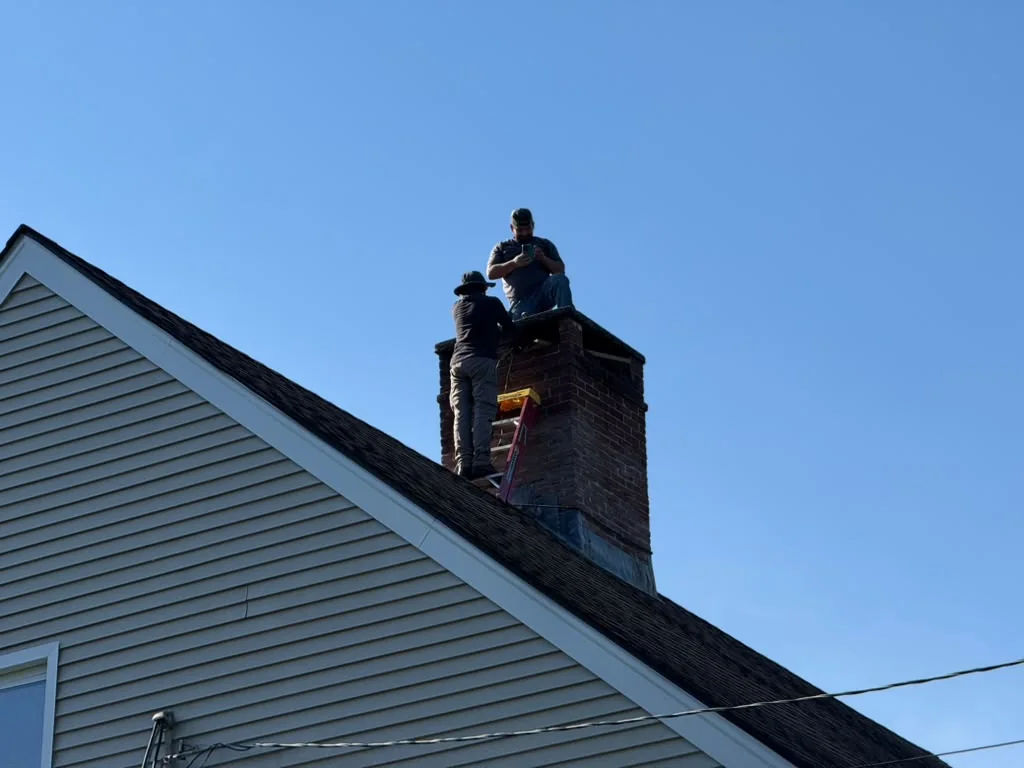
- $59 on-site inspectionWe check the flue with a camera, look at the base through the cleanout, and photograph the chimney top, using a drone when the roof is hard to see.
- Photos and findingsYou get photos of the flue walls, the base and the top, with a plain explanation of what we found and anything your heating technician should see.
- Written priceCleaning, relining or masonry repair is priced in writing before any work begins.
- Clean workDrop cloths go down around the boiler area and the cleanout, and the basement is left the way we found it.
Prefer we call you?
Three quick taps and a real person from A Class Chimney calls you back to set up a $59 on-site inspection.
- $59 on-site visit and written estimate
- Photos of everything we find
- A written price before any work starts
- Licensed and insured in Connecticut
Sunday to Friday
What do you need?
When?
Where should we call you?
Free, no obligation. Privacy
Common questions
Have us take a look
$59 on-site visit, photos of what we find and a written price before any work. Licensed and insured in Connecticut.