Chimney Liner Types: Stainless, Clay or Cast-in-Place?
The liner is the part of the chimney that actually contains the heat and exhaust. Which type you need depends on your appliance, your fuel, and the shape your flue is in now.
Sunday to Friday
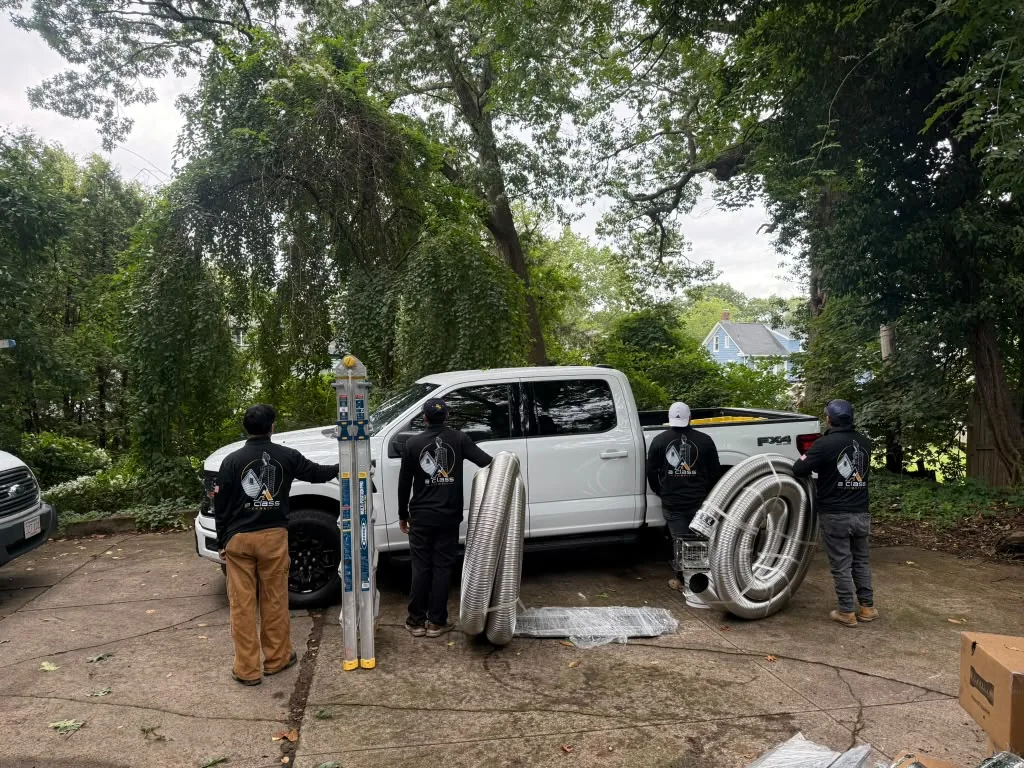
The main chimney liner types are clay tile, stainless steel, cast-in-place masonry, and resurfacing systems that repair an existing clay liner. Stainless steel is the most common choice for relining an existing chimney because it can be sized to the appliance and works with wood, oil and gas. Clay tile is standard in new masonry construction but very hard to replace once the chimney is built.
What a liner does, and how it fails
A chimney liner is the inner wall of the flue. It keeps heat away from the surrounding brick and wood framing, contains corrosive exhaust, and gives smoke a smooth, correctly sized path to rise through. Without a sound liner, a chimney can leak heat toward the framing and exhaust toward the living space.
Liners fail in different ways. Clay tiles crack under sudden heat, such as a chimney fire, and the mortar between tiles erodes. Acidic condensation from oil and gas appliances eats at joints and tiles over the years. And in many older Connecticut homes, the flue was never lined in the first place.
The five liner types you’ll hear about
Clay tile
Square or rectangular terra-cotta sections stacked and mortared as the chimney is built. Durable and inexpensive in new construction, but brittle under sudden heat.
Stainless steel
Rigid or flexible stainless pipe run down the existing flue and connected at the top and bottom. The standard relining choice for stoves, inserts, oil and gas.
Cast-in-place
A cement-based mix formed inside the flue to create a new inner shell. It can add strength to a deteriorated chimney but is a specialty process we don’t install.
Resurfacing (HeatShield)
A heat-resistant coating applied inside an existing clay liner to fill gaps, missing mortar and cracks. Suited to liners that are mostly intact.
Aluminum
Lightweight liner used only with certain gas appliances where the manufacturer allows it. Not suitable for wood, oil or high-temperature use.
Ballpark price check
Typical Connecticut ranges for common chimney jobs.
Matching the liner to what the flue serves
The appliance and fuel drive the choice more than anything else. This is how it typically shakes out.
| Your situation | Usual liner choice | Why |
|---|---|---|
| Open wood fireplace, clay liner with gaps or small cracks | HeatShield resurfacing | Restores a sealed, smooth flue without replacing the tiles. |
| Open wood fireplace, broken or missing tiles | Stainless liner sized for the fireplace opening | Replaces the failed lining with one continuous liner. |
| Wood stove or fireplace insert | Stainless liner, often insulated, sized to the appliance outlet | Keeps draft strong and makes the flue easy to sweep. See wood stove chimney service. |
| Oil boiler or furnace | Stainless liner rated for oil | Oil exhaust is acidic and sooty; a correctly sized liner drafts better. More on oil heat flues. |
| Gas furnace or water heater | Stainless, or the liner type the appliance manufacturer specifies | Gas exhaust carries lots of water vapor that breaks down clay and mortar. |
| Unlined historic chimney | Stainless liner in most cases | Fits irregular old flues without rebuilding the chimney. |
Stainless steel: what to ask about
Because stainless is what most relining jobs in Connecticut use, it’s worth knowing the details that separate a good installation from a poor one.
- Size: the diameter should match what the appliance needs, not just what fits. An oversized flue drafts poorly and collects creosote or condensation.
- Grade: stainless comes in different alloys, and the right one depends on the fuel. Ask which grade is going in and why.
- Insulation: many stove and insert installations call for an insulated liner, which keeps the flue warmer and helps with clearance to combustibles.
- Top and bottom: a proper top plate and cap at the crown, and a sealed connection at the appliance or smoke chamber, matter as much as the pipe itself.
- Rigid or flexible: rigid pipe has a smoother interior; flexible pipe gets around the offsets common in older chimneys. Both are widely used.
Clay tile and cast-in-place, briefly
Clay tile is durable and inexpensive when a chimney is being built, and most masonry chimneys from the last several decades have it. Its weakness is heat shock: a chimney fire can crack tiles in minutes, which is one reason we cover what causes chimney fires in detail.
Once clay tiles are cracked, they can’t practically be pulled out and replaced without taking the chimney apart. That’s why a damaged clay liner is usually resurfaced or relined with stainless rather than replaced with new clay.
Cast-in-place liners are formed inside the flue from a mortar-type mix. They suit some deteriorated or irregular chimneys, but the process is specialized and isn’t one we offer. If your chimney looks like a candidate, we’ll show you what we found so you can get specialist quotes.
Signs your liner may need attention
You can’t see a liner from the room, but a failing one usually leaves clues. Any of these is a good reason for a camera inspection before the next heating season.
- Pieces of clay tile, flakes or crumbled mortar collecting in the firebox, smoke shelf or cleanout
- A recent chimney fire, or loud popping and a roaring sound from the flue during a past fire
- A new stove, insert, boiler or water heater connected to an old flue
- Smoke or exhaust smells in rooms next to the chimney
- Water stains, white crust or rust inside the fireplace or at the base of the flue
- A chimney built before liners were standard, with no record of relining
What relining costs
Relining with stainless steel runs about $1,500–$4,000+ in Connecticut as a 2026 ballpark. Flue height, diameter, insulation, and whether the smoke chamber or crown needs work at the same time move the number within that range.
Resurfacing an existing clay liner is priced once a camera inspection shows how many joints and cracks need attention. In both cases the number you can rely on is the written one we give you after the $59 on-site visit. Our chimney liner cost guide goes into more detail, and our liner and flue repair page explains the service itself.
How A Class helps you choose a liner
- Tell us what the flue servesFireplace, stove, insert, oil boiler, gas water heater, or nothing at all. The liner decision starts there.
- Camera look insideOn the $59 inspection visit we run a camera down the flue to see the tiles, joints and gaps, and photograph the top of the chimney.
- Options in plain termsUsing your photos, we explain whether resurfacing will do or a stainless liner is needed, and why.
- A price on paper firstYou get the price in writing before any work. Call (203) 779-6787 if you’d like to talk it through before deciding.
- InstallationThe liner is installed and connected top and bottom, the cap goes on, and the work area is cleaned up.
Prefer we call you?
Three quick taps and a real person from A Class Chimney calls you back to set up a $59 on-site inspection.
- $59 on-site visit and written estimate
- Photos of everything we find
- A written price before any work starts
- Licensed and insured in Connecticut
Sunday to Friday
What do you need?
When?
Where should we call you?
Free, no obligation. Privacy
Common questions
Have us take a look
$59 on-site visit, photos of what we find and a written price before any work. Licensed and insured in Connecticut.