
Chimney Removal in Connecticut: Options & Process
Taking an unused chimney down below the roofline can end leaks and repair bills for good. Here is how to decide, what the work involves, and what it typically costs in Connecticut.
Sunday to Friday
Most chimney removals in Connecticut take the stack down below the roof deck, close the opening and patch the roof, leaving the lower masonry inside the house. The ballpark cost is $1,500–$5,000+ including the roof patch. It only makes sense when no furnace, boiler, water heater or fireplace still needs that chimney.
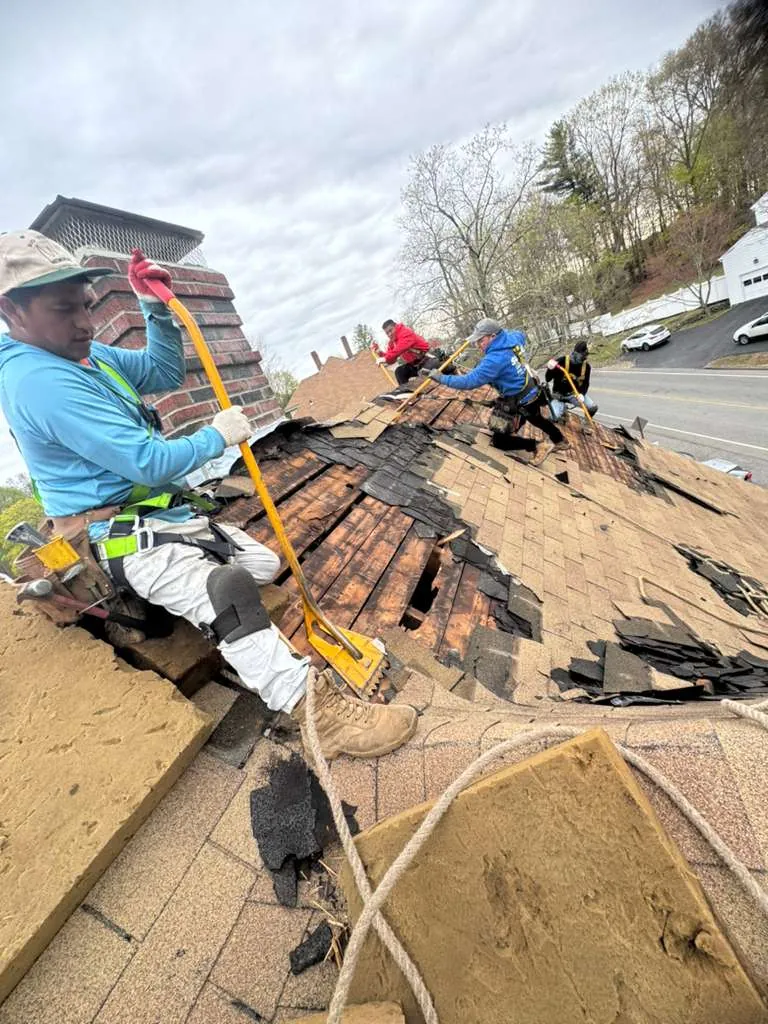
When taking a chimney down makes sense
A chimney that nothing vents through anymore still has to be maintained. It catches wind-driven rain, it needs a crown and flashing that stay tight, and every Connecticut winter it goes through freeze–thaw cycles that slowly push brick and mortar apart. If you have switched to a heat pump or a sidewall-vented boiler and never light the fireplace, that upkeep buys you nothing.
Removal is usually worth pricing when the part above the roof needs major work anyway: a crown that has broken up, bricks spalling on several faces, a top that has started to lean, or flashing that has leaked more than once. At that point you are really comparing a rebuild against taking the stack down and closing the roof.
- No appliance vents through any flue in the chimney, and none will in the near future
- The fireplace is unused, or you are willing to give it up
- The stack above the roof needs a partial rebuild or keeps needing leak repairs
- The chimney is not a feature you want to keep for the look of the house
Remove it, repair it, or close it off
All four figures are 2026 Connecticut ballparks, and the exact price is set in writing after the $59 on-site inspection. If you are still undecided about keeping the chimney at all, our guide on what to do with an unused chimney covers the lower-cost ways to close one up.
| Option | What it involves | Ballpark cost | Best when |
|---|---|---|---|
| Remove above the roof | Stack taken down below the roof deck, opening framed and decked, roof patched | $1,500–$5,000+ | The chimney is unused and the top needs major work |
| Partial rebuild | Masonry above the roofline rebuilt on the existing base, with a new crown | $3,000–$8,000 | You still use the chimney or want to keep its look |
| Cap it and keep it | Stainless cap installed so rain and animals stay out of the flue | $150–$600 | The masonry is sound and you just want it closed up |
| Crown repair only | Cracked crown repaired or sealed so water stops entering from the top | $200–$1,200 | The damage is limited to the crown |
Ballpark price check
Typical Connecticut ranges for common chimney jobs.
Check this first: is anything still using the chimney?
Many Connecticut houses have two or three flues inside one chimney: one for the fireplace, one for an oil boiler or furnace, and sometimes one for a water heater. Before anyone talks about removal, every flue has to be accounted for. Look in the basement for a metal pipe running from the boiler, furnace or water heater into the masonry. If you see one, that chimney is still doing a job.
An appliance that vents into the chimney cannot simply lose its flue. It needs a new venting route first, and that is work for a licensed heating technician, who will use a vent type the appliance manufacturer allows. Only after the old flue is retired does removal become an option.
The fireplace is simpler: once the stack is gone, it can no longer be used, and the firebox opening should be closed off so drafts and odors don’t travel through the old flue. If an oil-fired boiler or furnace still depends on one of the flues, keeping the chimney and relining it is usually the practical path.
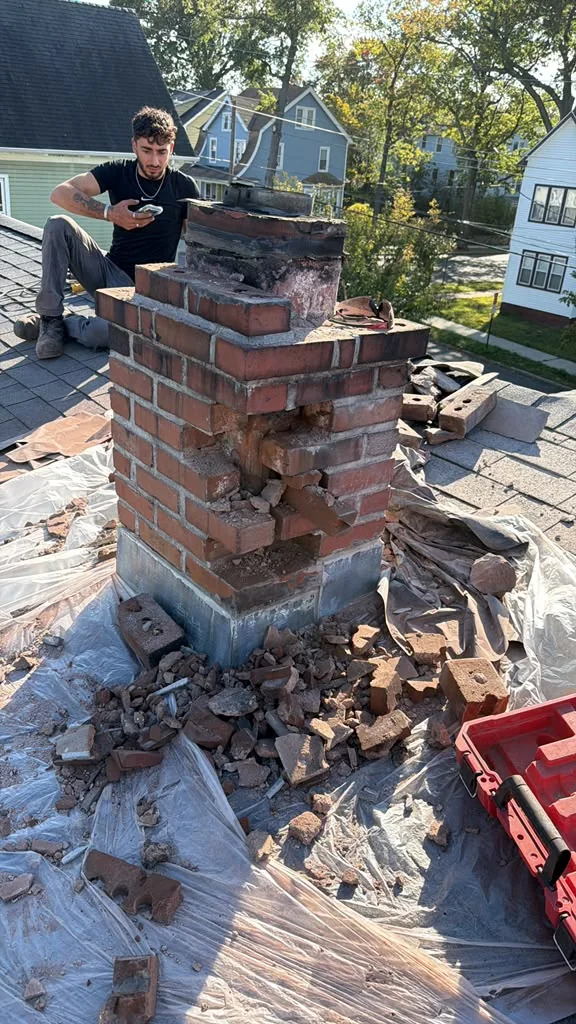
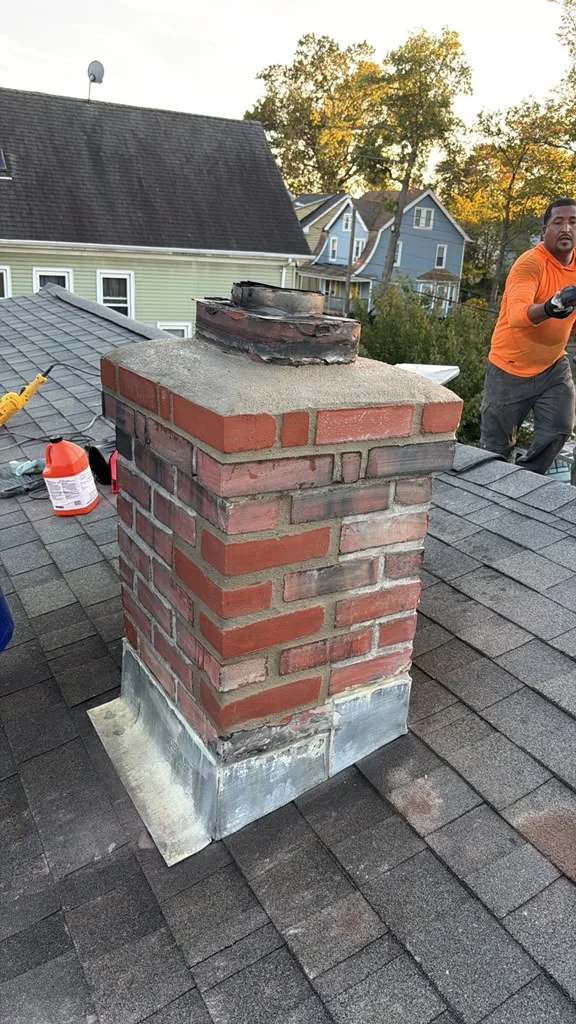
A real partial rebuild, before and after
The same chimney, during and after the work. The damaged top courses come down with the roof covered in tarps, then the top is rebuilt and finished with a new crown.
What happens on removal day
The goal is to take the masonry down in a controlled way and leave the roof as watertight as it would be if the chimney had never passed through it.
- Protect the houseDrop cloths go down inside near the fireplace and in the attic below the chimney, and the roof and yard under the work area are protected from falling debris.
- Take the stack down by handBricks come off course by course from the top and are lowered or bagged, not thrown off the roof. The work continues until the masonry sits below the roof deck.
- Close off what remainsThe masonry left in the attic is capped so rain, animals and air can’t move through the old flue.
- Frame and deck the openingThe hole in the roof is framed and sheathed so the roof surface is continuous where the chimney used to pass through.
- Patch the roofingUnderlayment and shingles go over the new decking and tie into the surrounding roof. Shingles that have weathered for years may look a shade different from new ones.
- Haul away and clean upBrick, mortar and old flashing leave the property with the crew, and the work areas are cleaned before they go.
What pushes the price up or down
The $1,500–$5,000+ ballpark covers very different chimneys. Where yours lands depends on a handful of things you can mostly judge from the ground.
- Height above the roof. A short stack on a ranch comes down quickly; a tall chimney on a steep colonial roof takes more time and more safety setup.
- Number of flues and overall size. A single-flue chimney holds far less brick than a wide center chimney with three flues.
- Roof pitch and access. Steep roofs, two or three stories and tight lot lines all add staging work.
- Roofing material. Asphalt shingles are the most straightforward to patch. Slate, wood and tile take more care to match and tie in.
- Condition of the decking. If years of leaks around old flashing have rotted the sheathing, that wood is replaced before the roof is closed. Our article on why chimneys leak explains how that damage builds up unseen.
- Debris volume. Brick and mortar are heavy, and hauling them away is part of the job.
Full removal, older homes and permits
Taking a chimney out all the way to the basement is a different kind of project. The masonry runs through floors, ceilings and sometimes the middle of the house, so removing it means opening finished rooms and rebuilding framing. That is renovation work for a general contractor, often with a structural engineer involved, and it costs far more than removal above the roof.
If your home is in a local historic district, an exterior change like removing a chimney may need approval before work starts. Big center chimneys on older colonials are often part of what makes the house look right from the street, and some owners choose rebuilding the top for that reason alone.
Permit rules vary from town to town. Check with your local building department before the work is scheduled, and ask your insurance company whether they want to hear about the change.
From your first call to a closed roof
- Call or ask for a callbackTell us which flues are still in use and why you are thinking about removal. You can reach us at (203) 779-6787 or through the callback form.
- $59 on-site inspectionWe look at the chimney from the roof and the attic, trace where every flue goes, and confirm nothing still vents through it.
- Photos of what we foundYou get photos of the crown, brick and flashing, including drone shots of the top, so you can judge the condition yourself.
- Written price, with optionsIf removal makes sense, the written estimate spells out how far down the chimney comes, how the roof is closed and what is hauled away. If a repair is the smarter call, we tell you that instead.
- The workOnce you approve, the crew sets up, takes the stack down, closes the roof and leaves the site clean.
Prefer we call you?
Three quick taps and a real person from A Class Chimney calls you back to set up a $59 on-site inspection.
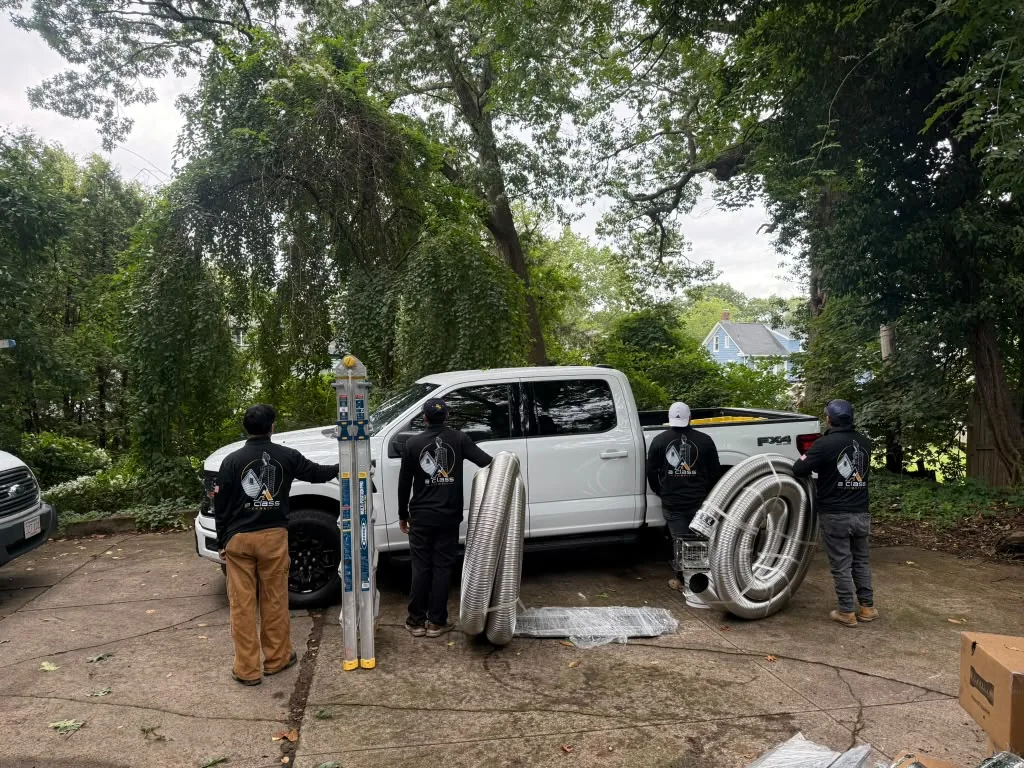
- $59 on-site visit and written estimate
- Photos of everything we find
- A written price before any work starts
- Licensed and insured in Connecticut
Sunday to Friday
What do you need?
When?
Where should we call you?
Free, no obligation. Privacy
Common questions
Have us take a look
$59 on-site visit, photos of what we find and a written price before any work. Licensed and insured in Connecticut.