
Chimney Rebuild Cost in CT: Partial vs. Full
When a chimney is past patching, the big question is how far down the rebuild has to go. That one decision sets the price more than anything else.
Sunday to Friday
In Connecticut, a partial rebuild of the chimney above the roofline runs about $3,000–$8,000, and a full rebuild from the base runs about $8,000–$20,000+, as 2026 ballparks. Many chimneys only need the exposed top rebuilt, because that is where water and freeze–thaw do their damage. Every chimney is priced individually, in writing, after a $59 on-site inspection.
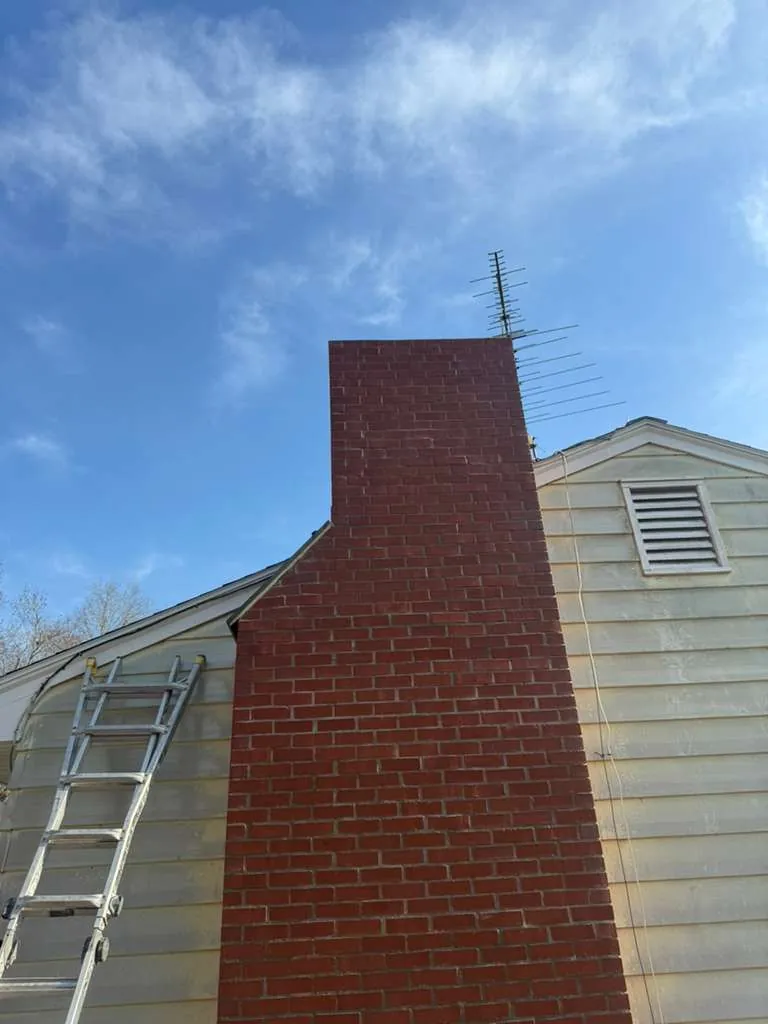
Rebuild costs at a glance
Ballpark ranges for Connecticut in 2026, with the lower-cost alternatives alongside so you can compare. Chimneys vary widely in height, width and access, so your actual figure is written up after we have seen the chimney on a $59 inspection visit.
| Option | Ballpark | When it fits |
|---|---|---|
| Partial rebuild above the roofline | $3,000–$8,000 | Damage is in the exposed section; the chimney below the roof is sound |
| Full rebuild | $8,000–$20,000+ | Leaning, settling or damage that reaches below the roof or into the house |
| Chimney removal above the roof, including roof patch | $1,500–$5,000+ | Chimney no longer used and not worth rebuilding |
| Repointing instead of rebuilding | $800–$3,000+ | Bricks are sound; only the mortar joints have eroded |
| Crown repair or new crown only | $200–$1,200 | The top is intact apart from the crown |
Partial or full: where the line usually falls
The part of a chimney above the roof gets rain, wind and freeze–thaw from every side, while the part inside the house stays dry and relatively warm. That is why damage usually concentrates in the top few feet: crumbling mortar, spalled brick faces, a failed crown, and bricks that rock when touched.
A partial rebuild takes the chimney down to sound masonry, often at or just below the roofline, and lays it back up with new brick and mortar, finished with a new crown. A full rebuild is needed when the problem starts lower: a chimney leaning from its base, cracks running through the attic section, settling at the footing, or water damage that has worked its way down inside the house.
The only reliable way to know where sound masonry begins is to look, from the attic as well as from above. A rebuild that stops too high just moves the problem down a few courses, and you pay for the same section twice.
Ballpark price check
Typical Connecticut ranges for common chimney jobs.
Signs you are looking at a rebuild, not a repair
Check from the ground with binoculars or a phone zoom, never from the roof. If only a few bricks are affected, look at spalling brick repair or repointing first; the full decision guide is chimney repair vs. rebuild.
- Bricks are missing, or pieces are landing on the roof, in the gutters or on the ground.
- Mortar has washed out deep into the joints across many courses, not just a few spots.
- The top is visibly leaning or twisted, or a gap has opened between the chimney and the house.
- Brick faces have spalled across large areas, not on a handful of bricks.
- The crown is broken into pieces and the bricks under it have shifted.
- Water stains in the attic or ceilings beside the chimney keep coming back after repairs.
- An earlier repair used hard mortar or a paint-like coating, and the brick around it is breaking up.
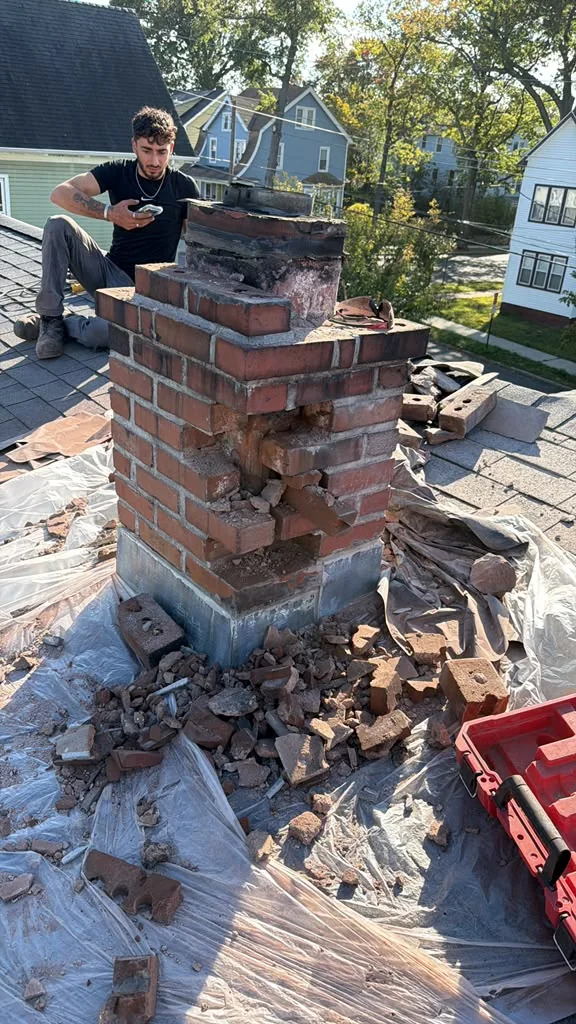
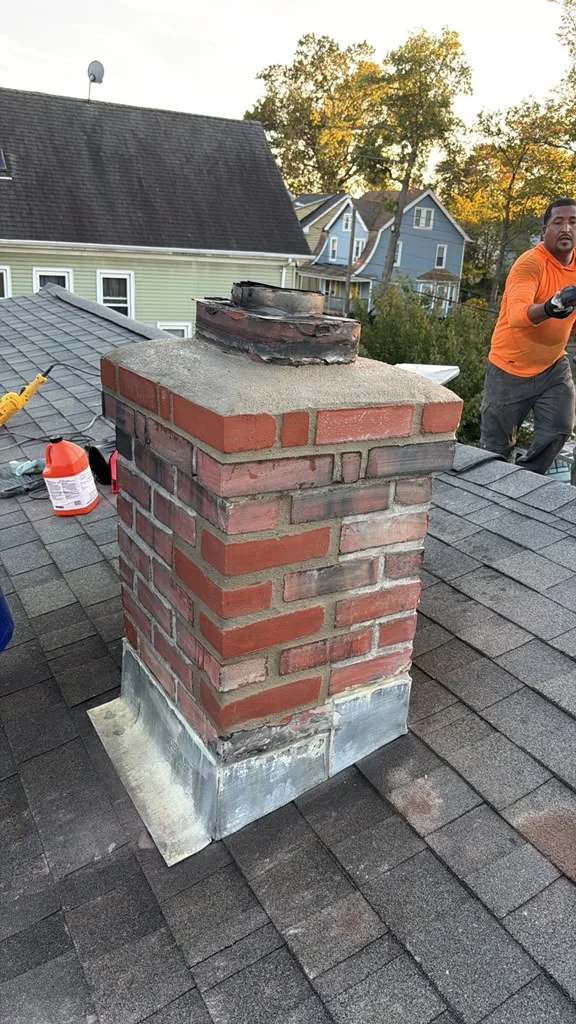
A real partial rebuild, before and after
The same chimney, during and after the work. The damaged top courses come down with the roof covered in tarps, then the top is rebuilt and finished with a new crown.
What pushes a rebuild price up or down
Height above the roof
Every course of brick is labor and material. A tall chimney on a two-story colonial has many more courses above the roof than a short one on a ranch.
Number of flues
A chimney carrying a fireplace flue plus an oil boiler flue is wider, uses more brick and has more liner sections to deal with.
Staging and roof pitch
Steep or slate roofs, and chimneys on a gable end two stories up, often need staging, which adds setup and removal time.
Brick and finish
Matching older or reclaimed brick costs more than standard brick. A stucco finish is another option on some chimneys; see rebuilds and stucco upgrades.
What goes on top
Ask whether the price includes the crown, cap and flashing. These are where two quotes for the same rebuild most often differ.
Liner condition
If the flue tiles in the rebuilt section are cracked, relining may make sense while the chimney is open. It is priced as its own line.
Rebuild, remove or repair? Thinking it through
If you still use the fireplace, or the chimney vents your oil boiler, it has a job to do and the choice is between repair and rebuild. If the fireplace has not been used in years and the heating system now vents another way, ask about removing the chimney above the roof. The ballpark is lower than a rebuild, but the roof opening has to be closed and flashed properly.
If the bricks are sound and the trouble is mortar, repointing at $800–$3,000+ costs a fraction of a rebuild. The honest test is whether the brick will hold new mortar. Soft, broken or spalled brick across large areas will not, and repointing it is money spent twice.
Older Connecticut homes add one more consideration. A large center chimney on an antique colonial, or a decorative chimney on a Victorian, is part of the house’s character. Rebuilding with matching brick and a matching profile costs more than a plain rebuild, but it keeps the house looking like itself.
Finally, think about the roof. If you are planning to replace shingles in the next year or two, do the chimney first or at the same time, so the new flashing ties into new roofing instead of being disturbed again later. Doing it in the wrong order often means paying for flashing twice.
How A Class prices and builds a rebuild
A rebuild is a large decision, so the process is built around showing you the chimney rather than describing it.
- The callTell us what you are seeing and what the chimney serves. If bricks are falling, say so, and keep everyone clear of the area below.
- $59 inspection visit, top and atticThe chimney is checked from above, with drone photos, and from the attic where it passes through, to find where solid masonry begins.
- Photos and a written priceYou see the damage and where the rebuild would start, with a written price that spells out what is and is not included.
- The rebuildOld masonry comes down to sound brick, the new section goes up, and the top is finished with a crown, plus flashing and a cap as the job requires.
- Clean-upDrop cloths and protection come up, debris is cleared, and the site is left clean.
Masonry and crowns need temperatures above freezing while mortar and concrete cure. A written estimate still lets you plan and budget now, with the work scheduled for suitable weather. The winter chimney repair guide covers which jobs can wait for spring and which should not.
Prefer we call you?
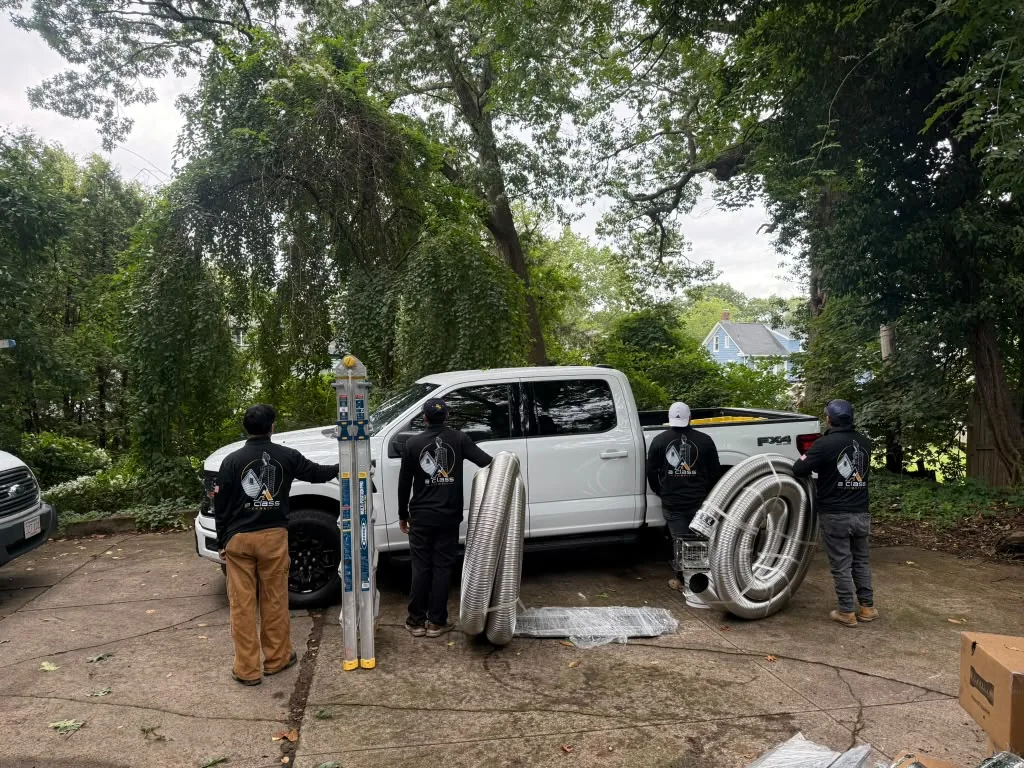
Three quick taps and a real person from A Class Chimney calls you back to set up a $59 on-site inspection.
- $59 on-site visit and written estimate
- Photos of everything we find
- A written price before any work starts
- Licensed and insured in Connecticut
Sunday to Friday
What do you need?
When?
Where should we call you?
Free, no obligation. Privacy
Common questions
Have us take a look
$59 on-site visit, photos of what we find and a written price before any work. Licensed and insured in Connecticut.