
Chimney Repair Cost in Connecticut: 2026 Ballpark Prices
Ballpark ranges for the repairs Connecticut chimneys need most, why two similar-looking jobs can be priced very differently, and which small repairs prevent the big ones.
Sunday to Friday
Most chimney repairs in Connecticut cost a few hundred to a few thousand dollars: a stainless cap runs $150–$600, crown repair $200–$1,200, flashing $400–$1,500 and repointing $800–$3,000+, as 2026 ballparks. Rebuilds are the exception and start around $3,000–$8,000 for the section above the roof. Your exact price is set in writing after a $59 on-site inspection.
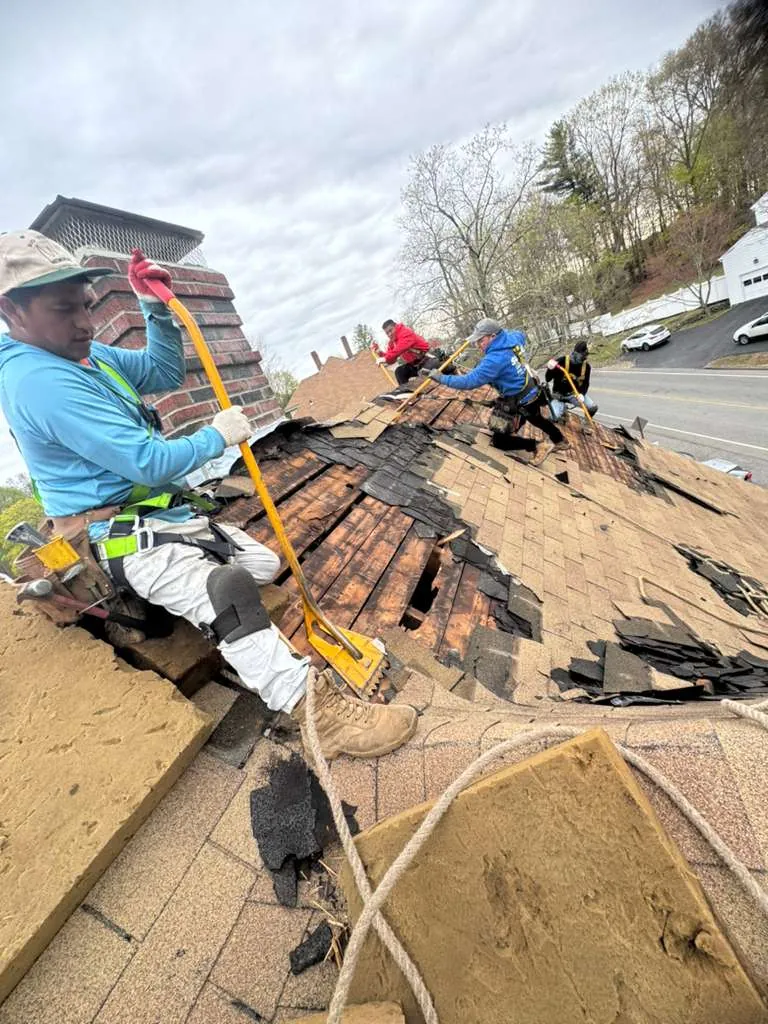
Chimney repair costs in CT: ballpark ranges
Ranges are for typical Connecticut homes in 2026. They are not quotes: your own number comes in writing after a $59 inspection visit to look at the chimney.
| Repair | Ballpark | Typical reason |
|---|---|---|
| Stainless chimney cap, supplied and installed | $150–$600 | Missing or rusted cap, animals, rain in the flue |
| Crown repair or sealing | $200–$1,200 | Cracked or crumbling concrete top |
| Waterproofing (vapor-permeable repellent) | $300–$800 | Porous brick soaking up rain |
| Flashing repair or replacement | $400–$1,500 | Leak where the chimney meets the roof |
| Top-sealing damper | $400–$900 | Broken throat damper, cold drafts, heat loss |
| Chase cover replacement (prefab) | $400–$1,200 | Rusted metal top on a sided chimney chase |
| Spalled brick replacement | $500–$2,500 | Flaking or broken brick faces |
| Firebox repair | $500–$2,500 | Cracked firebrick or refractory panels |
| Tuckpointing / repointing | $800–$3,000+ | Eroded or sandy mortar joints |
| Stainless liner (relining) | $1,500–$4,000+ | Cracked clay tiles, no liner, fuel change |
| Partial rebuild above the roofline | $3,000–$8,000 | Loose, leaning or badly deteriorated top section |
| Full rebuild | $8,000–$20,000+ | Damage running through the whole chimney |
Five things that change the price
Two chimneys with the same problem can land at opposite ends of a range. These are the usual reasons.
Height and roof pitch
A chimney on a steep, tall Victorian roof needs more setup and safety equipment than one on a ranch, and sometimes scaffolding.
How far the damage goes
Ten loose bricks and a whole side of loose bricks are both called brick repair, but they are very different jobs. Photos make the difference visible to you.
Matching older materials
Many older Connecticut homes have softer, irregular brick laid in lime-based mortar. Matching color, size and mortar strength takes more care than on a newer chimney.
Fixing the water source
Repairing brick without fixing the crown or flashing that let water in just resets the clock. A sound quote covers the cause, not only the visible damage.
Access around the house
Tight lot lines, landscaping, decks or a garage roof under the chimney affect where ladders and staging can go and how long setup takes.
Ballpark price check
Typical Connecticut ranges for common chimney jobs.
Where a small repair prevents a big one
Most expensive chimney work starts as a water problem. A crack in the crown lets rain into the top courses of brick. Connecticut’s freeze–thaw winters expand that water, brick faces pop off, mortar washes out, and in a few seasons a crown repair has turned into a partial rebuild.
That is why the cheaper lines at the top of the table deserve attention. A stainless cap, a sound crown and tight flashing protect everything below them. If you can see white staining, flaking brick faces or rust streaks from the ground, the chimney is telling you water is getting in. Our list of signs your chimney needs repair shows what else to watch for.
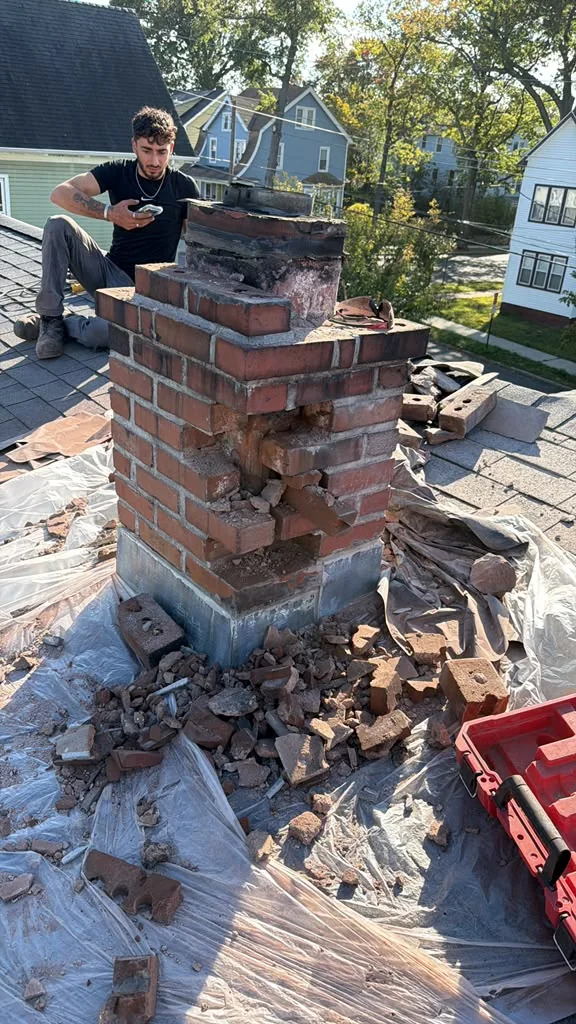
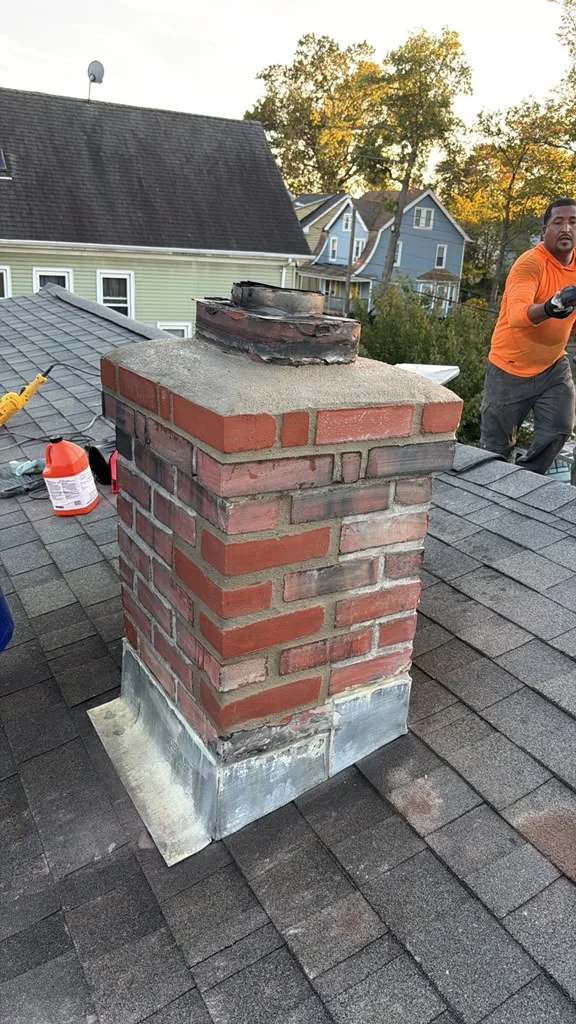
A real partial rebuild, before and after
The same chimney, during and after the work. The damaged top courses come down with the roof covered in tarps, then the top is rebuilt and finished with a new crown.
Bundling repairs to save on setup
A good part of the cost of any exterior chimney job is getting safely to the top: ladders, roof protection and sometimes staging. If the chimney needs more than one thing, doing them in the same visit means paying for that setup once. Sensible pairings are a crown repair with a new cap, repointing followed by waterproofing once the mortar has cured, and flashing replacement together with the roofing right around the chimney.
The reverse also holds. If a quote bundles items you did not ask about, ask for a photo of each one and which of them actually stop water. A new cap on a chimney that already has a sound stainless cap is not a saving, and a coat of repellent over open mortar joints is money spent in the wrong order.
What to check on any chimney repair quote
Whoever you hire, a quote you can compare fairly answers these questions in writing.
- Is the price written down, with the scope listed line by line?
- Are there photos of the damage the price is based on?
- Does it fix the source of the water, or only the visible damage?
- For brick and mortar work, what mortar will be used, and is it suited to the age of your brick?
- For a crown, is it a sealant over cracks, a repair, or a new crown with an overhang that sheds water past the brick?
- Does the job include a cap, flashing or waterproofing, or are those separate?
- Is protection of the roof, landscaping and the inside of the house, plus clean-up, part of the job?
Insurance, timing and phasing the work
Homeowners policies usually treat wear and tear as maintenance, but sudden damage from a storm, a fallen tree or a chimney fire may be handled differently. Read whether insurance covers chimney repair and check your own policy before you assume either way.
If the budget does not stretch to everything at once, ask which items stop water and which are mostly cosmetic. Water-stopping work comes first; cosmetic work can usually wait a season. Weather matters too: mortar and concrete need temperatures above freezing to cure properly, so exterior masonry in a Connecticut winter is scheduled around milder stretches.
Tell us at the start if an oil boiler or furnace shares the chimney. Work on that flue has to be planned so the house is not left without heat on a cold day, and your heating technician may need to check the appliance once the chimney work is done.
From first call to finished repair with A Class
- Describe what you seeCall (203) 779-6787 or ask for a callback. A ceiling stain, a rust streak on the siding or a photo from the yard is enough to start.
- Free look at the chimneyA tech checks the chimney, takes drone photos of the top and traces where the problem actually starts, which is not always where it shows.
- A written priceYou receive the price in writing, with the scope spelled out, before anything is scheduled. You decide when, or whether, to go ahead.
- The work, done cleanDrop cloths go down, the repair is done to the written scope, and the area is cleaned up before the crew leaves.
If pieces of brick are coming down or the chimney is visibly leaning away from the house, keep people, pets and cars clear of the area below and stop using the fireplace until it has been checked. Do not go up to look. Our page on leaning chimney repair explains what happens next.
Prefer we call you?
Three quick taps and a real person from A Class Chimney calls you back to set up a $59 on-site inspection.
- $59 on-site visit and written estimate
- Photos of everything we find
- A written price before any work starts
- Licensed and insured in Connecticut
Sunday to Friday
What do you need?
When?
Where should we call you?
Free, no obligation. Privacy
Common questions
Have us take a look
$59 on-site visit, photos of what we find and a written price before any work. Licensed and insured in Connecticut.