
Why Does My Chimney Smell? Causes & Fixes
Smoky, tar-like, musty or rotten: the kind of smell usually points to the cause. Here is how to narrow it down and what actually makes it stop.
Sunday to Friday
Most chimney smells come from creosote in the flue, water getting into the chimney, or debris and animals inside it. They get worse on humid days and when exhaust fans pull outside air down the flue. Air fresheners only mask it; a cleaning plus a fix for the water or airflow problem is what makes the smell go away.
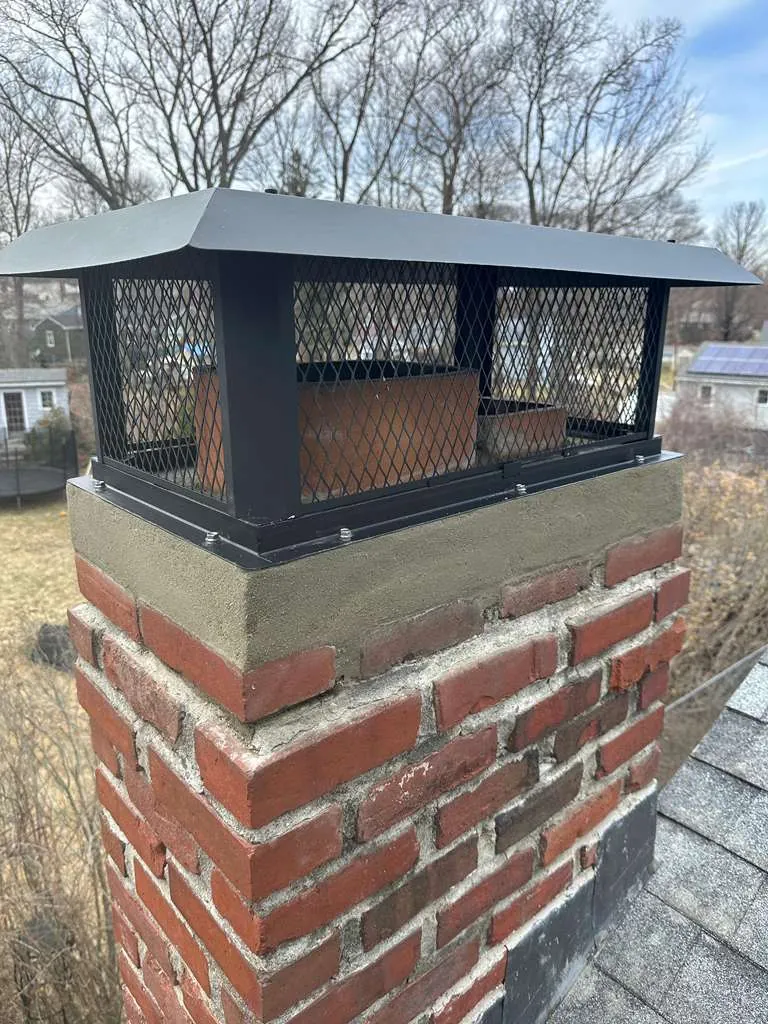
Match the smell to the likely cause
Stand near the fireplace with the damper closed, then open it. Notice what the smell reminds you of and when it is strongest. Those two details narrow things down quickly.
| What it smells like | Most likely source | What usually fixes it |
|---|---|---|
| Old campfire, asphalt or tar | Creosote and soot coating the flue and smoke chamber | A professional cleaning, then reducing the air pulled down the flue |
| Musty, like a damp basement | Water entering through a missing cap, cracked crown or failed flashing and soaking the masonry | Stopping the water at the top, then letting the masonry dry |
| Strong, rotten and getting worse | A dead animal or a decomposing nest on the smoke shelf | Removal from the flue and a cap with mesh sides |
| Sharp and sooty, near the boiler | Flue gases from an oil or gas appliance not venting properly | A heating technician for the appliance and a check of the flue |
| Rotten eggs | A possible natural gas or propane leak | Leave the house, then call 911 or your gas utility from outside |
If you smell smoke and nothing is burning, a CO alarm goes off, or people in the house have headaches, dizziness or nausea that ease when they step outside, get everyone out and call 911. Carbon monoxide is colorless and odorless, so a sniff test can never rule it out; working CO alarms can.
Why the creosote smell gets worse in summer
Creosote is the tar-like residue wood smoke leaves inside the flue. In winter, while the fireplace is in use and warm air rises up the chimney, you rarely notice it. In July and August, Connecticut’s humid air works on those deposits and the smell becomes much stronger, and the airflow in the chimney often runs backward.
Think of your house as a straw. A bathroom fan, a range hood, a clothes dryer and even the tight construction of a newer or renovated home all pull air out, and the house replaces it from wherever it can, often straight down the chimney. That incoming air carries the odor into the room, which is why the smell can seem to come and go on its own.
The fix usually has two parts. A chimney cleaning removes most of the source, and then the downdraft needs to stop. A top-sealing damper, which closes the flue at the top of the chimney with a gasketed lid, blocks that airflow much better than the old cast-iron damper above the firebox. As a ballpark, one runs $400–$900 installed.
Why is my fireplace smoking?
Pick when it happens to see the likely causes.
Damp, musty odors mean water is getting in
A chimney that smells like a wet basement is a chimney holding water. Rain comes in through an open flue with no cap, through hairline cracks in the crown, or around flashing that has pulled away from the brick. The water mixes with soot, soaks old leaves and nest material on the smoke shelf, and the masonry stays damp for days after each storm.
Nor’easters and wind-driven rain are hard on Connecticut chimneys, especially on the side facing the weather. Look for a water stain on the ceiling or wall beside the chimney, rust on the damper or fireplace screen, or white stains on the brick. Each one tells you water has found a path in.
Sealing the smell in doesn’t work. Stop the water first with a stainless cap (ballpark $150–$600), a crown repair (ballpark $200–$1,200) or flashing work, and the musty odor usually fades as the masonry dries out over the following weeks.
Animals, nests and debris
A sudden, sharp, rotten odor usually means something died in the flue or on the smoke shelf. Squirrels, raccoons and birds get into uncapped chimneys, and some can’t climb back out. Old nests and piles of leaves also break down and smell, especially once they are wet. Our article on getting birds and animals out of a chimney covers what to do if you hear something alive in there.
Chimney swifts are a special case. They are protected under the federal Migratory Bird Treaty Act, so an active nest can’t be removed while they are nesting; the chimney is cleaned and capped after the birds head south in the fall. The guide to chimney swifts in your chimney explains the timing.
Whatever is up there, don’t reach into the flue and don’t try to burn a nest out. Dry nest material catches fire easily, and an animal may still be alive.
What you can do today while you wait
These steps take the edge off the smell. None of them fixes the cause, but they make the house more comfortable until the chimney is looked at.
- Close the damper fully and check that it really seals; a warped or rusted damper can leave a gap you can feel air through
- Close the fireplace glass doors if you have them
- Run the range hood and bath fans only as long as you need them, and crack a window on another side of the house while they run
- Set a shallow tray of baking soda or activated charcoal in the firebox to absorb some of the odor
- Clear out old ashes once they are completely cold, since damp ash smells strongly in humid weather
- Skip scented sprays and plug-ins; they layer a second smell on top of the first
- Write down when the smell is worst, such as after rain, on humid days or when fans run, so you can tell the technician
How we track down a chimney odor
An odor call is mostly detective work. The aim is to find the real source, because a cleaning alone won’t help for long if water or downdraft is the actual problem.
- You describe itWhen you call (203) 779-6787, tell us what the smell is like and when it shows up. That points toward the likely cause before anyone arrives.
- $59 inspection visit and a look up the flueWe check the firebox, damper and smoke chamber, run a camera up the flue, and look at the cap, crown and flashing from above.
- Photos of the sourceYou see what we see: the creosote layer, the cracked crown, the gap in the flashing or the nest on the smoke shelf.
- A written price for the fixNothing starts without a written price. As a ballpark, a standard cleaning with a Level 1 inspection runs $150–$350 and waterproofing about $300–$800; the exact figure is set after the $59 on-site inspection.
- Clean, tidy workDrop cloths go down, the source is dealt with, and the area around the fireplace is left clean.
Prefer we call you?
Three quick taps and a real person from A Class Chimney calls you back to set up a $59 on-site inspection.
- $59 on-site visit and written estimate
- Photos of everything we find
- A written price before any work starts
- Licensed and insured in Connecticut
Sunday to Friday
What do you need?
When?
Where should we call you?
Free, no obligation. Privacy
Common questions
Have us take a look
$59 on-site visit, photos of what we find and a written price before any work. Licensed and insured in Connecticut.