
Fireplace Smoking Into the House? Draft Problems Explained
A fireplace that smokes is telling you something about the flue, the house or the weather. Work out when it happens and you are most of the way to the cause.
Sunday to Friday
A fireplace smokes into the room when the chimney isn’t pulling hard enough: the flue is cold or blocked, the damper isn’t fully open, the house is short on replacement air, or the chimney is too short or too small for the opening. Open the damper fully, warm the flue and crack a window first. If it still smokes, the chimney needs an inspection.
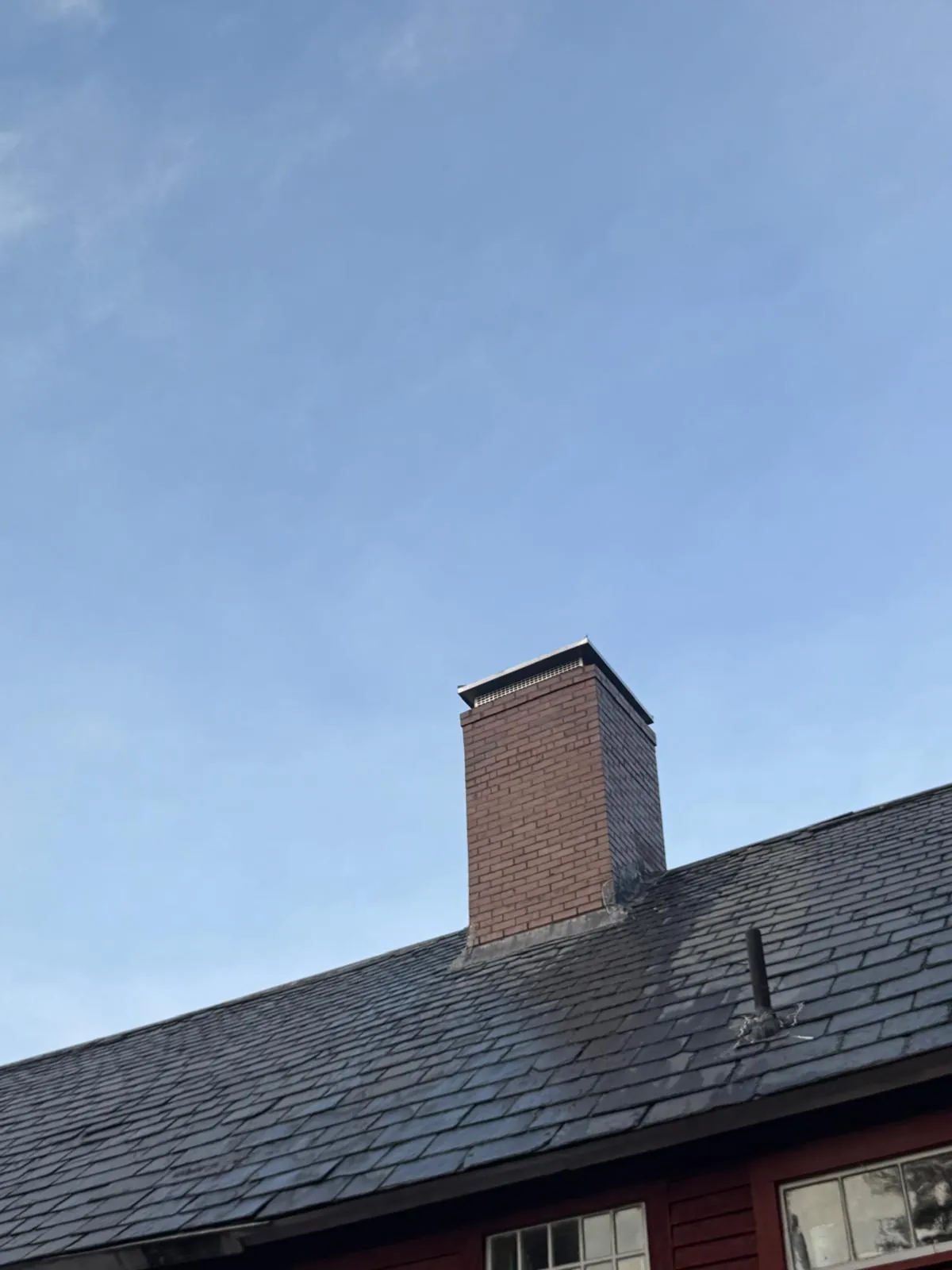
How a chimney is supposed to draw
Hot smoke is lighter than the cooler air around it, so it rises. A tall column of warm gas inside the flue creates gentle suction at the fireplace opening, pulling room air in and sending smoke up and out. That suction is the draft, and anything that weakens it, from a cold flue to a gust of wind, shows up as smoke in your living room.
Good draft depends on four things working together: a warm flue, enough chimney height, a flue sized correctly for the fireplace opening, and a steady supply of replacement air coming into the house. When smoke spills, at least one of those four is usually missing.
When does it smoke? That is your best clue
Watch the pattern over a few fires. The timing points to the cause better than anything else you can check from inside the house.
| When it smokes | Likely cause | First thing to try |
|---|---|---|
| Only while lighting, then it clears | Cold, heavy air sitting in the flue | Warm the flue before lighting the fire |
| Every fire, start to finish | A blockage, a damper that isn’t fully open, or an opening too large for the flue | Check the damper, then stop using the fireplace until the flue is inspected |
| When the range hood, dryer or bath fans run | The house is under negative pressure and pulling air down the chimney | Turn the fans off and open a nearby window slightly |
| On windy days, or with wind from one direction | Downdraft from wind, a taller roofline or nearby trees | Note the wind direction; a cap or added height may be needed |
| Late in the fire, as it dies down | The flue cooling while the fire smolders | Burn smaller, hotter fires with dry wood |
| Smoke smell from another fireplace or the boiler flue | Smoke drifting from one flue top into its neighbor | Have the chimney top checked for flue heights and caps |
Why is my fireplace smoking?
Pick when it happens to see the likely causes.
Fixes you can try tonight
These steps are safe and need no tools. If one of them solves the problem, you have also learned what the underlying cause was.
- Open the damper all the way. Throat dampers can stick half open, especially rusty ones. Shine a flashlight up past the damper; you should see the flue, not a metal plate.
- Warm the flue first. Roll a sheet of newspaper, light one end and hold it up near the open damper for a minute. When the flame starts leaning upward, the draft is established and you can light the fire.
- Build a top-down fire. Larger logs on the bottom, smaller splits above, kindling and paper on top. It starts with less smoke and heats the flue quickly.
- Give the fire some air. Open a window in the same room an inch or two and switch off exhaust fans while the fire is going.
- Burn dry wood only. Seasoned hardwood with moisture under about 20 percent burns hot and clean. Wet wood smolders, cools the flue and leaves more creosote behind.
- Keep the fire toward the back of the firebox. A fire built right at the front edge spills smoke into the room more easily.
Draft problems that need a chimney technician
If the quick fixes don’t help, the cause is usually inside the chimney or on top of it, where you can’t safely look.
Blocked or narrowed flue
Heavy creosote, a fallen flue tile, leaves or a nest shrink the space smoke has to travel through. A chimney cleaning and inspection finds the restriction and clears it.
Damper that won’t open fully
A warped, rusted or broken throat damper chokes the opening. Replacing it, or adding a top-sealing damper, restores full flow. See damper repair for the options.
Rough or failing smoke chamber
The sloped area above the damper should be smooth so smoke funnels into the flue. Stepped or cracked brick there causes turbulence; smoke chamber repair smooths it out.
Opening too big for the flue
A common rule of thumb is that the flue’s cross-section should be roughly one-tenth to one-twelfth the area of the fireplace opening. When the opening is much larger, smoke rolls out along the top front edge.
Chimney too short
The usual guideline is at least 3 feet above where the chimney passes through the roof and 2 feet higher than anything within 10 feet. Additions, dormers and grown-up trees can leave an older chimney below that line.
Wind and downdraft
Strong gusts, especially during a nor’easter, can push air down the flue. The right cap and proper flue height both help, and a technician can tell which one your chimney needs.
Older Connecticut houses and the tight-house problem
Many Connecticut homes, from 18th-century colonials to 1950s capes, were built drafty. Air leaked in through every window and sill, and the fireplace never ran short of it. When those houses get new windows, spray-foam insulation and air sealing, the fireplace can suddenly start smoking because replacement air no longer comes in easily.
A kitchen remodel with a powerful range hood can do the same thing. A big hood can pull more air out of the house than the chimney moves, and the chimney loses that contest. If your smoke problem began right after a renovation, that timing is a strong clue.
In that case the answer may not be chimney work at all. Cracking a window helps, and some homeowners ask their HVAC or building contractor about a dedicated outside-air supply. An inspection is still worth doing first to rule out blockage and damper trouble.
Stop adding wood to a fire that is filling the room with smoke, and let it burn down with the screen closed. If the smoke keeps building, a smoke or CO alarm goes off, or anyone feels dizzy or sick, get everyone outside and call 911. Don’t throw water on the fire; the sudden steam and temperature change can crack the firebox and flue tiles.
What happens when you call us about a smoky fireplace
- Tell us the patternCall (203) 779-6787 and we will ask when it smokes, how your wood is stored, and whether anything changed recently, such as new windows or a range hood. Your answers shape the visit.
- $59 on-site inspectionWe check the damper, firebox and smoke chamber, run a camera up the flue, compare the opening with the flue size, and look at chimney height and the cap from the roof.
- Photos and a plain explanationYou see photos of what we found and hear which part of the draft is failing: a blockage, the damper, the smoke chamber or the chimney itself.
- Written priceWhatever needs fixing gets a written price before anyone starts. As a ballpark, a standard cleaning with a Level 1 inspection is $150–$350 and a top-sealing damper $400–$900; the exact price follows the $59 on-site inspection. If the cause is the house rather than the chimney, we say so.
- The fixThe crew works with drop cloths around the hearth and cleans up after, and you can test the fireplace once the job is done.
Prefer we call you?
Three quick taps and a real person from A Class Chimney calls you back to set up a $59 on-site inspection.
- $59 on-site visit and written estimate
- Photos of everything we find
- A written price before any work starts
- Licensed and insured in Connecticut
Sunday to Friday
What do you need?
When?
Where should we call you?
Free, no obligation. Privacy
Common questions
Have us take a look
$59 on-site visit, photos of what we find and a written price before any work. Licensed and insured in Connecticut.