
Gutter Installation & Repair in CT: Seamless and Guards
Gutters have one job: moving roof water away from your walls and foundation. In Connecticut they also have to survive ice, heavy snow and a lot of falling leaves.
Sunday to Friday
If your gutters sag, leak at the joints or overflow in heavy rain, a repair or re-pitch, about $200–$800 as a ballpark, often solves it. When they are undersized, rusted or pulling away from rotted fascia, new seamless gutters for the whole house typically run $1,500–$4,000, and guards add about $1,000–$3,000 where trees hang over the roof.
Why gutters matter more than they look
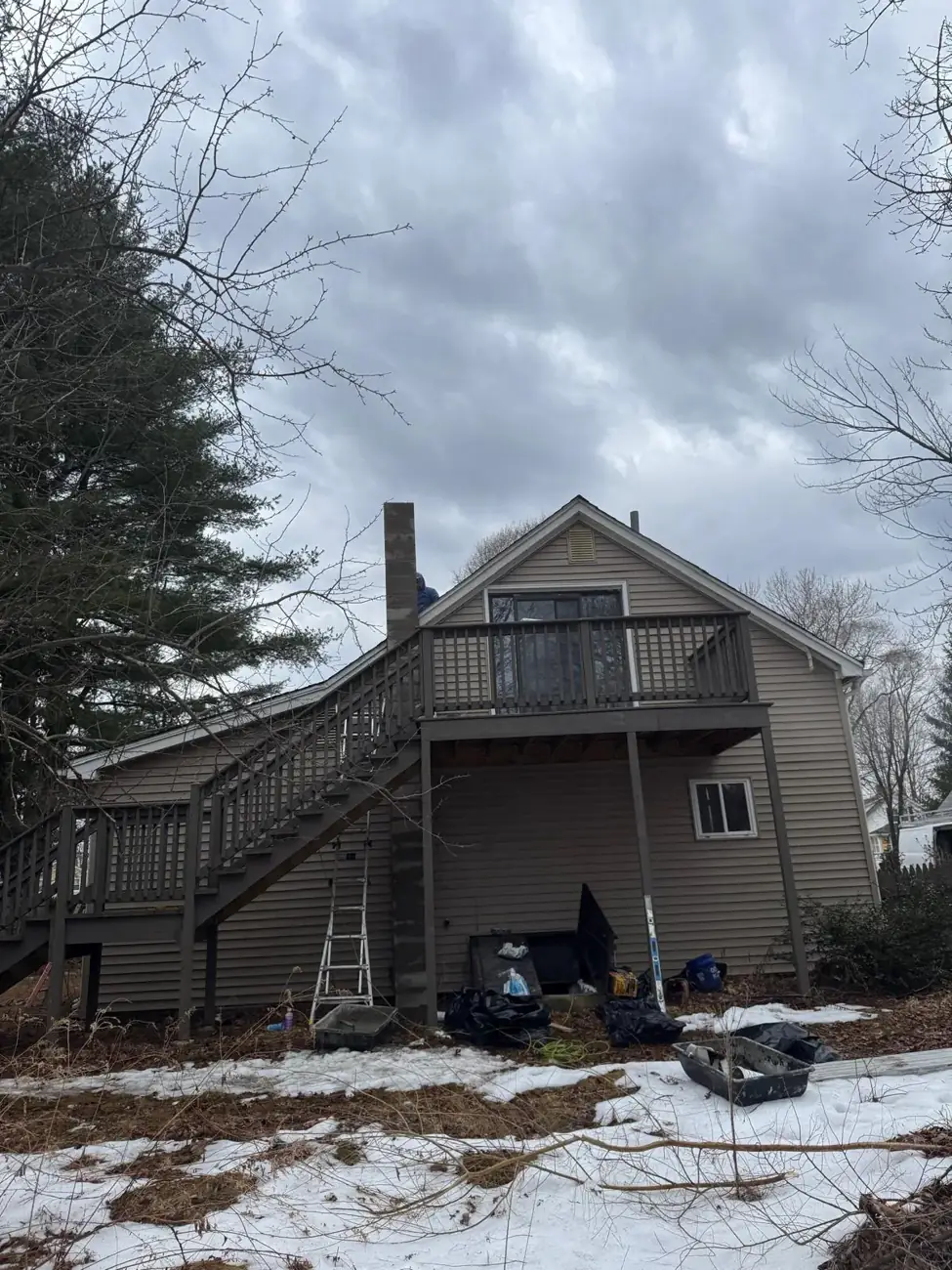
An inch of rain falling on 1,000 square feet of roof adds up to roughly 620 gallons of water, and in a summer cloudburst all of it heads for a few downspouts. When gutters overflow or dump that water beside the house, it soaks the soil against the foundation, finds its way into basements, rots fascia boards and the lower edge of the roof deck, and splashes dirt up onto siding and windows.
Failing gutters also feed roof problems. A clogged gutter holds water and then ice at the eaves, which makes ice dams worse, and a gutter dragged down by ice can tear the drip edge and the first row of shingles with it. Rot at the deck edge behind a long-neglected gutter is a roof repair in its own right, so it pays to fix drainage before that point.
Signs your gutters need repair or replacement
The best time to look is during a steady rain, from inside or under an umbrella, rather than on a dry afternoon.
- Water spilling over the front edge in heavy rain even though the gutter is clean
- Sagging runs, or gutters pulling away from the fascia
- Drips at seams, corners and end caps
- Water still sitting in the gutter a day after rain, a sign the pitch is off
- Peeling paint, stains or soft wood on the fascia behind the gutter
- Rust spots or holes in older steel gutters
- Washed-out mulch, eroded soil or a damp basement wall below a downspout
- Thick sheets of ice hanging from the same gutters every winter
Roof problem checker
Tick what you have noticed and see what it usually means.
Choosing gutters that fit your house
Most gutter trouble comes down to size, slope and how the gutters are fastened to the house.
Seamless aluminum
Formed from a coil into continuous lengths that run corner to corner, so the only joints are at corners and outlets. Fewer joints mean fewer leaks, and aluminum does not rust.
5-inch or 6-inch
Five-inch K-style gutters are the common size on houses. Large or steep roofs, long runs and valleys that pour onto one spot often need 6-inch gutters to keep up with a summer downpour.
Downspouts
Larger 3×4-inch downspouts carry more water and clog less often than 2×3. Each one should empty onto a splash block or into an extension that carries water several feet away from the foundation.
Slope
A run should drop toward its outlet by roughly a quarter inch over each 10 feet. Too little and water sits in the trough; too much and the line looks crooked from the street and can overflow at the low end.
Hangers
Hidden hangers screwed into the fascia at close spacing hold far better under snow and ice than the old spike-and-ferrule method, which works loose over the years.
Gutter guards: when they earn their cost
If oaks, maples or white pines hang over the roof, gutters can fill in a single fall. Guards cut down on how often gutters need clearing, and they keep downspouts from clogging, which is when the real overflow begins.
Guards are not all alike. Simple screens and perforated covers block leaves but let pine needles and seeds through. Fine micro-mesh stops most debris, needles included, though its top surface needs an occasional brushing. Solid covers that rely on water curling around a rounded nose can overshoot in a hard downpour. No guard is maintenance-free, and any guard has to be fitted so snow and ice sliding off the roof do not rip it loose.
Whole-house guards typically run $1,000–$3,000 as a ballpark, depending on the type and how many feet of gutter they cover. Our gutter installation cost guide breaks down what moves that figure.
Repair, re-pitch or replace?
Use this to match what you are seeing with the likely fix. The figures are 2026 Connecticut ballparks, and the written price for your house comes after a free visit.
| Situation | Likely fix | Ballpark |
|---|---|---|
| A leaking corner or end cap, loose hangers, one sagging run | Repair and re-secure | $200–$800 |
| Water standing in the gutter or spilling at one end | Re-pitch that run | $200–$800 |
| Undersized gutters overflowing in every storm | New, larger seamless gutters | $1,500–$4,000 for the whole house |
| Rusted steel, many leaking joints, rot behind the gutter | Replace the gutters; fascia repair priced after the visit | Whole-house range above, plus fascia work if needed |
| Gutters packed with leaves and needles every fall | Add guards | $1,000–$3,000 |
Gutters, ice and the roof edge
Connecticut winters are hard on gutters. Snow sliding off the roof catches the front lip, and ice filling a long run can weigh more than its hangers were ever meant to hold. Gutters set too high or too far out from the drip edge make both problems worse.
Gutters do not cause ice dams, but a full, frozen gutter makes them worse. The underlying cause is heat escaping into the attic, so if you see heavy icicles and stains near the eaves every winter, read our ice dam guide and look at the attic, not only the gutter. A stain on a ceiling near an outside wall can also come from the roof edge itself, which our page on roof leak repair helps you sort out.
When a roof is replaced, the gutter, drip edge and ice barrier should be planned together, so water lands in the gutter and not behind it. Heat cables can keep a channel open at a problem corner, but they treat a symptom rather than the cause.
Where the water goes after the downspout
A gutter system is only as good as its last three feet. Each downspout should empty onto a splash block or into an extension that carries water several feet out, onto ground that slopes away from the house. Soil that has settled against the foundation over the years often slopes the wrong way, and regrading it can do as much for a wet basement as new gutters.
Underground drain pipes look tidy, but they clog with roof grit and leaves and can freeze in winter, sending water back up and over the gutter. If yours connect to a buried line, make sure it actually reaches daylight or a proper drain. Many Connecticut towns and sewer authorities do not allow roof leaders to tie into the sanitary sewer, so check with yours before connecting anything.
How we handle a gutter job
- Get in touchWhether you call (203) 779-6787 or send a callback request, say whether you are dealing with overflow, sagging, leaks, ice damage or debris, since each points to a different part of the system.
- Look at the whole drainage pathWe check the gutters, downspouts, fascia and roof edge, and photograph the problems, including rot behind the gutter that is easy to miss from the ground.
- A price with sizes spelled outThe written price covers repair, re-pitching, new seamless gutters or guards, with gutter size and downspout locations named so you know what you are getting.
- Install, then haul awayThe crew takes down old gutters, hangs and secures the new system, and removes the old material and debris from the property.
Prefer we call you?
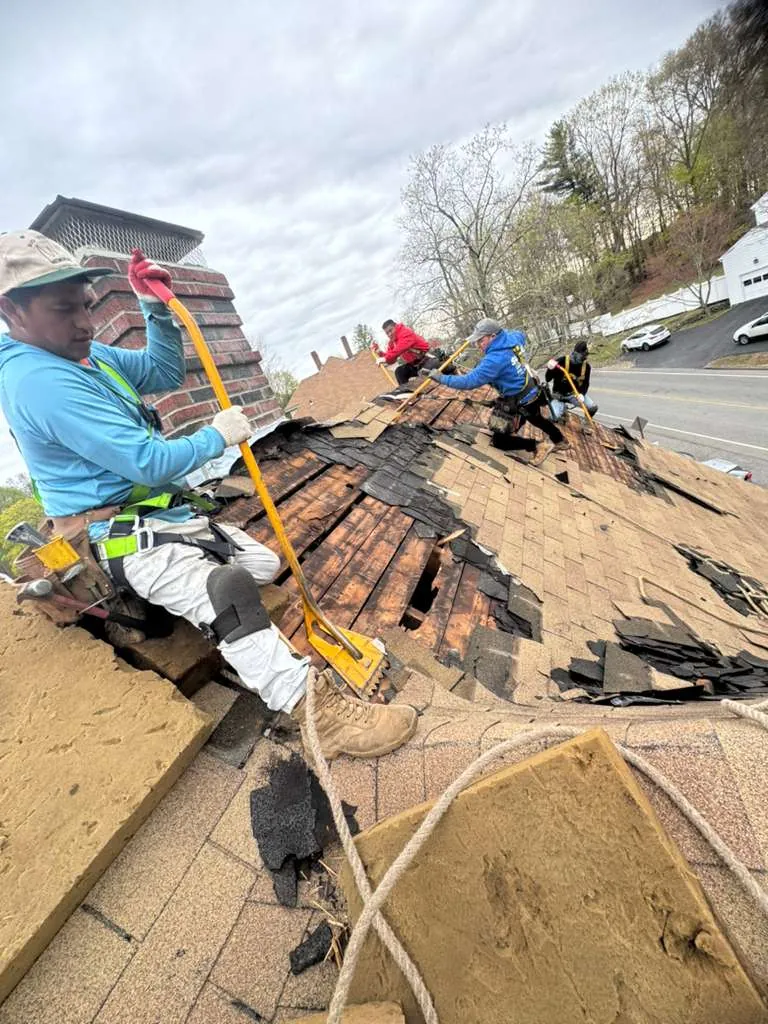
Three quick taps and a real person from A Class Chimney calls you back to set up a free roof inspection.
- Free roof inspection and written estimate
- Photos of everything we find
- A written price before any work starts
- Licensed and insured in Connecticut
Sunday to Friday
What do you need?
When?
Where should we call you?
Free, no obligation. Privacy
Common roofing questions
Related guides and services
Have us look at your roof
Free roof inspection, photos of what we find and a written price before any work. Licensed and insured in Connecticut.