
Emergency Roof Repair & Tarping in Connecticut
When water is pouring in or a tree has come through, the first job is keeping people safe. The second is stopping the water until a proper repair can be planned.
Sunday to Friday
Get everyone away from sagging ceilings and any place where water meets wiring, and call 911 if the structure looks unsafe or power lines are down. Then move valuables, catch the water and photograph the damage. A roofer can cover the opening with a properly secured tarp, which in Connecticut usually costs $300–$1,000 as a ballpark, with the permanent repair priced separately.
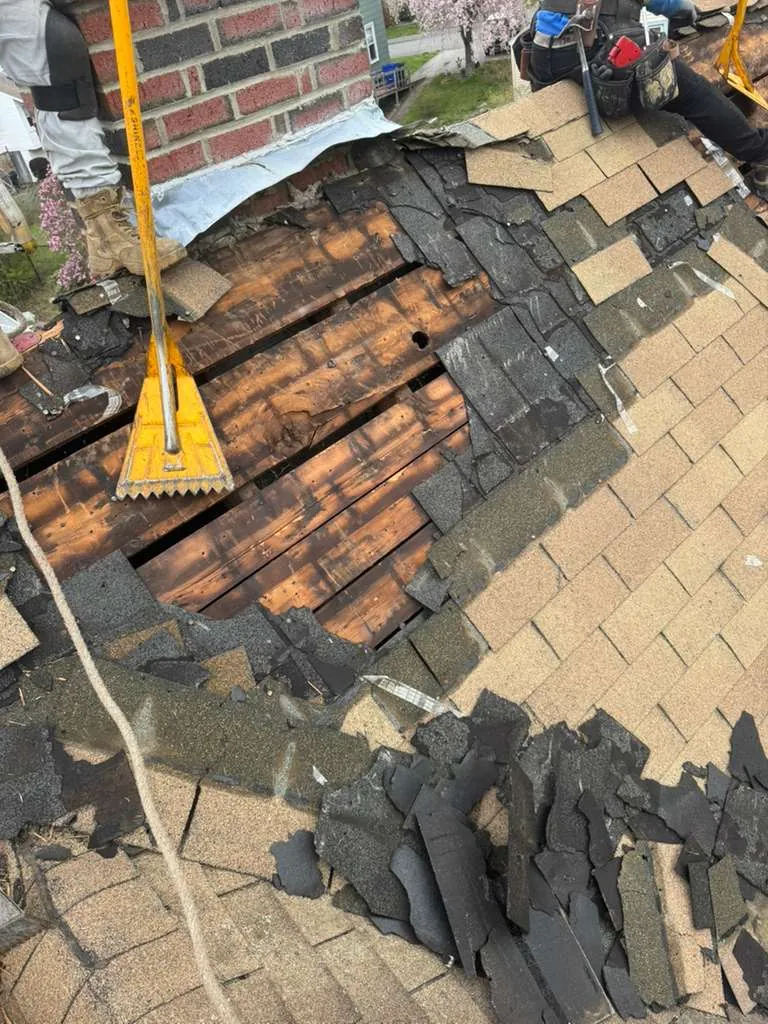
A ceiling that bulges or sags, water dripping from a light fixture or running near outlets or the electrical panel, cracking or groaning sounds from the framing, a tree resting on the house, or power lines down in the yard. Get everyone out of the area and call 911 if there is any doubt. Report downed lines to your electric utility, Eversource or United Illuminating depending on your town, and stay well away from them.
While you wait: the first hour inside the house
None of these steps involves a ladder. Your job is to limit the damage indoors; the roof belongs to a crew with the right equipment and calmer weather.
- Move what mattersCarry electronics, papers, rugs and small furniture out of the drip zone. Drape plastic sheeting or a shower curtain over anything too heavy to move.
- Catch the waterSet buckets, storage bins or a cooler under each drip, with towels around them to soak up splashes. Empty them before they overflow, and keep checking rooms below the leak too.
- Stay out from under a bulgeA ceiling holding water can let go without warning. Keep people and pets out of that room and leave the bulge for a professional to deal with.
- Photograph as you goTake pictures of the water, the ceilings, the roof as seen from the yard and anything damaged, with time stamps on. Insurers ask for this, and it is easy to forget once cleanup starts.
- Start drying once the dripping stopsRun fans and a dehumidifier and pull up soaked carpet and padding. Drywall and insulation that stay wet for more than a day or two can start to grow mold.
Is it an emergency? A quick way to decide
Not every drip needs a crew today. Use this to judge how quickly the roof needs attention, and read our page on roof leak repair for the slower, everyday kind of leak.
| What you’re seeing | How soon | Why |
|---|---|---|
| Tree or big branch punched through the roof | Today, after calling 911 if anyone is hurt or the house is shifting | The opening lets in every rain, and rafters may be cracked |
| Water running through a ceiling light or near wiring | Today, after everyone leaves the room | Water and electricity together are a shock and fire hazard |
| A large patch of shingles or flat-roof membrane torn away | As soon as it can safely be covered | The next band of rain goes straight into the decking and attic |
| A steady drip in one spot during heavy rain | Within a few days | Usually a flashing, pipe boot or shingle failure that can be traced |
| Leaking only while ice lines the eaves | Soon, then plan a lasting fix | Ice dams point to heat loss and ventilation, not just a bad shingle |
| A few shingles missing, no water inside | Book an inspection | Bare underlayment will not hold up long against wind-driven rain |
After-the-storm checklist
What to do, in order, after wind, hail or a fallen tree.
What emergency tarping is, and what it isn’t
A tarp is a temporary roof. Done properly, a heavy-duty tarp runs up and over the ridge so water cannot slip behind it at the top, and its edges are fastened down with wood strips so wind cannot get underneath. A tarp thrown over a hole and weighed down with a few bricks usually ends up in the neighbor’s yard after the next gust. Low-slope sections need a different method, because water pools on them and searches out the edges.
Emergency tarping in Connecticut runs about $300–$1,000 as a ballpark. The size of the opening, the pitch and height of the roof, and how hard the area is to reach all affect it, and the exact price is set in writing after the crew sees it. If a tree is lying on the roof, a tree service normally has to remove it before anyone can cover the opening.
A tarp buys time, but not a lot of it. Sun, wind and snow wear tarps out within weeks to a few months, so book the permanent repair now rather than after the next storm. For the wider picture of wind and tree damage, see storm damage roof repair.
After the tarp: pricing the permanent repair
Once the opening is covered and the weather has cleared, the damage can be assessed properly: decking, rafters, flashing, the attic and the ceilings below. These are 2026 Connecticut ballpark ranges for the permanent fix, and each one is confirmed in writing after a free look at the roof.
Look past the obvious hole. Water that ran along a rafter can surface two rooms away, and soaked attic insulation holds moisture for a long time and may need to come out. Ask for photos of the attic side as well as the roof, so hidden damage is not left for next season to discover.
If the storm also hit a chimney, the urgent steps change a little; our page on emergency chimney repair covers falling bricks and blocked flues.
- Emergency tarping: $300–$1,000
- Minor repair, such as torn shingles, a pipe boot or a short run of flashing: $350–$1,500
- Larger repair, such as a section of decking, a valley or several damaged areas: $1,500–$4,000
- Full replacement when damage is widespread or the roof was already near the end of its life: see roof replacement cost
Mistakes that turn storm damage into something worse
The urge to fix things yourself is strongest right after a storm, which is exactly when roofs, ladders and wet attics are at their most dangerous.
- Climbing onto a wet, icy or tree-covered roof to throw a tarp over the hole yourself
- Walking across attic joists above a soaked ceiling, where one slip puts a foot through the drywall
- Hacking at ice dams with a hammer, shovel or ax; our ice dam guide explains safer options
- Plugging fans or heaters into outlets near standing water
- Throwing out damaged materials before you or your insurer have photographed them
- Signing with a crew that knocked on the door after the storm before you have seen a written price
- Waiting for the tarp to fail before booking the real repair
When you call A Class with a roof emergency
Storms rarely respect office hours, and ours run 7 AM–8 PM from Sunday to Thursday and 7 AM–2:30 PM on Friday, with Saturday closed. A storm that hits after hours is still worth a callback request through the site, so your details are waiting when the phones open, but danger to people always goes to 911 first. A Class carries a Connecticut license and insurance, which is worth confirming with anyone you let onto a damaged roof.
- Describe what is happeningRing (203) 779-6787 and tell us where water is coming in, whether a tree or limb is involved, and what you can see from the yard. Ground-level photos help us plan the visit.
- Look before anything is pricedWe come out at no charge, find where the water is entering, and photograph the damage from the roof, or with a drone when getting close is not safe yet.
- Two prices on paperYou get a written price for the temporary cover and another for the permanent repair, before any work starts.
- Secure, repair, clean upThe crew secures the opening, returns for the permanent repair once you approve it, and leaves the yard and gutters clear of shingles, nails and branches from the roof.
Prefer we call you?
Three quick taps and a real person from A Class Chimney calls you back to set up a free roof inspection.
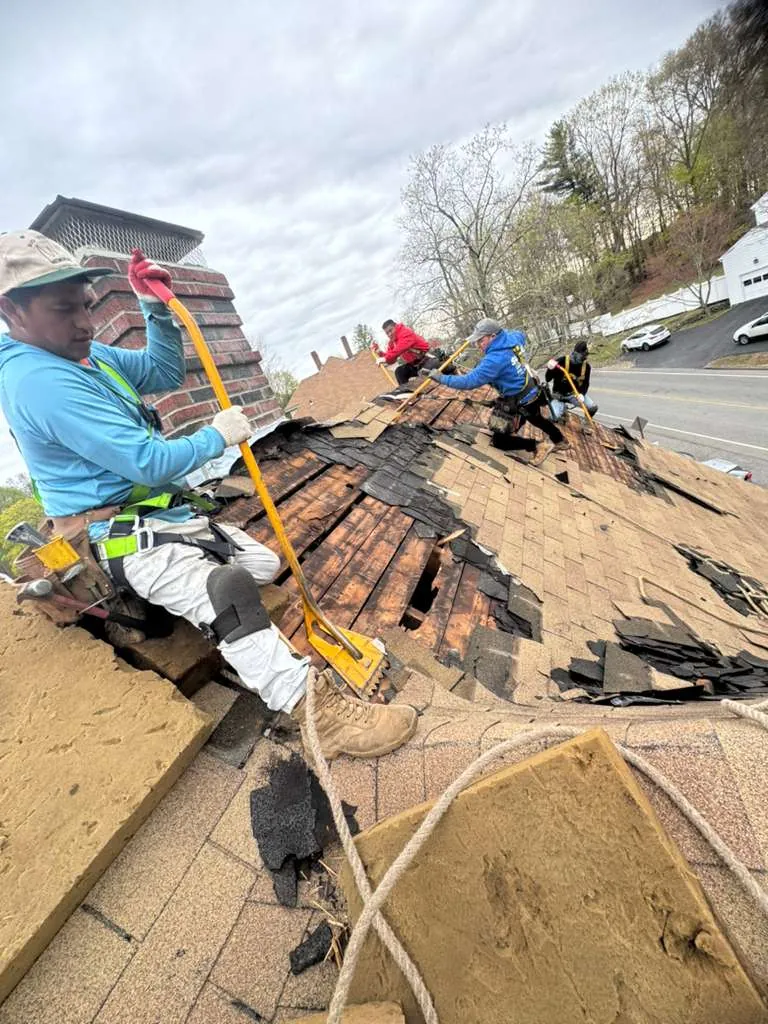
- Free roof inspection and written estimate
- Photos of everything we find
- A written price before any work starts
- Licensed and insured in Connecticut
Sunday to Friday
What do you need?
When?
Where should we call you?
Free, no obligation. Privacy
Common roofing questions
Have us look at your roof
Free roof inspection, photos of what we find and a written price before any work. Licensed and insured in Connecticut.