Chimney Service for Landlords & Multi-Family Homes in CT
A two- or three-family house can have several flues in one chimney, each serving a different unit or boiler. Here’s how to keep them all safe, documented and on schedule.
Sunday to Friday
In a multi-family home, every flue in the chimney needs a yearly inspection, not just the fireplace, because each unit’s boiler, furnace or water heater may vent through its own flue. Landlords should schedule service when tenants can provide access, keep photos and written records of each visit, and fix venting problems quickly since they affect more than one household. Ask your attorney or insurer what inspections or documentation apply to your rental.
Why multi-family chimneys are different
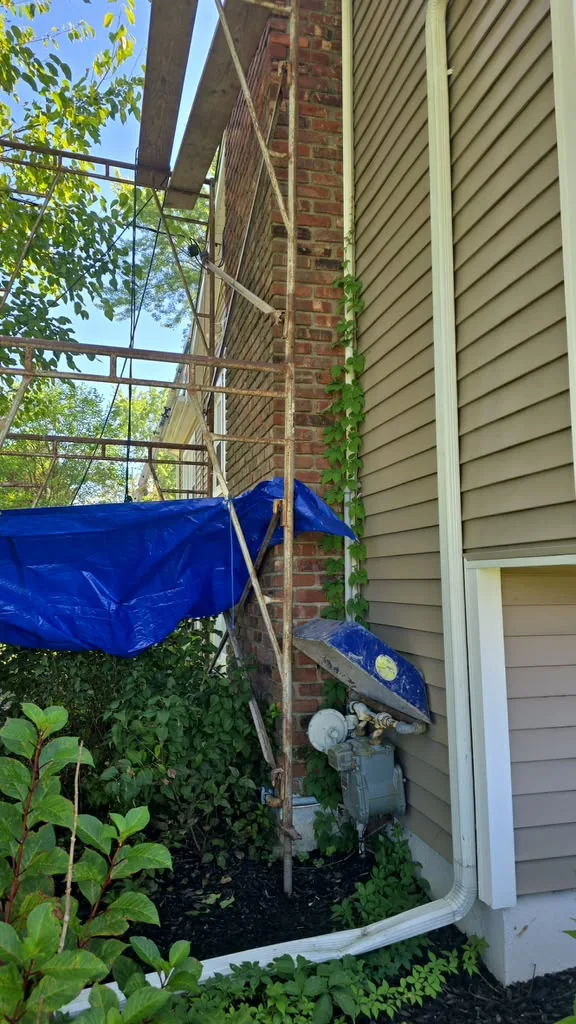
Connecticut’s cities and older towns are full of two- and three-family houses: stacked-porch homes in Hartford and New Haven neighborhoods, side-by-side duplexes, big Victorians converted into apartments. Their chimneys often hold several flues, one for each unit’s boiler or water heater, sometimes with a fireplace or two besides.
That changes the job in three ways. There’s more to inspect, since every flue is its own venting system. A problem in one flue can affect people who never use it, when exhaust or smoke finds its way through cracks into a neighboring flue or unit. And access involves tenants, schedules and keys, which makes one well-planned visit far easier than several piecemeal ones.
What tends to go wrong in multi-flue chimneys
Flues mismatched after upgrades
When one unit gets a high-efficiency boiler vented out the side wall, a water heater may be left in a flue that is now far too large for it, which weakens draft.
Worn clay liners
Decades of exhaust condensing inside clay tiles erode the joints. Cracks between side-by-side flues let exhaust cross from one to the next.
Soot and scale at the base
Oil heat, common in older Connecticut rentals, leaves soot and scale that collect at the bottom of the flue. More on oil heat flues.
Fireplaces nobody maintains
A fireplace in one unit can go years without a sweep because each tenant assumes someone else took care of it.
Weather damage up top
Large multi-flue chimneys have big crowns and lots of exposed brick, so cracked crowns and loose top courses are frequent findings.
One open flue
A single uncapped flue lets in rain, birds and debris, and the water then works into the shared masonry around every flue.
Ballpark price check
Typical Connecticut ranges for common chimney jobs.
What to watch in each type of building
The layout of the building shapes where problems hide. Use this to make sure nothing gets skipped.
| Building type | Typical flues | What to watch |
|---|---|---|
| Two-family, stacked units | One heating flue per unit, sometimes a fireplace | Flues aging at different rates; exhaust crossing between adjacent flues |
| Three-family | Three or more flues in one large chimney | A big crown and top courses exposed to weather; uneven upkeep |
| Side-by-side duplex | Separate chimneys, or one shared central chimney | Who maintains the shared masonry and cap |
| House converted to apartments | Original fireplaces plus newer appliance flues | Old fireplaces reopened without inspection; liners added piecemeal |
| Owner-occupied with a rental unit | Your fireplace plus the tenant’s heating flue | Easy to maintain your side and overlook the tenant’s |
A yearly chimney routine for landlords
A simple routine keeps every flue covered and gives you a clean record.
- List every flue: what it serves, which unit, and the fuel.
- Have every flue inspected once a year, as NFPA 211 recommends, ideally before the heating season.
- Coordinate with your heating technician’s service visit so the appliances and the chimney are both covered.
- Give tenants notice of the visit in line with your lease and local rules, and confirm access to each unit and the basement.
- Keep the photos and written findings for each flue with your property records.
- Make sure smoke and CO alarms are in place and working, and ask your attorney or town what’s required for your rental.
- Re-inspect after any boiler or water heater replacement, a chimney fire, or storm damage.
- Ask tenants to report smoke smells, soot, water stains or alarm chirps right away.
Tell them to get everyone out of the unit and call 911 from outside, and not to go back in until the fire department says it’s safe. Once the building is cleared, have both the heating appliance and the chimney flue checked before that system runs again.
Old fireplaces in rental units
Converted houses often have original fireplaces in apartments that were closed up decades ago, then rediscovered by a tenant who wants a fire. Before any of them is used, have the flue cleaned and inspected and the liner checked; an unlined or cracked flue next to another unit’s living space is not something to find out about mid-winter.
For many landlords, the simpler answer is to retire those fireplaces for good: cap the flue, close it with a top-sealing damper, and let tenants know in writing that the fireplace isn’t for use. Our guide to what to do with an unused chimney covers the options. Whichever way you go, decide it deliberately rather than leaving it to each tenant.
Records that protect you
For a rental, a chimney visit should leave a paper trail. Photos of each flue and the chimney top, a short written description of condition, and a dated invoice show what was checked and when. If you ever face an insurance claim, a tenant concern or a sale, those records answer questions quickly. Our post on insurance and chimney repairs explains why documentation matters.
What inspections or documentation the law requires for your rental, and what your insurer expects, varies; ask your attorney, insurer or town rather than relying on a contractor. A formal Level 2 inspection report is the right tool when buying or selling a multi-family property or after a chimney fire. Routine yearly service is normally a Level 1.
How A Class works with landlords
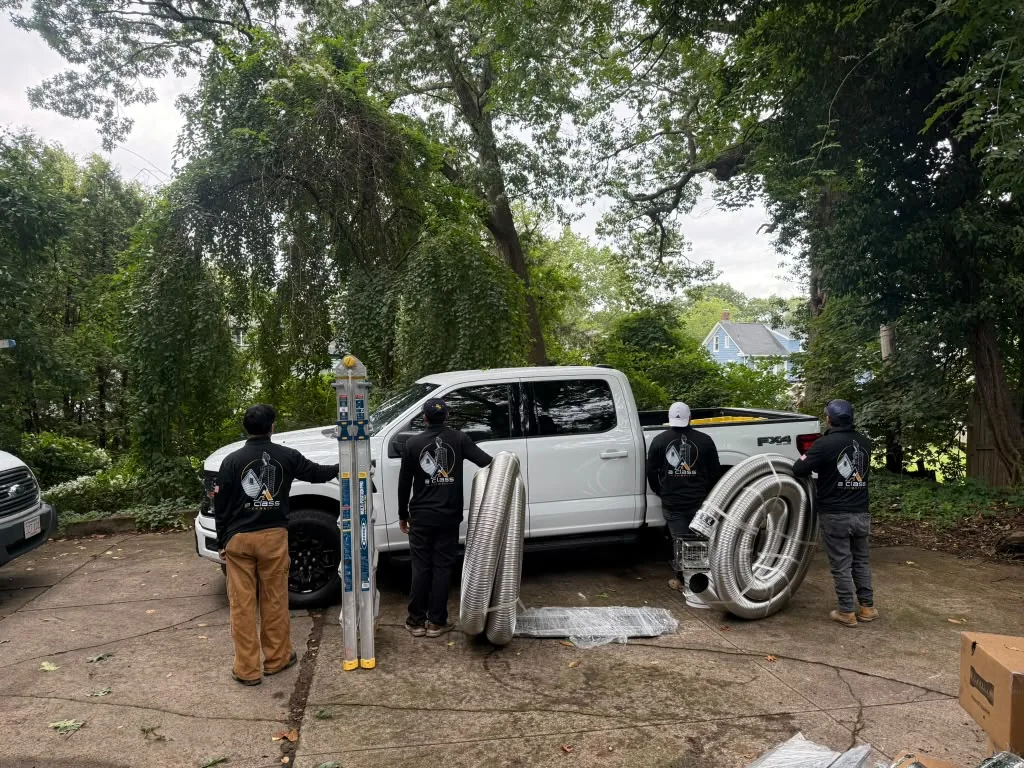
Call (203) 779-6787 or send a callback request with the address, the number of units and flues, and how each unit is heated. We’ll set up a $59 inspection visit at a time that works for you and your tenants, photograph the chimney top (drone photos save a climb on tall multi-family roofs), and check the flues.
You get the photos and a written price for any cleaning or repair before work begins, so you can see which flue needs what. As 2026 Connecticut ballparks, cleaning plus a Level 1 inspection runs $150–$350 for a standard chimney, relining $1,500–$4,000+, and crown repair $200–$1,200. A chimney with several flues costs more because there’s more to do, and your actual numbers are written up after we’ve seen the building.
Inside the units we put down drop cloths and clean up, so tenants aren’t left with soot on the floor. Boilers, furnaces and gas piping stay with your licensed heating technician; we take care of the chimney and its flues. If something on the appliance side looks off, we’ll photograph it so you can pass it along.
Prefer we call you?
Three quick taps and a real person from A Class Chimney calls you back to set up a $59 on-site inspection.
- $59 on-site visit and written estimate
- Photos of everything we find
- A written price before any work starts
- Licensed and insured in Connecticut
Sunday to Friday
What do you need?
When?
Where should we call you?
Free, no obligation. Privacy
Common questions
Have us take a look
$59 on-site visit, photos of what we find and a written price before any work. Licensed and insured in Connecticut.