Chimney Inspection When Buying or Selling a Home in CT
A general home inspection looks at the chimney from the outside. A Level 2 chimney inspection looks inside every flue and gives you photos and a written report you can negotiate with.
Sunday to Friday
When a home changes hands, NFPA 211 recommends a Level 2 chimney inspection, which adds a camera scan of every flue and a check of accessible attic and basement areas to the basic visual look. In Connecticut it runs about $250–$500 as a 2026 ballpark. Book it as soon as your offer is accepted so there is time to price any repairs before your inspection period ends.
Why a home inspection is not a chimney inspection
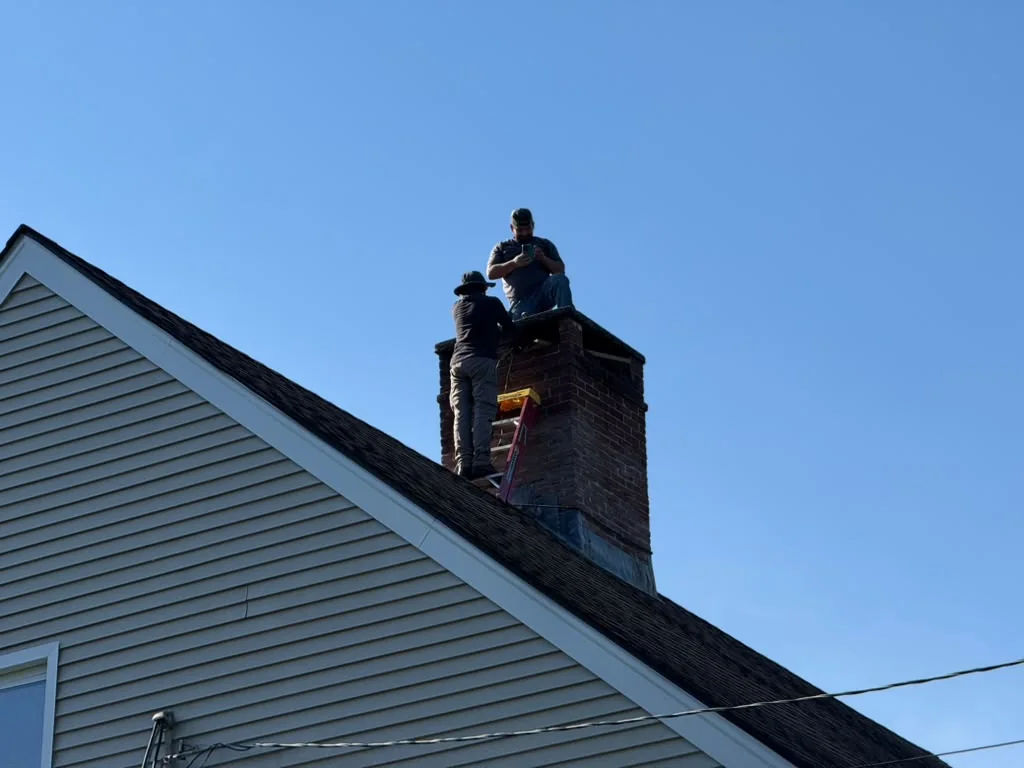
A general home inspector usually looks at the chimney from the ground or the roof edge, opens the damper and shines a flashlight up the flue. That is a reasonable screen, but it cannot show a cracked flue tile two stories up, open mortar joints between liner sections, or a smoke chamber that was never parged. It is common for the chimney section of a home inspection report to end with a line recommending evaluation by a chimney professional.
That gap matters in Connecticut, where much of the housing stock is older: colonials, Victorians and mid-century capes, often with clay-tile liners that have been through decades of freeze–thaw winters, and some with no liner at all. Many of these homes also vent an oil boiler or furnace into a second flue of the same chimney, which is easy to overlook when everyone is focused on the fireplace.
What a Level 2 inspection covers at a sale
A Level 2 includes everything in a Level 1 and adds the checks below. For a side-by-side comparison of the two, see Level 1 vs. Level 2 inspections.
Camera scan of every flue
A video camera runs the length of each flue to look for cracked or shifted tiles, open joints, heavy creosote and blockages. This is where most hidden problems show up. More on how it works in our camera and drone inspection guide.
The top of the chimney
Crown, cap, flashing and upper brickwork are checked, with drone photos of the top so the buyer or seller can see the condition rather than take anyone’s word for it.
Attic, crawl space and basement
Where they can be reached, the parts of the chimney that pass through the house are checked for water staining, deteriorated masonry and clearance concerns around framing.
Flues serving the heating system
The flue that vents an oil or gas boiler, furnace or water heater is checked for condition and connection. The appliance itself is a job for a licensed heating technician.
A written report with photos
Findings come in writing with photos. That is what your agent and attorney need if you plan to ask for repairs or a credit.
Which inspection do you need?
Tick what applies and get the right inspection level.
Questions to settle before the chimney inspection
Ask the seller or listing agent these early in your contingency period. The answers tell the inspector where to look hardest.
- How many flues does the chimney have, and what is each one connected to: fireplace, wood stove, oil boiler, water heater?
- When was the fireplace last used, and when was the chimney last swept?
- Is there a stainless liner, and is there any paperwork showing when it was installed?
- Has the heating system been converted, for example from oil to gas? A fuel change can mean the flue needs a different liner.
- Are there water stains on ceilings or walls near the chimney, or in the attic around it?
- Does the seller have receipts for past chimney repairs?
- Is the chimney leaning, missing bricks, or streaked with white or rust stains when you look at it from the street?
- How many days remain in your inspection period, and how does your contract handle repair requests? Your agent or attorney can answer this one.
Common findings at a home sale, and what they mean
These are the findings that most often turn up when a chimney is inspected for a sale. Ballpark ranges are Connecticut 2026 figures to help you size a credit; the exact repair price is set in writing after the chimney has been seen. The full list is on our chimney repair cost page.
| Finding | What it means | Typical next step and ballpark |
|---|---|---|
| Cracked or missing flue tiles | The liner no longer contains heat and exhaust reliably | Stainless relining, $1,500–$4,000+ |
| Cracked or crumbling crown | Water is getting into the top of the chimney | Crown repair or sealing, $200–$1,200 |
| Eroded mortar joints | Water entry and loosening brick | Tuckpointing, $800–$3,000+ |
| Rusted or missing cap | Rain, animals and debris can enter the flue | New stainless cap, $150–$600 |
| Leak stains at the roofline | Flashing has failed or pulled away | Flashing repair or replacement, $400–$1,500 |
| Loose or leaning top section | Masonry above the roof is failing | Partial rebuild, $3,000–$8,000 |
| Heavy or glazed creosote | Fire risk; the chimney is overdue for cleaning | Cleaning before the fireplace is used |
Timing the inspection in a Connecticut sale
Inspection windows in a purchase contract are often short, so schedule the chimney inspection as soon as your offer is accepted instead of waiting for the home inspection report to flag it. If repairs are found, you want a written repair price in hand while you can still negotiate.
Winter sales add a wrinkle. Snow on the roof can hide part of the crown or flashing, so ask that the report note anything that could not be seen. Exterior masonry work needs workable temperatures, so a problem found in January may be priced now and repaired in spring; our guide to chimney repair in winter explains what can and cannot wait.
Sellers can benefit from inspecting before listing. Finding a cracked crown or a failed liner early lets you repair it, or price it into the listing, before a buyer’s inspector raises it in the middle of negotiations. A clean recent report is also something you can hand to buyers who ask.
How A Class handles a home-sale inspection
Call (203) 779-6787 or request a callback and tell us the address, your closing timeline and whether you are the buyer or the seller. We set a time and let you know what access is needed: attic hatch, basement, and a fireplace cleared of logs and ash.
On site, the tech lays drop cloths, runs the camera through each flue, photographs the top with the drone and checks the parts of the chimney that can be reached inside the house. You receive a written report with photos. If repairs are needed, you also get a written price for them, so your agent is negotiating with a real number instead of a guess.
The formal Level 2 report is a paid service. If you only want a chimney looked at and a specific repair priced outside of a sale, that visit and written estimate are free.
A photo of a cracked flue tile next to a written repair price carries more weight than a home inspection line saying further evaluation is recommended. Share both with your agent, and let your attorney handle how any credit or repair is written into the contract.
Prefer we call you?
Three quick taps and a real person from A Class Chimney calls you back to set up a $59 on-site inspection.
- $59 on-site visit and written estimate
- Photos of everything we find
- A written price before any work starts
- Licensed and insured in Connecticut
Sunday to Friday
What do you need?
When?
Where should we call you?
Free, no obligation. Privacy
Common questions
Have us take a look
$59 on-site visit, photos of what we find and a written price before any work. Licensed and insured in Connecticut.