
Historic Chimney Restoration in Connecticut
Old chimneys were built with softer brick, lime mortar and often no liner at all. Repairing them well means respecting how they were made while making them safe to use today.
Sunday to Friday
Historic chimney restoration means making an old chimney safe and watertight without erasing its original character: rebuilding loose tops, repointing with mortar that suits soft old brick, matching brick where it must be replaced, and relining flues that were never lined. The mistake to avoid is hard modern mortar on soft historic brick, which pushes moisture into the brick faces and makes them crumble.
What makes an old Connecticut chimney different
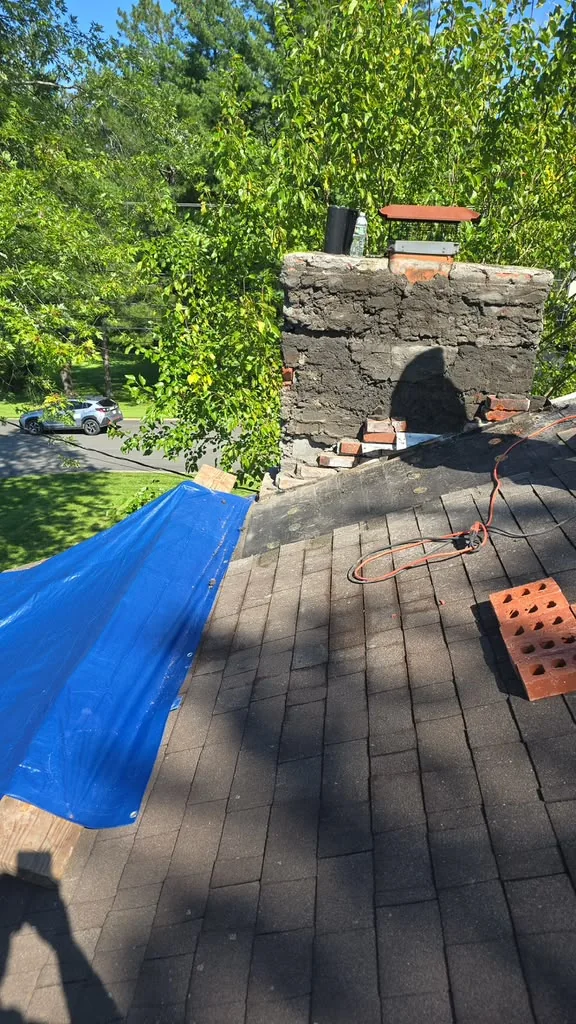
Connecticut has some of the oldest housing stock in the country: center-chimney colonials, Federal and Greek Revival homes, Victorians with tall decorative stacks, and early-1900s foursquares and bungalows. Their chimneys were built for wood and coal, long before modern liners and building codes.
Three things set them apart. The brick is often softer and more absorbent than modern brick. The mortar was usually lime-based, softer and more flexible than today’s cement mortars. And many flues were never lined, or were lined with clay tile that has since cracked.
Add a century or two of freeze-thaw winters and you get chimneys that look solid from the street but are loose at the top and leaky inside. Restoration is about fixing that while keeping what makes the chimney worth keeping.
Common problems on older chimneys
Loose top courses
The bricks above the roofline take the worst weather. Mortar washes out, bricks lose their bond, and the top few courses start to shift.
No real crown
Many old chimneys have a thin mortar wash instead of a proper crown, so water soaks straight into the masonry. See our crown repair page.
Unlined or cracked flues
Smoke and gases can pass through mortar joints toward framing and living space. This matters most for a flue serving a fireplace, stove or boiler you actually use.
Wrong-mortar patches
Earlier repairs with hard cement mortar, caulk or tar trap moisture and push damage into the brick faces around them.
Odd-sized shared flues
Big center chimneys often hold several fireplaces and flues of unusual sizes, which complicates relining and draft.
Failed old flashing
Original lead or tarred flashing has usually given out, letting water run inside walls. Our flashing and leak repair page explains the modern fix.
Chimney symptom checker
Tick what you have noticed and see what it usually means.
Mortar: the decision that matters most
The core rule of old-chimney repair is that new mortar should be softer than the brick around it. Mortar is meant to be the sacrificial part of the wall. When the masonry moves and gets wet, the joint should take the stress and eventually be repointed, not the brick.
Modern Portland-cement mortar is much harder and less breathable than lime mortar. Pack it into a soft historic chimney and moisture that gets in can’t leave through the joints, so it exits through the brick faces instead. Freeze-thaw cycles then pop those faces off, which is the spalling you see on many old chimneys that were ‘fixed’ once before.
Good repointing on an old chimney means raking out failed joints carefully, choosing a mix that suits the brick, and matching color and joint profile so the repair blends in. Our tuckpointing and repointing page covers the process. As a ballpark, repointing runs $800–$3,000+ depending on how much of the chimney needs it.
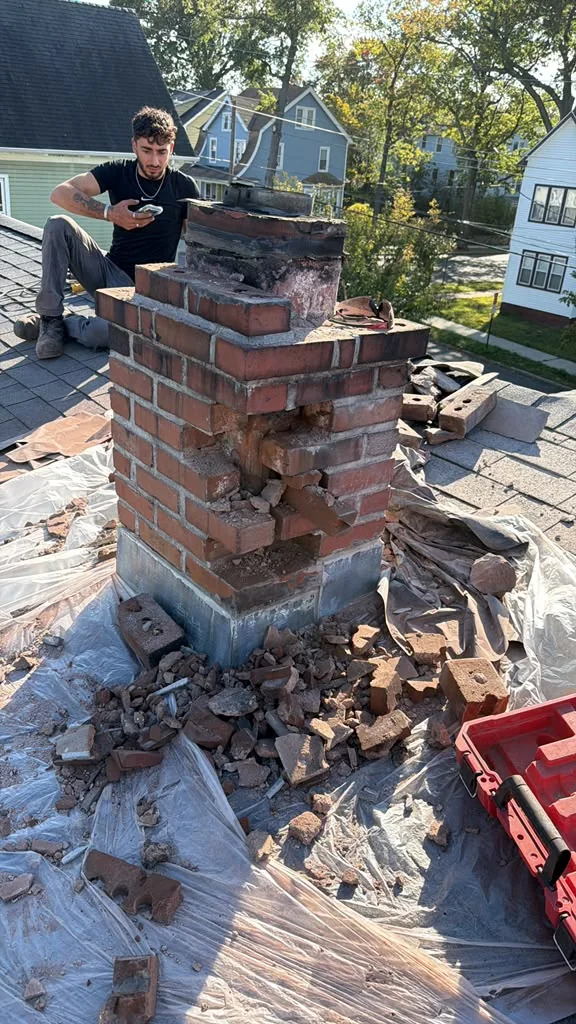
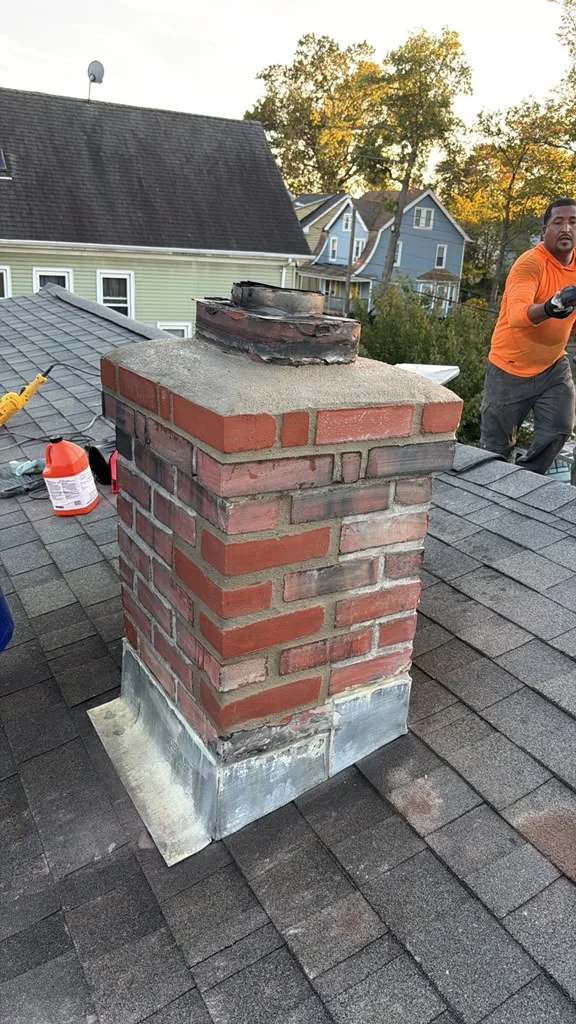
A real partial rebuild, before and after
The same chimney, during and after the work. The damaged top courses come down with the roof covered in tarps, then the top is rebuilt and finished with a new crown.
Repair, restore or rebuild: matching the fix to the condition
Old chimneys rarely need to come down entirely. The goal is the least invasive repair that makes the chimney sound. These are 2026 Connecticut ballpark ranges, and the real price for your chimney is written up after a $59 on-site inspection.
| Condition | Usual approach | Ballpark |
|---|---|---|
| Eroded joints, bricks still solid | Repoint with compatible mortar | $800–$3,000+ |
| A handful of spalled or cracked bricks | Replace with matched or salvaged brick | $500–$2,500 |
| Cracked or missing crown | Repair or rebuild the crown | $200–$1,200 |
| Top courses loose above the roof | Partial rebuild above the roofline, reusing sound brick where possible | $3,000–$8,000 |
| Unlined or badly cracked flue | Stainless liner, or HeatShield resurfacing if the tiles are mostly intact | $1,500–$4,000+ for stainless relining |
| Chimney leaning or failing below the roof | Full rebuild, assessed case by case | $8,000–$20,000+ |
Keeping the original look
On a historic house the chimney is part of the street view. Decorative corbels, a particular brick color, or a stucco or parged finish are worth preserving. Before work starts, look at photos of the chimney from the ground and from above, and agree on what the finished top should look like: the same number of courses, the same corbel detail, the same finish.
Brick matching is part craft and part sourcing. New brick can come close on color and size; salvaged brick often gets closer on texture. Expect a repair to look slightly fresh for a season or two while it weathers in.
If your home is in a local historic district, the town’s historic district commission may need to approve exterior changes visible from a public street, such as a different cap style, a top that changes profile, or removing a chimney altogether. Check with the commission before you commit. Stainless chimney caps come in low-profile styles that sit quietly on an old roofline.
Questions to ask anyone working on an old chimney
Whoever you hire, these answers tell you whether they’re treating the chimney as a historic structure or as a generic brick box.
- What mortar will you use for repointing, and how does it compare in hardness to my brick?
- How will you remove the old mortar without chipping the edges of soft brick?
- Where will replacement brick come from, and can I see a sample next to the original?
- Will the rebuilt top keep the same height, corbels and profile?
- What will you do about the unlined or cracked flues, and which flues will stay in use?
- How will the roof around the chimney, including slate or old shingles, be protected?
- Will I get photos of what you found before the work starts?
How a restoration job runs with A Class
- Tell us about the houseCall (203) 779-6787 or request a callback. Mention roughly when the house was built, which fireplaces or appliances you use, and whether it’s in a historic district.
- $59 inspection visit and documentationWe look at the chimney inside and out, photograph the top (a drone keeps everyone off fragile slate and old shingles), and check the flues with a camera.
- A written plan and priceYou get a written price before anything is touched. If you’d like to phase the work, ask us to list safety and water items separately from cosmetic ones.
- Careful, tidy workDrop cloths inside, protection for plantings and old roofing outside, and a full clean-up when the job is done.
- A walk-through at the endWe go over the finished chimney with you and the photos of what we found, which are also worth keeping with the house records.
Prefer we call you?
Three quick taps and a real person from A Class Chimney calls you back to set up a $59 on-site inspection.
- $59 on-site visit and written estimate
- Photos of everything we find
- A written price before any work starts
- Licensed and insured in Connecticut
Sunday to Friday
What do you need?
When?
Where should we call you?
Free, no obligation. Privacy
Common questions
Have us take a look
$59 on-site visit, photos of what we find and a written price before any work. Licensed and insured in Connecticut.