
Chimney Sweep & Repair in Simsbury, CT
Sweeping, inspections and restoration for Simsbury’s colonial-era houses and the newer homes in Simsbury Center, Weatogue, West Simsbury and Tariffville.
Sunday to Friday
A Class Chimney cleans, inspects and repairs chimneys in all four Simsbury villages. For routine upkeep, that means an annual sweep and Level 1 inspection; if you are buying an older house, a Level 2 inspection with camera footage is the way to find hidden flue damage before closing. The on-site estimate is free.
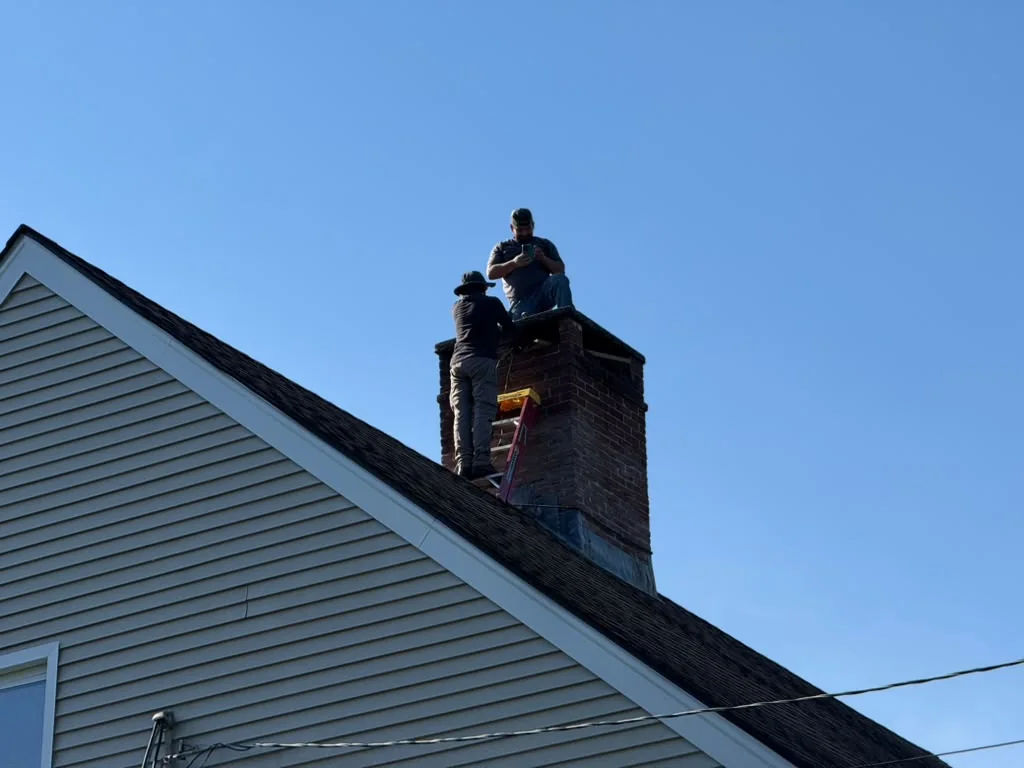
Colonial houses and postwar neighborhoods in one town
Simsbury is one of Connecticut’s older towns, incorporated in 1670 and resettled after it was burned in 1676 during King Philip’s War. Houses from the 1700s still stand in places like Simsbury Center, East Weatogue and Terry’s Plain; the John Humphrey House dates to about 1760 and the Capt. Elisha Phelps House to 1771.
The town stayed small for a long time, around 5,000 people in 1950, then grew quickly as families moved out to the suburbs after the war. With about 25,000 residents today, most houses across Weatogue, West Simsbury, Tariffville and the center are mid-century and later colonials, capes and contemporaries.
Those two groups need different things. An 18th-century house may have a big central chimney serving several fireplaces, with no modern liner at all. A house from the 1960s onward usually has one or two clay-lined flues, and sometimes a wood stove or insert added years after it was built.
Many older houses have also been added onto over the centuries, so one home can have an original chimney in the oldest section and a newer one in a later wing. Each needs its own inspection, because they were built decades or even centuries apart.
Buying an older Simsbury house? Check these first
A general home inspector covers a lot, but does not normally run a camera through the flue. Before you close on an older house, ask about the items below, and consider a real estate chimney inspection.
- Whether each flue has a liner, and what kind: clay tile, stainless steel, or none
- When the chimney was last cleaned and inspected, with paperwork if the sellers have it
- Whether a fireplace was converted to a wood stove or insert, and whether a liner went in with it
- Cracks or open joints in the firebox and around the hearth
- Stains on ceilings or walls near the chimney
- The state of the crown and the upper mortar, seen from the ground or in drone photos
- Any mention of a past chimney fire in the disclosures
- Which fireplaces the sellers actually used and which have sat cold for years
Chimney symptom checker
Tick what you have noticed and see what it usually means.
Why a Level 2 matters on a colonial chimney
NFPA 211 recommends a Level 2 inspection when a property is sold or transferred. On an old center chimney that recommendation earns its keep, because the costly problems, such as missing mortar between flues, cracked or absent liners and old repairs done badly, sit inside the masonry where nobody sees them.
A Level 2 adds a camera run through each accessible flue and a look at the chimney in the attic, basement and on the roof, with a written report. It is a paid service, about $250 to $500 in Connecticut as a ballpark. The difference between the two levels is laid out in Level 1 vs. Level 2 chimney inspection.
If the report shows work is needed, an old chimney can usually be brought back without losing its character. Our historic chimney restoration page covers mortar matching, relining and rebuilding the top.
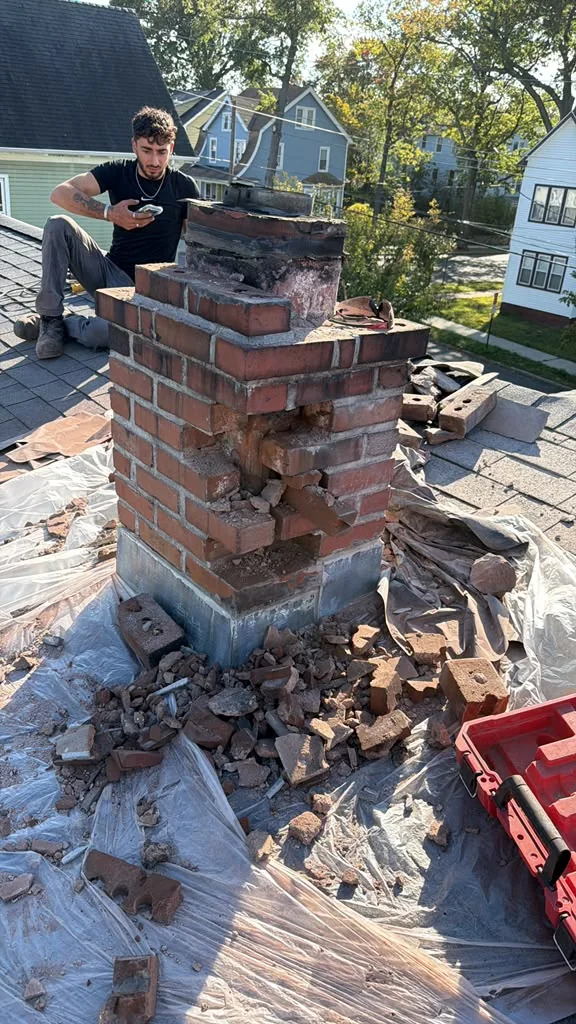
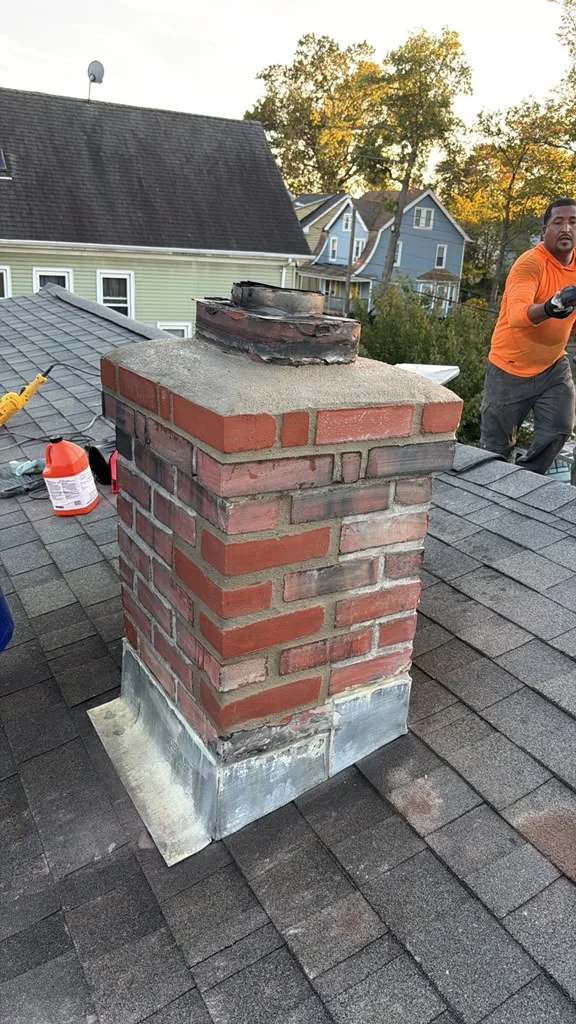
Recent work: a partial chimney rebuild
The same chimney, during and after the work. The damaged top courses come down with the roof covered in tarps, then the top is rebuilt and finished with a new crown.
Wood stoves, inserts and yearly upkeep
Stove and insert flues
A stove or insert set into a fireplace should vent through a liner sized and connected to that appliance. See wood stove and insert chimney service.
Creosote
Wood that is not fully seasoned leaves sticky, tar-like creosote that can ignite. A yearly sweep keeps it from building up to a dangerous level.
Leaves and nests
With Talcott Mountain, Stratton Brook State Park and plenty of wooded yards, leaves and nesting animals find open flues easily. A stainless cap keeps them out.
Relining
When a clay liner is cracked or the wrong size for a stove, a stainless liner is the usual fix, about $1,500 to $4,000+ as a ballpark.
After a suspected chimney fire
A loud roar, sparks from the top or puffy, flaky creosote afterward all point to a chimney fire. Have a Level 2 inspection before the next fire; see what causes chimney fires.
Working with A Class from start to finish
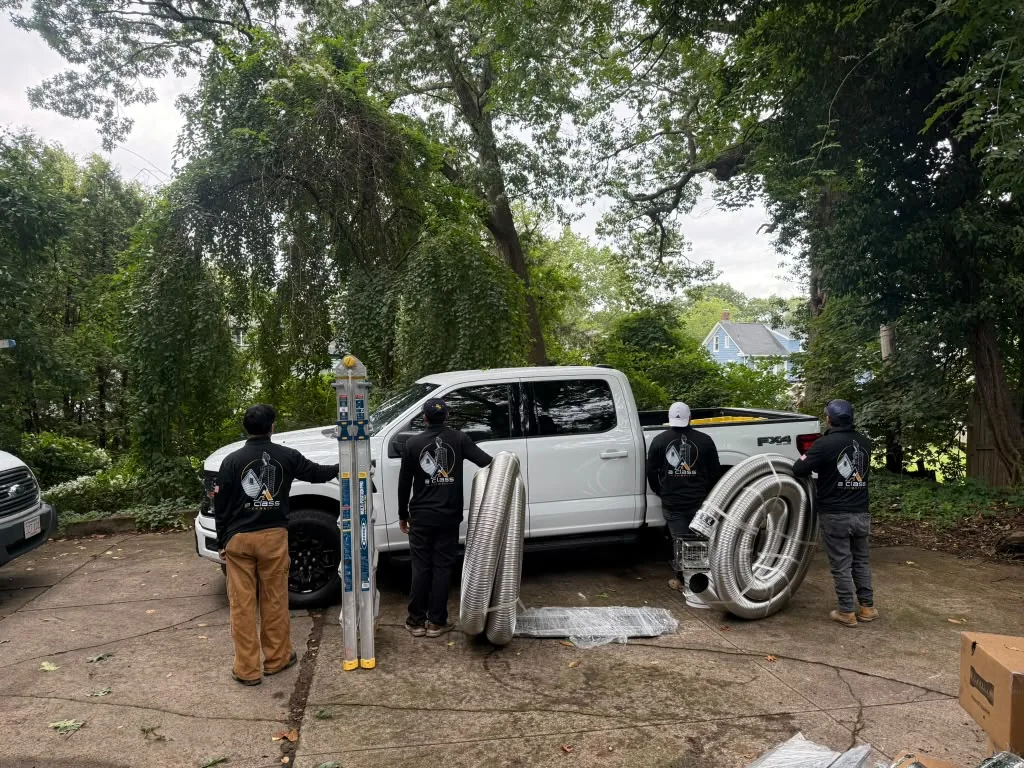
A phone call or callback request gets things started. We will ask what kind of house it is and which fireplaces or stoves are in use, then book a technician to visit without charge.
During the visit we check every flue we can reach, use a camera where needed, and take photos, including drone shots of the chimney top. You receive the pictures and a written estimate. If you are in the middle of a purchase, we can price a formal Level 2 report instead. Work begins only after you approve it, with drop cloths down and a full clean-up at the end. In a lived-in historic home, we talk through dust control and which rooms we need to reach before the work day.
Booking from Simsbury
Call (203) 779-6787 or use the callback form. If you are under contract on a house, tell us your inspection deadline when you get in touch so we can talk about timing. We work throughout Simsbury and in neighboring Avon and Bloomfield.
Prefer we call you?
Three quick taps and a real person from A Class Chimney calls you back to set up a $59 on-site inspection.
- $59 on-site visit and written estimate
- Photos of everything we find
- A written price before any work starts
- Licensed and insured in Connecticut
Sunday to Friday
What do you need?
When?
Where should we call you?
Free, no obligation. Privacy
Simsbury chimney questions
Chimney help in Simsbury
$59 on-site visit, photos of what we find and a written price before any work. Licensed and insured in Connecticut.