Chimney Camera & Drone Inspection in CT
A camera shows what a flashlight cannot, and a drone shows you the top of the chimney without anyone describing it secondhand. Here is what each one finds and when it is worth booking.
Sunday to Friday
A chimney camera inspection runs a video camera up the inside of the flue to find cracked tiles, open joints and blockages that cannot be seen from the fireplace, while drone photos cover the crown, cap and flashing from above. Together they are the core of a Level 2 inspection, which costs roughly $250–$500 in Connecticut (2026 ballpark).
What a flashlight misses
Standing in the fireplace with a light, you can see the damper, the smoke shelf and perhaps the first few feet of flue. The rest, often two stories of it, is out of sight. A sweep’s brush can tell you the flue is passable, but not what condition the tiles are in.
Damage tends to hide in exactly that unseen stretch. Clay flue tiles crack from heat shock during a fast, hot fire or a chimney fire. Mortar between tile sections erodes and leaves gaps. Offsets, where the flue bends around framing, collect creosote. And water from a cracked crown attacks the upper tiles first, far from any flashlight beam.
In older Connecticut houses there is a more basic question a flashlight cannot answer: whether the flue is lined at all. Some chimneys built before clay liners became standard practice have bare brick inside, and the only way to know for certain is to look up the full height of the flue.
What the camera can find inside the flue
Cracked or shifted tiles
Cracks and slipped sections let heat and exhaust reach the brick and the house framing around the chimney. They are a frequent reason a flue needs relining.
Open mortar joints
Gaps between tile sections are easy to miss and do the same harm as a crack. On camera they show up as dark bands where the joint should be smooth.
Glazed or heavy creosote
Shiny, tar-like creosote is hard to remove and burns hot. The camera shows how thick it is and where it has built up. See creosote dangers and removal.
Blockages and nests
Fallen brick, leaves and nesting material. If you hear birds in summer, read about chimney swifts first, because they are federally protected while nesting.
Wear in oil and gas flues
Exhaust from oil and gas appliances forms acidic condensation that eats at mortar and tile over time. Flaking scale and crumbling joints show up clearly on video.
Damage after a chimney fire
Puffy, honeycombed creosote, cracked tiles and heat-damaged joints. After any suspected fire, a camera look comes before the next use. More on chimney fire damage.
Which inspection do you need?
Tick what applies and get the right inspection level.
What the drone adds from above
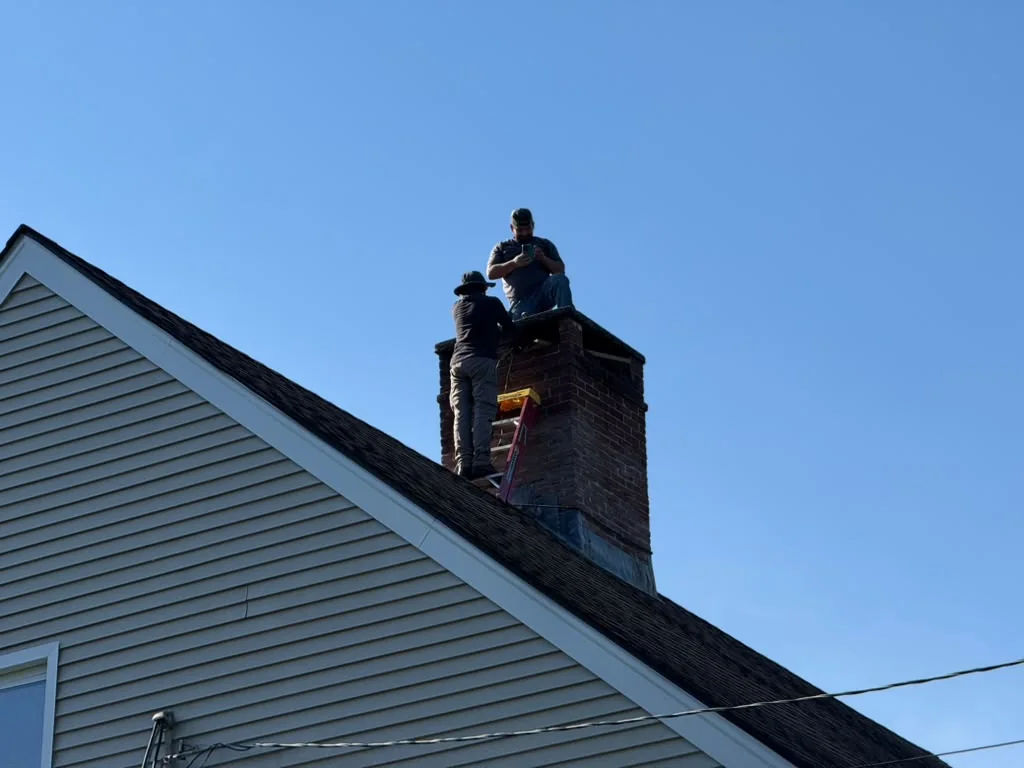
The top of the chimney takes the worst of Connecticut weather: freeze–thaw cycles all winter, nor’easter rain driven sideways for hours, and salt air near the shore. Cracked crowns, loose top courses of brick, rusted caps and lifted flashing all start up there, and they are hard to judge from the driveway.
Drone photos put the chimney top on a screen in front of you at close range. You can see whether the crown is cracked or just stained, whether the cap is rusted through, and whether the flashing is still tight to the brick. If the difference between a cap and a crown is fuzzy, our cap vs. crown explainer helps.
The drone does not replace hands-on work. Testing loose brick, checking sealant at the flashing and measuring for a cap still happen in person. What it does replace is the old routine of a homeowner squinting from the yard, or worse, climbing up to look. Please do not do that.
When a camera inspection is worth paying for
NFPA 211 recommends a Level 2 inspection, which includes the video scan, in specific situations. In practical terms, book one if any of these apply:
- You are buying or selling the house. See real estate chimney inspections.
- There was a chimney fire, a lightning strike, or a storm or falling limb that hit the chimney.
- You are changing fuel or appliance, say replacing an oil boiler with a gas one, or adding a wood stove or insert to the chimney.
- Smoke or odors show up in rooms where they should not.
- The fireplace smokes into the room and the cause is not obvious.
- There are water stains near the chimney and nobody can find the source.
- The house is old and no one knows whether the flue has a liner.
- A sweep or home inspector saw something in the flue they could not fully evaluate.
Reading the footage: what is serious and what is not
Not every mark on a video is a defect. Light soot and a thin coat of dry creosote are normal in a chimney that gets used, and a cleaning takes care of them. Fine surface crazing on an old clay tile is also different from a crack that runs through the tile or a section that has slipped out of line.
Ask the tech to show you on the screen exactly what they are calling a problem and where it sits in the flue. A useful finding names the location, describes the defect and says what it means for using the fireplace or appliance. If a finding means you should stop using that flue until it is fixed, you should hear that plainly, along with what the fix involves and a written price.
How a camera and drone inspection runs with A Class
A formal camera inspection with a written report is a Level 2 inspection, and it is a paid service. If you only need a repair looked at and priced, that visit and written estimate are free.
- Tell us why you want itA home sale, a fire, a fuel change or a mystery leak each point the inspection at different questions, so we ask when you call.
- Prep inside the houseDrop cloths go down at the fireplace and any cleanouts, and we check the parts of the chimney reachable from the attic and basement.
- Camera through each flueEvery flue gets scanned, not only the fireplace one. That includes the flue venting your boiler or water heater.
- Drone over the topClose-up photos of the crown, cap, flashing and upper brick, taken without anyone guessing from the ground.
- Report and written priceYou receive the findings with photos. If anything needs repair, the price is in writing before any work is scheduled.
Do not keep burning while you wait for the repair. A cracked or missing liner section lets heat and exhaust reach wood framing and lets carbon monoxide find its way into the house. If you ever have smoke filling the house, a suspected chimney fire or a CO alarm, get everyone out and call 911.
Prefer we call you?
Three quick taps and a real person from A Class Chimney calls you back to set up a $59 on-site inspection.
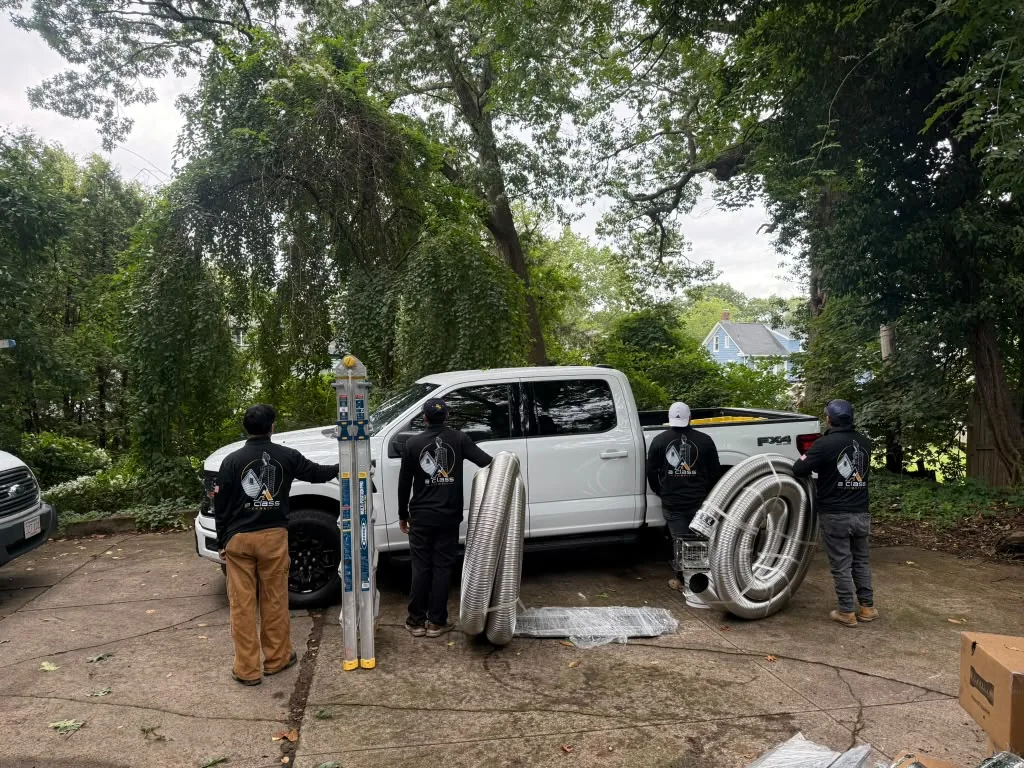
- $59 on-site visit and written estimate
- Photos of everything we find
- A written price before any work starts
- Licensed and insured in Connecticut
Sunday to Friday
What do you need?
When?
Where should we call you?
Free, no obligation. Privacy
Common questions
Have us take a look
$59 on-site visit, photos of what we find and a written price before any work. Licensed and insured in Connecticut.