
New Roof Installation: What to Expect, Day by Day
A roof replacement on a typical house is short, loud and busy. Knowing the sequence lets you prepare the house, the driveway and the neighbors before the dumpster arrives.
Sunday to Friday
An asphalt shingle replacement on a typical single-family Connecticut home often takes one to three working days of dry weather: setup, tear-off, deck repair, ice barrier and underlayment, flashing, shingles, ridge vent and cleanup. Larger, steeper or more complex roofs take longer, and rain or high wind can pause the job between days.
Before work starts: contract, permit and scheduling
- Read the written contract closelyIn Connecticut, home improvement contractors must be registered with the Department of Consumer Protection, and the contract must be in writing, signed by both sides, with notice of your right to cancel within three business days. Check that it lists tear-off, ice barrier, underlayment, drip edge, flashing, ventilation and cleanup, and how any rotten decking will be priced.
- Choose the material and colorLook at a full roof in the color you like, not just a sample board, because shingles look lighter and flatter across a whole roof. If you are still deciding between materials, our guide to the best roofing material for Connecticut compares the options.
- Sort out the permitA reroof needs a building permit in many Connecticut towns, and some schedule an inspection once the work is finished. Check with your town’s building department and make sure the contract says who applies for it.
- Set a date with weather in mindRoofs are torn off only on days when the new roof can be closed up before dark. Expect your start date to move if rain or strong wind is forecast; a contractor who waits is protecting your house.
Preparing your house the week before
A little preparation keeps the work moving and keeps your belongings safe from vibration and falling debris.
- Move cars out of the garage and off the driveway on work days so the dumpster and material delivery can get in
- Clear patio furniture, grills, planters and bikes away from the walls of the house
- Take mirrors, pictures and shelf items off top-floor walls; hammering shakes the whole frame
- Cover belongings stored in the attic with old sheets, since dust and nails can come through, especially under older plank sheathing
- Mark sprinkler heads, garden lights and anything fragile in the beds next to the house
- Plan for pets and small children to be well away from the noise and the work zone
- Let close neighbors know, especially if you share a driveway or the dumpster will sit near their property line
- Point out an outdoor outlet the crew can use
Repair or replace?
Five quick questions for a rule-of-thumb answer.
Day by day on a typical asphalt reroof
Every house is different, but the work runs in the same order. On a simple roof, several of these steps fall within a single workday.
- Setup and protectionThe dumpster is placed, ladders go up, and tarps and boards go over shrubs, flower beds and anything below the roof edge. Windows and the AC unit may be covered.
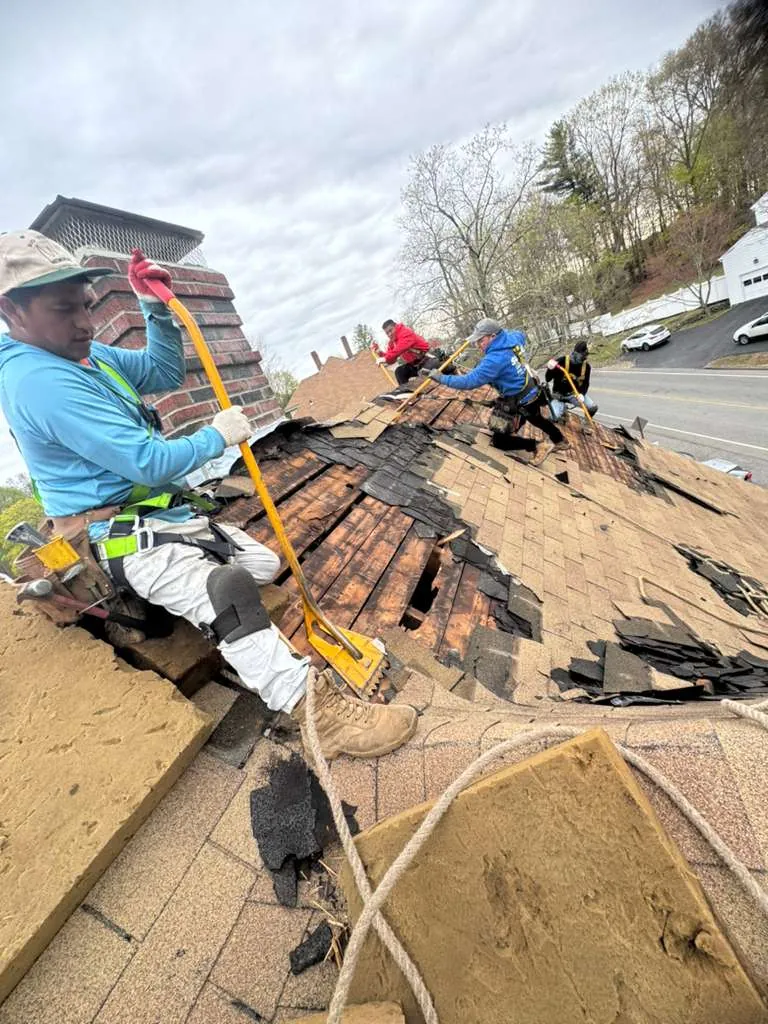
- Tear-offOld shingles and underlayment are stripped to the bare deck, usually one section at a time, so no more of the house is open than the crew can dry in before quitting time. This is the loudest part of the job.
- Deck inspection and repairWith the deck exposed, soft or rotted boards are found and replaced. Older Connecticut houses often have plank sheathing with gaps, which may need new plywood in spots.
- Ice barrier, underlayment and drip edgeA self-adhering ice and water membrane goes on at the eaves and in valleys, and around chimneys and skylights where needed. Underlayment covers the rest of the deck, and new drip edge goes along the edges.
- Flashing, shingles and ventilationNew flashing goes in at walls, vent pipes and the chimney, and shingles are installed from the eaves up. A ridge vent is cut in if the plan calls for one; our page on attic ventilation explains why it matters.
- Cleanup and walkthroughDebris goes into the dumpster, gutters are cleared of grit, and the lawn, beds and driveway are checked for stray nails. You should be shown photos of the finished roof and walked through any changes.
What can change the schedule or the price
The biggest unknown is under the shingles. Rotted decking, an extra layer nobody knew about, or old repairs that hid damage only show up at tear-off. A good contract sets out in advance how that extra work is priced, so a surprise is a line item rather than an argument.
Weather is the second variable. Crews do not strip a roof with a storm coming, and in cold weather the self-sealing strips on shingles may not bond until warmer days, so installers follow the manufacturer’s cold-weather instructions. Late spring through fall is the easiest window in Connecticut, though mild winter days can work.
The third is what you add while the roof is open. A new roof is the right moment to replace an aging skylight, a ballpark $1,500–$4,000 per unit installed; to deal with worn chimney flashing; or to upgrade attic ventilation, ballpark $500–$2,000. For the roof itself, an asphalt replacement on a typical Connecticut home runs a ballpark $10,000–$25,000+, with the exact price written down after a free look; see roof replacement cost for what moves it.
Final walkthrough checklist
Before the crew leaves, or within a day or two, go through these with the person in charge of the job.
- Shingle lines look straight and even from the street and the backyard
- Flashing at the chimney, walls and skylights is new or sound wherever the contract called for it
- Pipe collars around plumbing vents are new
- The ridge vent is installed if it was in the contract
- Gutters and downspouts are free of shingle grit and nails and drain properly
- Lawn, beds, patio and driveway are clear of nails and debris
- You have photos from during the job showing the deck, the ice barrier and the underlayment, since those are hidden now
- You have the paperwork: contract, final invoice, any permit sign-off and the shingle product details
Yes, and most people do, but plan for it. Tear-off day is loud enough to make video calls and naps impossible, so working from somewhere else that day is worth arranging. Keep the windows closed, the cars out of the driveway and everyone away from the drip line of the roof.
How a roof replacement runs with A Class
The first step is phoning (203) 779-6787 or asking for a callback through the site. We come out, photograph the roof with the drone and on foot, check the attic and ventilation, and then put the full scope in writing: materials, what is included, and how any decking repair would be handled. That visit and estimate are free; more on the scope is on our roof replacement page.
Once you agree to the written price, we set a date around the weather and tell you what to prepare. On the job, plantings and the yard are protected with tarps. If rotten decking turns up at tear-off, we photograph it and show you before it is replaced, so nothing is added without your say.
The job ends with cleanup and a walk around the house with you. Homeowners’ comments on how that goes are on our reviews page, where A Class is rated 5.0 on Google.
Prefer we call you?
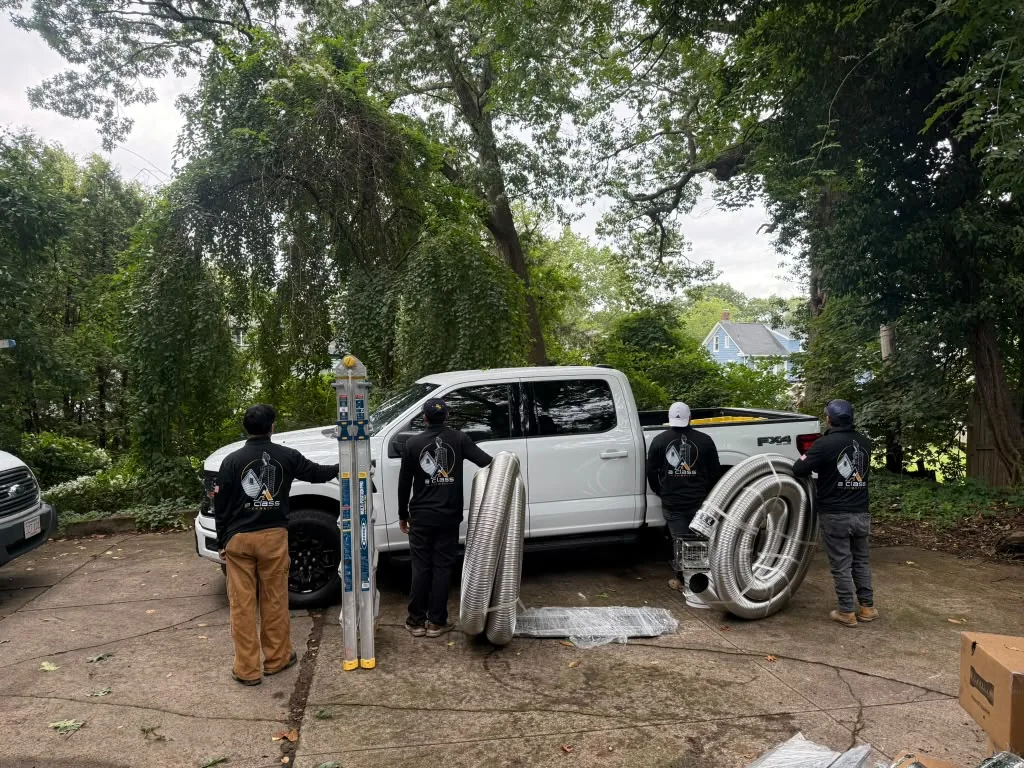
Three quick taps and a real person from A Class Chimney calls you back to set up a free roof inspection.
- Free roof inspection and written estimate
- Photos of everything we find
- A written price before any work starts
- Licensed and insured in Connecticut
Sunday to Friday
What do you need?
When?
Where should we call you?
Free, no obligation. Privacy
Common roofing questions
Related guides and services
Have us look at your roof
Free roof inspection, photos of what we find and a written price before any work. Licensed and insured in Connecticut.