
Emergency Chimney Repair in CT: Storm Damage & Falling Bricks
A chimney hit by wind, a falling limb or a chimney fire needs a calm, safe first hour. Here is what to do right away, what can wait a few days, and how repairs get priced.
Sunday to Friday
If there is fire, smoke in the house or a CO alarm, get everyone out and call 911 first. For storm damage or loose bricks, keep people and cars away from where debris could fall, stop using any fireplace or appliance that vents into that chimney, and photograph the damage from the ground. Then have a chimney company assess it and price the repair in writing.
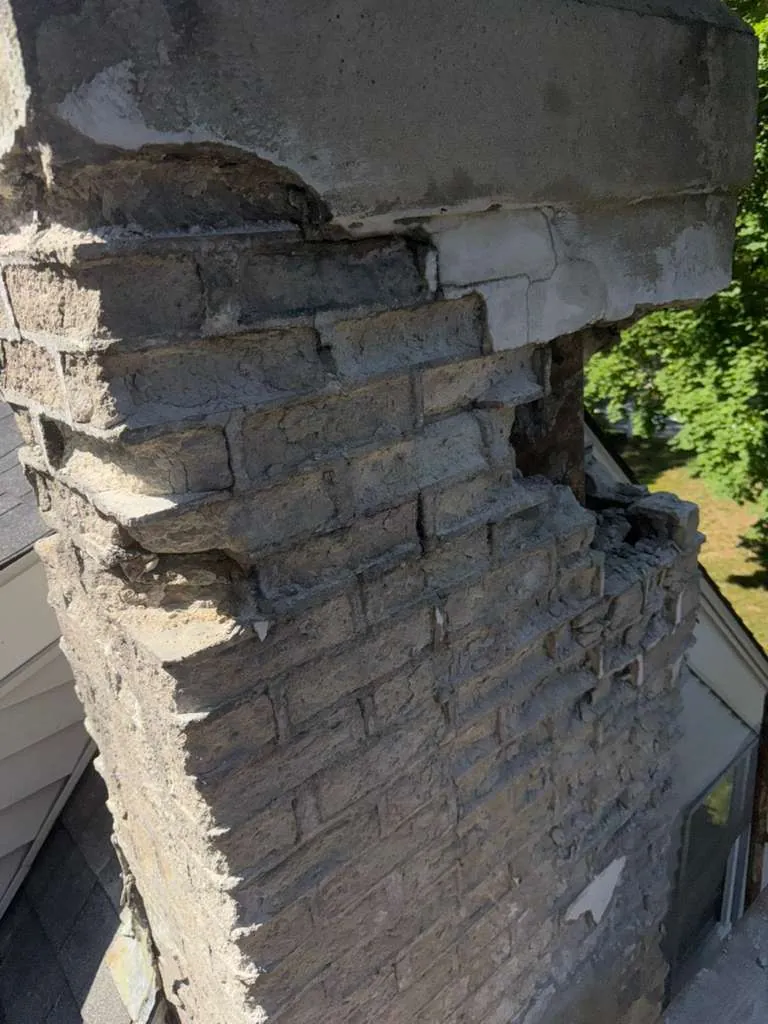
Flames or sparks coming from the chimney top, a roaring sound in the chimney, smoke inside the house, a CO alarm sounding, or anyone indoors feeling dizzy, nauseated or headachy. Get everyone out, call 911, and let the fire department clear the house before you think about repairs.
The first hour after chimney damage
When nobody is in danger, these steps keep a bad situation from getting worse. None of them involves a ladder or the roof.
- Clear the fall zoneKeep people, pets and cars away from the sides of the house below the chimney. Loose bricks can slide off a roof hours after the wind has died down.
- Stop using the chimneyDon’t light the fireplace or stove. If a boiler, furnace or water heater vents into the damaged chimney, debris may have blocked the flue; ask your heating technician whether it is safe to run, and keep CO alarms working.
- Catch the waterIf rain is coming in, move furniture and rugs, set out buckets and towels, and keep water away from light fixtures and outlets.
- Photograph everything from the groundTake wide shots and close-ups of the chimney, the roof, any bricks on the ground and interior water stains, and note the date and time.
- Call your insurer and a chimney companyReport storm damage to your insurance company early, then have the chimney assessed so the repair can be priced in writing.
What can’t wait, and what can
Not every crack is an emergency. Use this to decide how quickly you need someone to look at it.
| What you see | How urgent | Why |
|---|---|---|
| Bricks falling, or the chimney top visibly broken | Call right away | More masonry can come down, and a broken or blocked flue can’t be used safely |
| Chimney leaning or pulling away from the house after a storm | Call right away | The movement may continue, and the flue inside may be cracked |
| A tree limb hit the chimney | Call right away | Damage to the crown, flue and flashing is often hidden from the ground |
| Water pouring in around the chimney during storms | Call within days | Framing, insulation and ceilings suffer the longer water runs |
| Chimney cap blown off | Call soon | The flue is open to rain and animals, though nothing is about to fall |
| Cracked crown or a few loose bricks, nothing falling | Book an inspection | Freeze–thaw will make it worse, but it is rarely urgent |
Chimney symptom checker
Tick what you have noticed and see what it usually means.
What not to do while you wait
Well-meant shortcuts after a storm cause many of the injuries and much of the extra damage. Skip these, even if the fix looks simple from the yard.
- Don’t climb onto the roof or lean a ladder against a damaged chimney
- Don’t try to knock loose bricks down from a window or the roof edge
- Don’t light a fire to test whether the chimney still works
- Don’t cover the chimney top yourself with plastic or a tarp; a blocked flue can push exhaust back into the house
- Don’t run a boiler or furnace that vents into the damaged flue until a heating technician says it is safe
- Don’t throw away fallen bricks or cap pieces before your insurer has seen them or your photos
- Be wary of anyone who knocks on the door after a storm offering a quick fix without a written estimate
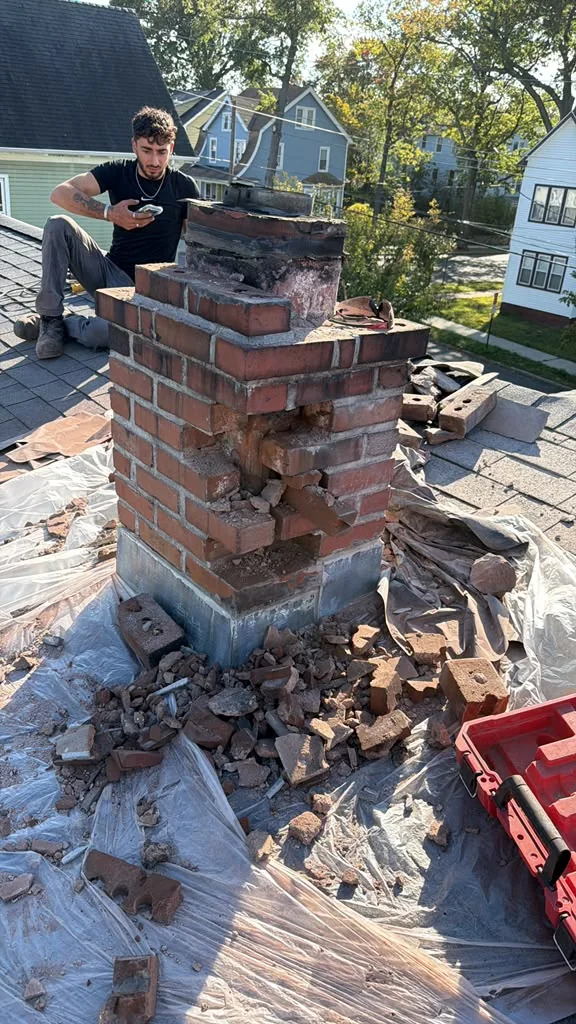
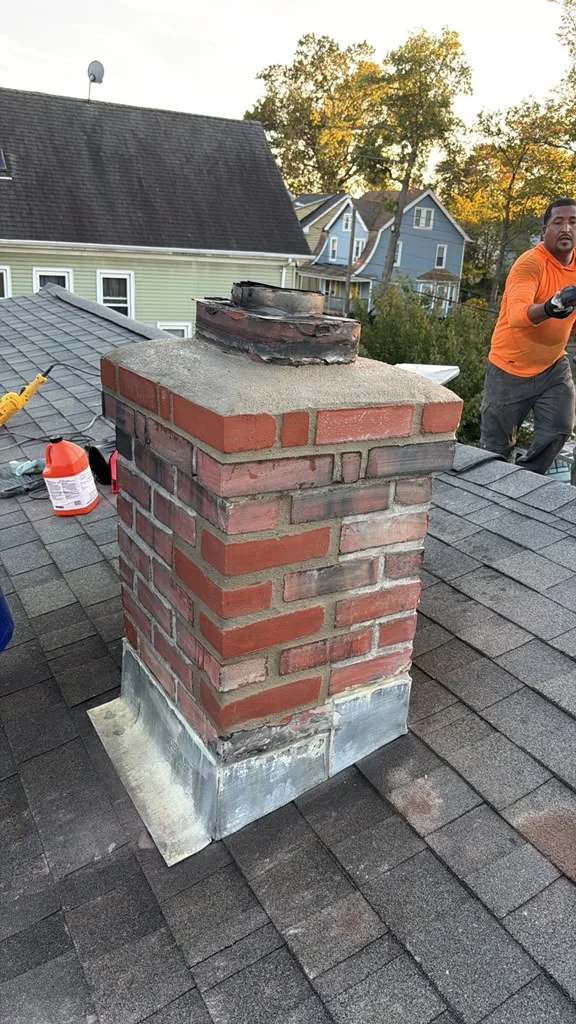
A real partial rebuild, before and after
The same chimney, during and after the work. The damaged top courses come down with the roof covered in tarps, then the top is rebuilt and finished with a new crown.
What usually causes sudden chimney damage in Connecticut
Sudden chimney damage usually traces back to a handful of events. Nor’easters and summer thunderstorms bring gusts strong enough to snap a weakened chimney top or tear off a cap. Limbs from the big oaks and maples around many Connecticut homes can knock bricks loose or split a crown in a second. Lightning sometimes strikes a chimney, often the highest point on the house, and can blow masonry apart.
Other emergencies build quietly and then fail all at once. Years of freeze–thaw cycles loosen mortar until a section of the top lets go during a winter storm. Snow sliding off a steep roof can push hard against a chimney on the low side. And a chimney fire can crack flue tiles and masonry without any visible sign from the living room.
If your chimney already showed warning signs such as spalling brick or a cracked crown, a storm is often what turns a planned repair into an urgent one. Catching those early is the cheapest way to avoid an emergency call.
Making it safe first, then fixing it properly
Urgent chimney work usually happens in two stages. The first is about safety and water: dealing with loose masonry at the top, keeping rain out of the flue and the roof opening, and confirming whether any appliance can keep venting through the chimney. The second is the permanent repair, planned and priced once the damage is fully understood.
What the permanent repair costs depends on what failed. These are 2026 Connecticut ballpark ranges; the exact price is written down after the $59 on-site inspection:
- Replacing damaged bricks: $500–$2,500, depending on how many
- Rebuilding the chimney above the roofline: $3,000–$8,000 (see chimney rebuild costs)
- Crown repair or rebuild: $200–$1,200
- Flashing repair or replacement: $400–$1,500
- New stainless-steel chimney cap: $150–$600
- Level 2 inspection after a damaging event, as NFPA 211 recommends: $250–$500
Insurance after storm damage
Sudden damage from wind, a falling tree or lightning is the kind of loss many homeowners policies are designed for, while gradual deterioration usually is not. Every policy is different, so call your insurer before permanent repairs begin and ask what they need. Our article on whether insurance covers chimney repair covers the common questions.
Your own photos from the day of the storm, plus the photos and written estimate from the chimney assessment, give the adjuster a clear record. Hold on to any bricks or pieces of cap that came down until the claim is settled.
How A Class handles an urgent chimney call
Our office hours are Sunday through Thursday, 7 AM to 8 PM, and Friday, 7 AM to 2:30 PM; we are closed Saturday. Outside those hours, leave a callback request on the site, and for any fire, smoke or CO concern, call 911.
- Call and describe itCall (203) 779-6787 and tell us what happened, what you can see from the ground, and whether any appliance vents through that chimney. Have your photos handy.
- Free on-site assessmentWe look at the chimney from the roof and from inside, check the flue, and photograph the damage, using a drone for the top when getting close isn’t safe.
- Options in writingYou get a written price for the work needed, including any steps to stop water and secure loose masonry, before anything starts.
- Repair and clean-upOnce you approve, the crew does the work and cleans up the roof, the yard and any work areas inside the house.
Prefer we call you?
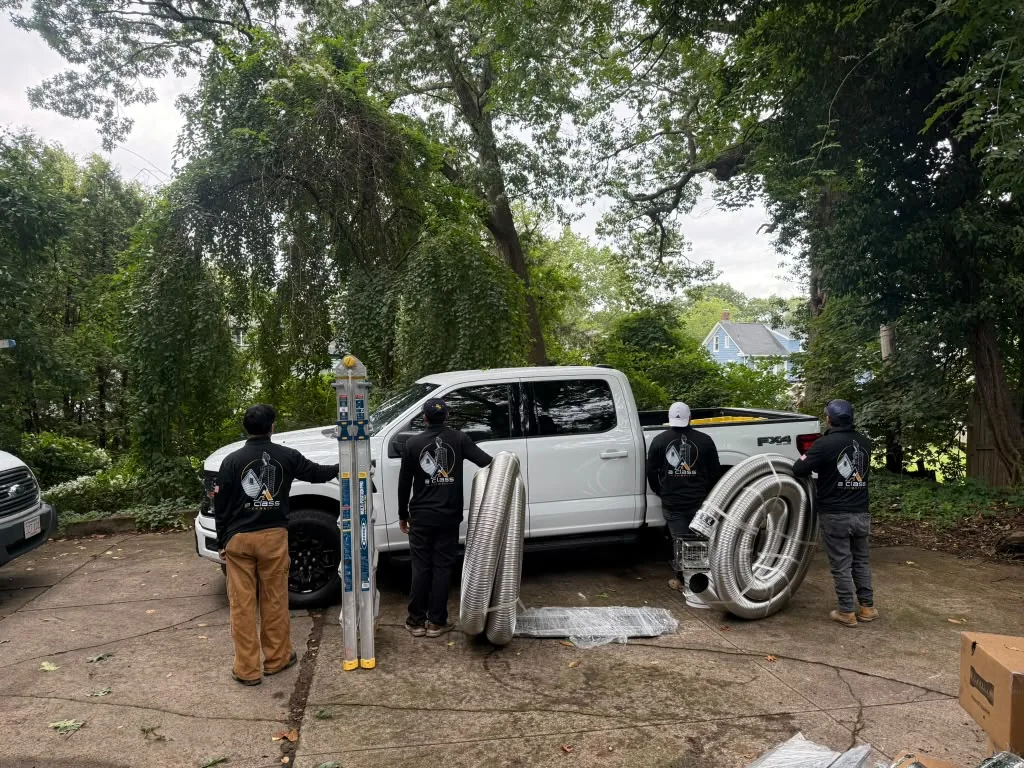
Three quick taps and a real person from A Class Chimney calls you back to set up a $59 on-site inspection.
- $59 on-site visit and written estimate
- Photos of everything we find
- A written price before any work starts
- Licensed and insured in Connecticut
Sunday to Friday
What do you need?
When?
Where should we call you?
Free, no obligation. Privacy
Common questions
Have us take a look
$59 on-site visit, photos of what we find and a written price before any work. Licensed and insured in Connecticut.