How Much Does a Chimney Inspection Cost in CT?
Ballpark 2026 Connecticut prices for each inspection level, what pushes the number up or down, and how to tell which inspection you actually need before you book.
Sunday to Friday
In Connecticut, a standard cleaning with a Level 1 inspection runs about $150–$350, and a Level 2 inspection with a camera scan and written report runs about $250–$500, as 2026 ballpark ranges. A visit to look at a specific repair and price it is free. Where you land within a range depends on the number of flues, access and the reason for the inspection.
Chimney inspection prices at a glance
These are ballpark ranges for Connecticut in 2026, not quotes. The exact price for an inspection is confirmed when you book, and any repair it turns up is priced in writing after a $59 on-site inspection. For cleaning-only pricing, see what a chimney sweep costs in Connecticut.
| Service | Ballpark (CT, 2026) | What it is for |
|---|---|---|
| Cleaning + Level 1 inspection | $150–$350 | Yearly upkeep of a chimney you use, with no changes planned |
| Level 2 inspection (camera scan + written report) | $250–$500 | Home sale, chimney fire, storm damage, or a change of appliance or fuel |
| On-site visit to price a repair | Free | A leak, cracked crown, loose brick or rusted cap: photos and a written price |
What each level actually includes
CSIA defines three levels of chimney inspection, and NFPA 211, the national standard for chimneys, fireplaces and vents, recommends an inspection every year. The right level depends on your situation, not on how thorough you would like to feel.
Level 1 is a visual check of the readily accessible parts: the firebox, damper, the smoke chamber as far as it can be seen, the exterior, and the connection of any appliance. It fits a chimney that has been used normally with no changes, and it is usually done together with a sweep. Our cleaning and inspection page explains what that visit covers.
Level 2 adds a video scan of every flue and a look at accessible attics, crawl spaces and basements. It is recommended when a property is sold or transferred, after a chimney fire or other damaging event, and when you change the appliance or the fuel. Level 3 means opening walls or other parts of the structure to reach concealed areas, and it is only recommended when a Level 2 points to hidden damage. The Level 1 vs. Level 2 comparison goes deeper.
Ballpark price check
Typical Connecticut ranges for common chimney jobs.
What moves the price within the range
Number of flues
Many Connecticut chimneys carry two or three flues: the fireplace plus an oil boiler or water heater flue. Each one is cleaned or scanned on its own.
Height and roof access
A tall chimney on a steep slate roof takes more time and equipment than a short one on a low-pitched ranch.
How dirty the flue is
A light layer of soot brushes out quickly. Thick or glazed creosote takes longer and may need more than one pass or method.
Why you need the inspection
A home sale or a fire calls for a documented report with photos. A routine yearly check does not need that paperwork.
What has to be reached
Attic hatches behind storage, finished basements with no cleanout access, or a chimney that runs through a closet all add time.
Masonry or factory-built
A brick chimney is checked for tile, mortar and crown problems. A prefab metal chimney is checked for pipe joints, the chase cover and the firebox panels. Each takes its own approach.
Which inspection do you need? A quick guide
Match your situation to the closest line below before you call. It keeps you from paying for more inspection than you need, or less.
- Used the fireplace or stove normally this season, no changes planned: cleaning plus Level 1.
- Buying or selling the house: Level 2. See inspections for home sales.
- Had a chimney fire, heard a roaring sound in the flue, or found puffy flakes of creosote on the hearth: Level 2 before the next fire.
- Lightning, a fallen limb or a storm hit the chimney: Level 2.
- Switching from oil to gas, or connecting a wood stove or insert: Level 2 before the change.
- A leak, loose brick or rusted cap you can see from the ground: start with the $59 on-site visit.
- Fireplace unused for years: at least a cleaning and Level 1 before the first fire, and a Level 2 if anything looks wrong.
Low prices and what they can leave out
A price well below the ranges above is worth a few questions. Which level of inspection is it? Is every flue included, or only the fireplace? Will you get photos? Will any repair be priced in writing before anyone starts? A quick flashlight look sold as an inspection does not tell you much about a flue that is two stories tall.
It also helps to know what an inspection does not include. Cleaning is not repair, and a Level 2 report tells you what is wrong without fixing it. Work such as a new or repaired crown or relining is priced separately. For what the common repairs cost, see chimney repair costs in CT.
The cheapest inspection is the one that catches a problem while it is small. A cracked crown found during a routine visit is a $200–$1,200 repair as a ballpark; the same crack left for a few Connecticut winters can let enough water into the brick to turn it into masonry work costing many times more.
How booking and pricing work with A Class
When you call, we ask a few questions: what kind of fireplace or stove you have, whether an oil or gas appliance shares the chimney, when it was last cleaned, and why you want the inspection now. That is usually enough to tell you which level makes sense and where in the range you are likely to land. If you are not sure what the chimney serves, a photo of the fireplace and of where the boiler pipe meets the chimney in the basement helps.
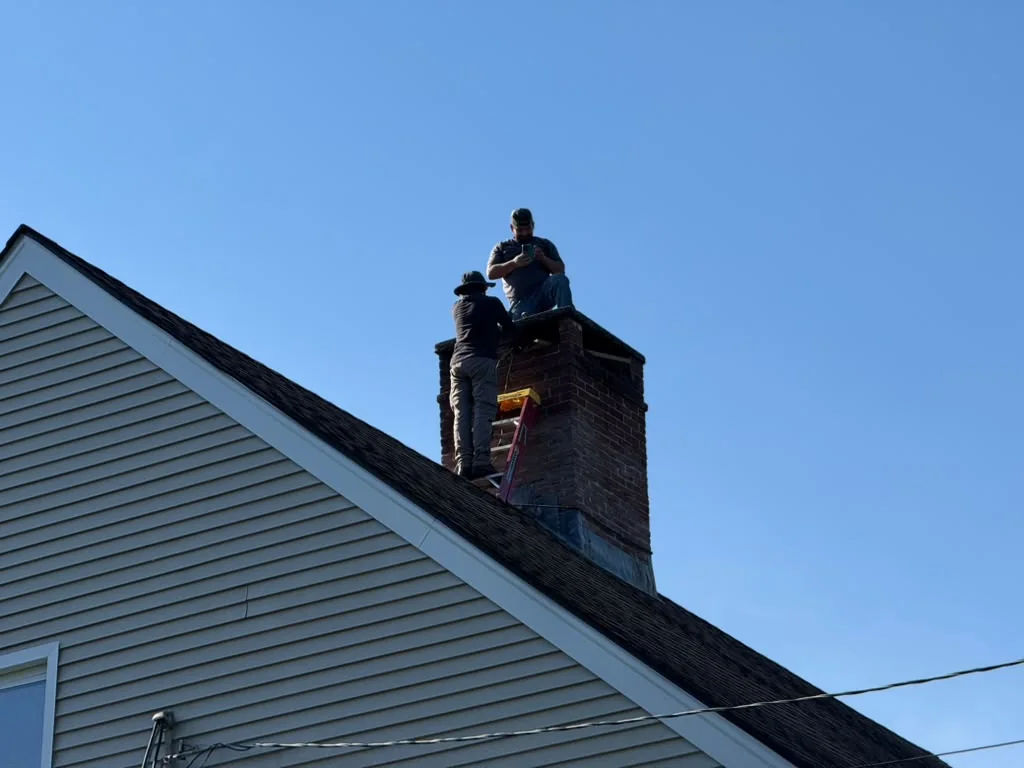
At the visit, the tech lays down drop cloths, does the work, and photographs what they find, from the chimney top by drone to the inside of the flue. If something needs repair, you get a written price for it and decide in your own time. Repairs are not started from a verbal number.
If you would like to know what other homeowners thought of the process, our reviews page shows what they wrote. We are rated 5.0 on Google.
Mortar and crown repairs need workable weather. An inspection in late fall that turns up a problem can leave you without a usable fireplace until spring, while one in spring or early summer leaves time to fix what it finds before the first cold night.
Prefer we call you?
Three quick taps and a real person from A Class Chimney calls you back to set up a $59 on-site inspection.
- $59 on-site visit and written estimate
- Photos of everything we find
- A written price before any work starts
- Licensed and insured in Connecticut
Sunday to Friday
What do you need?
When?
Where should we call you?
Free, no obligation. Privacy
Common questions
Have us take a look
$59 on-site visit, photos of what we find and a written price before any work. Licensed and insured in Connecticut.