Fireplace & Firebox Repair in CT: Firebrick & Panels
The firebox is the part of the chimney that takes direct flame. When its brick or panels crack, heat can reach places it should not. Here is how to tell what matters and what can wait.
Sunday to Friday
Firebox repair means replacing cracked or loose firebrick, repointing its joints with heat-rated refractory mortar, or replacing broken refractory panels in a factory-built fireplace. Fine surface cracks are often cosmetic; open joints, loose brick and panels cracked through are not. In Connecticut it runs about $500–$2,500 as a 2026 ballpark, set in writing after a $59 on-site inspection.
What the firebox does and why it wears out
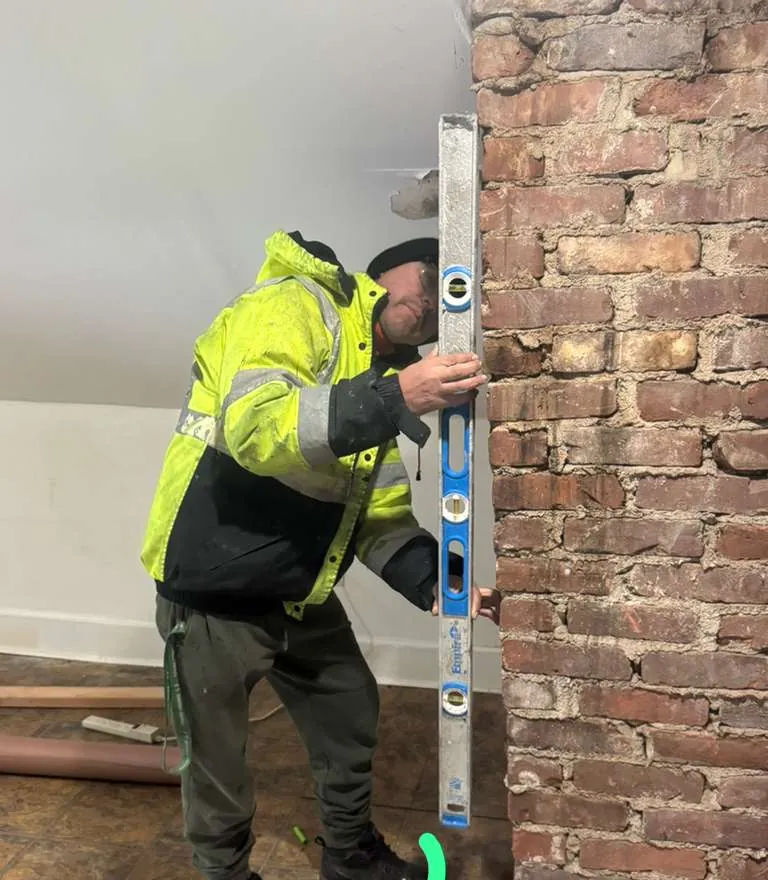
In a masonry fireplace, the firebox is lined with firebrick, a dense brick made to handle direct flame, laid with thin joints of refractory mortar. Behind it is the ordinary masonry of the chimney, and beyond that, in many houses, wood framing. The firebrick’s job is to keep the heat of the fire away from both.
Every fire heats the firebox fast, and every cold night afterward cools it down. That cycling, plus the occasional log dropped against the back wall, slowly opens joints and cracks bricks. In older Connecticut homes, add decades of use and sometimes water dripping down a chimney that has no cap, which softens mortar and leaves rust from the damper on the firebox floor.
Factory-built fireplaces use molded refractory panels instead of individual bricks. They do the same job, wear in a similar way, and have to be replaced with panels made for that specific unit. The rest of a factory-built system is covered on our prefab chimney repair page.
Antique houses are a special case. Some early colonial fireplaces, including shallow Rumford-style ones, were built with soft old brick rather than modern firebrick. Repairing them is a balance between keeping original material and making the fireplace safe to use, and clear photos plus a written scope help you make that call.
Cosmetic or serious? Reading firebox damage
Use a flashlight and look at the back wall, the sides and the floor. Here is how to read what you find.
| What you see | What it usually means | What to do |
|---|---|---|
| Fine surface cracks in firebrick | Normal wear from heating and cooling | Keep an eye on them; have them looked at during your yearly inspection |
| Mortar joints recessed, sandy or missing | Heat and gases can work into the masonry behind | Repoint with refractory mortar before the next season |
| Bricks loose, broken through or bulging | The lining is no longer protecting the wall behind it | Stop using the fireplace until the bricks are replaced |
| Back wall leaning forward | The firebox wall is failing | Stop using it; the wall needs rebuilding |
| Hairline lines in prefab refractory panels | Often within normal limits | Check the owner’s manual for the manufacturer’s criteria |
| Prefab panel cracked through, crumbling or with pieces missing | The metal behind the panel is exposed to heat | Stop using it; replace the panel with one made for that unit |
Chimney symptom checker
Tick what you have noticed and see what it usually means.
Causes worth fixing along with the damage
New firebrick lasts longer when whatever damaged the old brick is dealt with too.
Fires too big for the firebox
Overloading with wood, or burning scrap lumber, pallets or paper that flare hot, cracks firebrick faster than a steady, moderate fire.
Water from above
A missing cap, a cracked crown or a rusted damper lets rain reach the firebox. Firebrick that gets wet and is then heated cracks and spalls.
The wrong materials in an old repair
Ordinary brick, ordinary mortar or hardware-store caulk used in a past patch breaks down quickly under direct flame.
Movement in the chimney
Cracks that run from the firebox into the surrounding brick or the hearth can point to settling in the chimney or its foundation, which needs a wider look.
Firebox, damper and smoke chamber are connected
Just above the firebox sits the damper, and above that the smoke chamber, the sloped area that funnels smoke into the flue. A damper that no longer closes, or a smoke chamber with rough, stepped brick, can be part of the reason a fireplace smokes or drafts poorly even after the firebox itself is repaired.
That is why a firebox repair visit looks up past the damper as well. If the damper is rusted or stuck, see damper repair, including top-sealing dampers. If the smoke chamber needs parging, see smoke chamber repair. And if smoke is coming into the room, our guide to draft problems covers the other causes.
A quick look before your first fire of the season
Two minutes with a flashlight, before you light anything. It complements our full fireplace safety checklist.
- Shine the light on the back and side walls. Look for joints open wide enough to slip a coin edge into, missing pieces, or bricks that move when pressed gently.
- Check the firebox floor for rust flakes, crumbled mortar or chips of brick.
- Open and close the damper. It should move freely and close fully.
- Look for black smoke stains on the face above the fireplace opening, a sign smoke has been escaping into the room.
- In a factory-built unit, check the panels for cracks that go all the way through or metal showing behind them.
- Make sure the hearth area is clear and that your smoke and carbon monoxide detectors work.
- If anything above looks wrong, hold off on using the fireplace until it has been looked at.
How A Class repairs a firebox
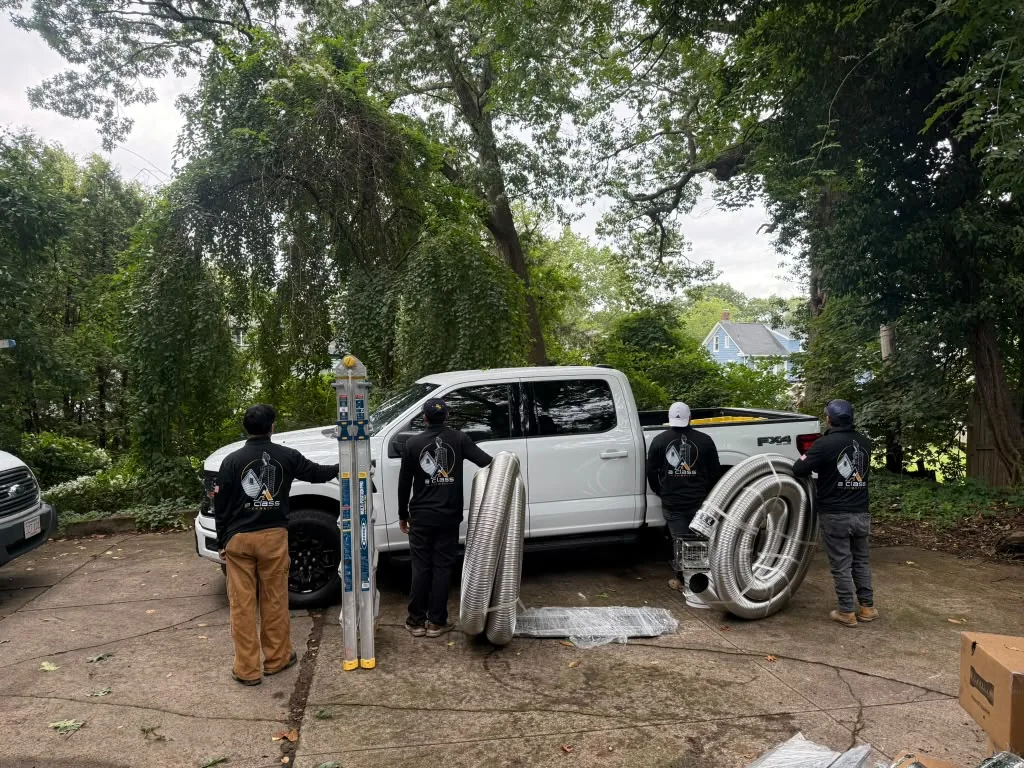
A call or a callback request gets you a time for a $59 inspection visit. The tech puts down drop cloths, inspects the firebox, damper and smoke chamber, and photographs every problem, so you can see the cracked brick or open joint for yourself instead of taking it on description.
You get a written price before anything starts. Typical firebox repairs, from repointing joints with refractory mortar to replacing firebrick or prefab panels, run about $500–$2,500 as a ballpark, depending on how much of the firebox is affected. On the repair day, damaged brick is cut out, new firebrick is set in refractory mortar, and the room is cleaned up before the tech leaves. Ask about curing before your first fire, and follow the instructions you are given for the product used.
Firebox work happens indoors, so unlike exterior masonry it is not held up by Connecticut weather. If you are thinking of converting to gas logs, a licensed gas technician handles the gas side; we inspect and maintain the chimney it will use.
Loose or missing firebrick, a back wall that bulges, or a prefab panel with metal showing behind it means the firebox is no longer doing its job. Do not light another fire until it is repaired. If you ever see smoke coming from walls or ceilings near the fireplace, get everyone out and call 911.
Prefer we call you?
Three quick taps and a real person from A Class Chimney calls you back to set up a $59 on-site inspection.
- $59 on-site visit and written estimate
- Photos of everything we find
- A written price before any work starts
- Licensed and insured in Connecticut
Sunday to Friday
What do you need?
When?
Where should we call you?
Free, no obligation. Privacy
Common questions
Have us take a look
$59 on-site visit, photos of what we find and a written price before any work. Licensed and insured in Connecticut.