
Can You Repair a Chimney in Winter in CT?
Some chimney work is fine in January. Masonry that depends on fresh mortar curing is a different story. Here’s how to sort what can happen now from what should wait.
Sunday to Friday
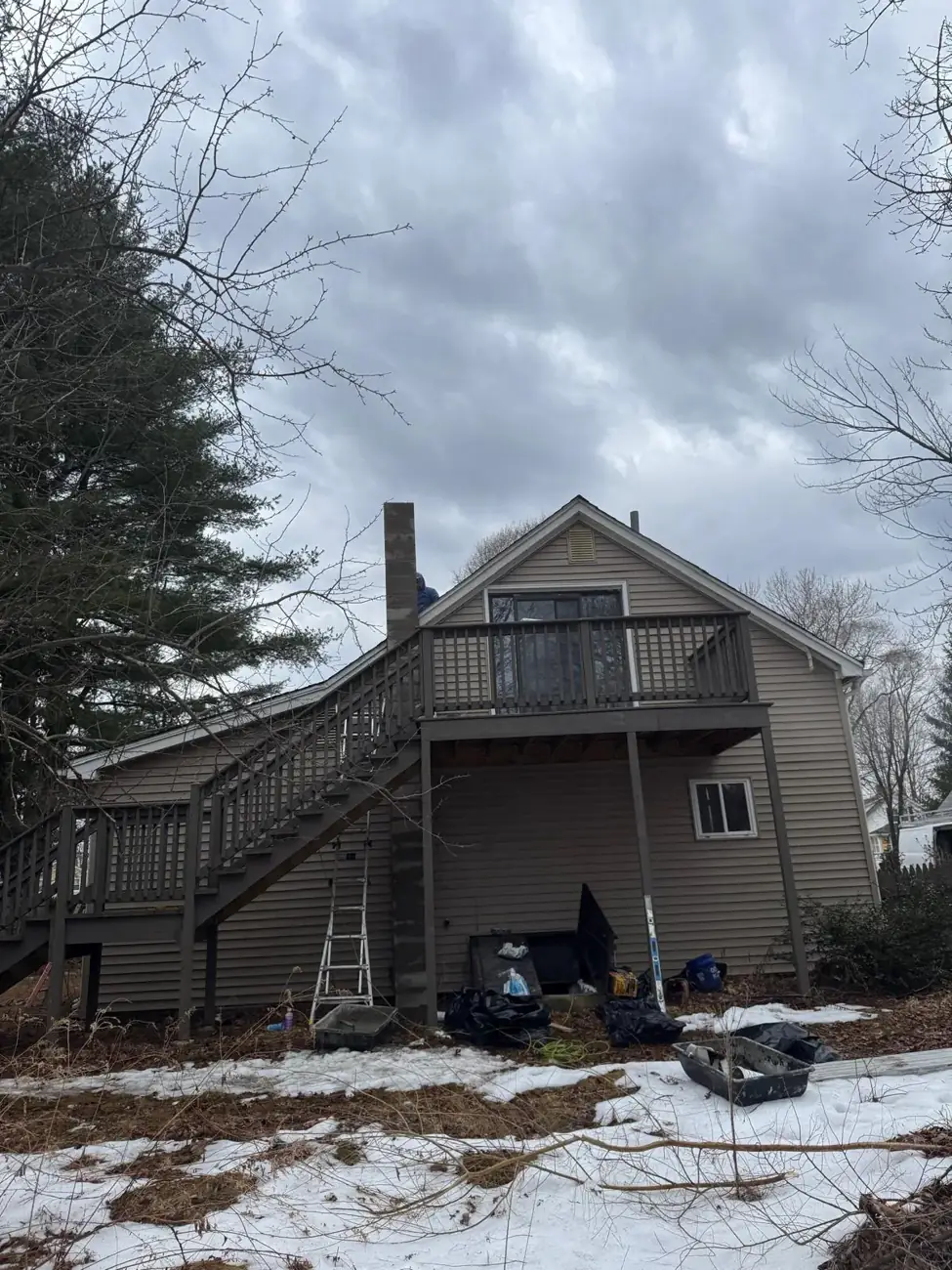
Yes, much chimney work can be done in a Connecticut winter: sweeping, inspections, caps, chase covers, liners, dampers and many flashing repairs go ahead year-round whenever the roof is safe to reach. Masonry that depends on fresh mortar or concrete curing, such as repointing, crown pours and rebuilds, needs a stretch of above-freezing weather or cold-weather protection, so it may be timed for a mild spell or for spring. A winter leak can usually be slowed right away while the masonry waits.
Why winter changes the plan for masonry
Mortar and concrete don’t simply dry; they cure through a chemical reaction that slows to a crawl in the cold. If the water in fresh mortar freezes before the mortar has gained strength, it expands, weakens the bond, and can leave crumbly joints by spring.
Masonry practice treats temperatures around 40°F and falling as the point where cold-weather precautions start: warmed materials, covers or heated enclosures, and protection from freezing while the work cures. That’s why a crown pour or a repointing job on a chimney top exposed to Connecticut wind is usually timed for a forecast that stays above freezing for several days.
What can be done in winter, and what usually waits
Roof access depends on snow and ice on the day, whatever the job. Beyond that, this is how chimney work generally sorts out in the cold months.
| Job | In winter? | Notes |
|---|---|---|
| Sweeping and Level 1 inspection | Yes | A mid-season sweep is common for heavy wood burners. |
| Level 2 camera inspection | Yes | Needed after a chimney fire at any time of year. |
| Stainless cap or chase cover | Yes | One of the quickest ways to stop water and animals. |
| Stainless liner or HeatShield | Usually | Mostly interior work, as long as the roof can be reached safely. |
| Damper repair or top-sealing damper | Yes | Also cuts winter drafts from a fireplace you rarely use. |
| Flashing repair | Often | Metal work can go ahead on dry days; sealants and roofing materials have temperature limits. |
| Repointing and tuckpointing | Weather permitting | Needs above-freezing days or protection while the mortar cures. |
| Crown repair or new crown | Weather permitting | Small repairs may fit a mild spell; full crown pours usually wait. |
| Partial or full rebuild | Usually spring to fall | Large masonry jobs are easier to protect and cure in warm weather. |
| Waterproofing | Usually waits | Water repellents need dry masonry and temperatures above the product’s minimum. |
Chimney symptom checker
Tick what you have noticed and see what it usually means.
A winter chimney leak: what to do now
Leaks often show up in winter. Snow sits against the back of the chimney, melts on sunny afternoons and refreezes at night. Nor’easters drive rain sideways into the masonry, and ice dams near the chimney can push water under flashing that held fine all summer.
You can’t fix the cause from inside, but you can limit the damage. Put a pan or towels under drips, move belongings out of the way, and take dated photos of stains so you can tell whether they grow. Don’t climb onto a snowy roof to look; ground photos are enough for a first call.
Then get the source found. Our guide to why chimneys leak covers the usual suspects: an open flue without a cap, a cracked crown, failed flashing, or porous brick. Many of them have a winter-friendly fix even if the full masonry repair waits.
Stopgaps that hold until spring
When the right repair needs warm weather, the winter goal is keeping water out of the masonry and out of the house.
Put a cap on it
A stainless chimney cap stops rain and snow from falling straight down the flue, often the biggest single source of winter water. Ballpark $150–$600 installed.
Re-secure the flashing
Where counter flashing has pulled loose, it can often be re-set or temporarily sealed until a full flashing repair is practical.
Seal open crown cracks
On a suitable dry day, open cracks in the crown can be sealed to slow water entry until the crown is properly repaired.
Pause the fireplace if needed
If spalling, loose brick or liner damage is part of the picture, hold off on fires until the chimney has been checked.
If bricks or chunks of crown are coming down, keep people, pets and cars away from the area below the chimney and stop using the fireplace. That isn’t a wait-for-spring item. Our emergency chimney repair page lists what to do first.
A quick winter check you can do from the ground
None of this needs a ladder. Pick a clear day after a snowfall or a storm and take a slow walk around the house.
- Look at the chimney top for a missing or tilted cap, or a crown with visible gaps.
- Note heavy icicles or ice ridges at the eaves below the chimney, a sign of ice dams that can push water under flashing.
- Look for snow and ice piled against the uphill side of the chimney.
- Scan the brick for fresh white staining, dark wet patches or flaking faces.
- Inside, check ceilings and walls next to the chimney, and the attic if you can reach it safely, for new stains.
- Look in the firebox for bits of tile, mortar or rust flakes that weren’t there in the fall.
Why winter is a smart time to book anyway
Fall is when most people think about the chimney, because that’s when they want the fireplace ready. Getting an inspection in winter instead lets you see exactly what needs doing, have a written price in hand, and be ready to go as soon as masonry weather returns.
It also means problems found mid-season, like a cracked flue tile or a leaking crown, don’t sit untouched for months. Some fixes go in right away; the rest go on the calendar for the first stretch of mild weather. If your chimney serves an oil or gas boiler, winter is also when a blocked or failing flue matters most, so it’s worth checking now.
How A Class handles a winter call
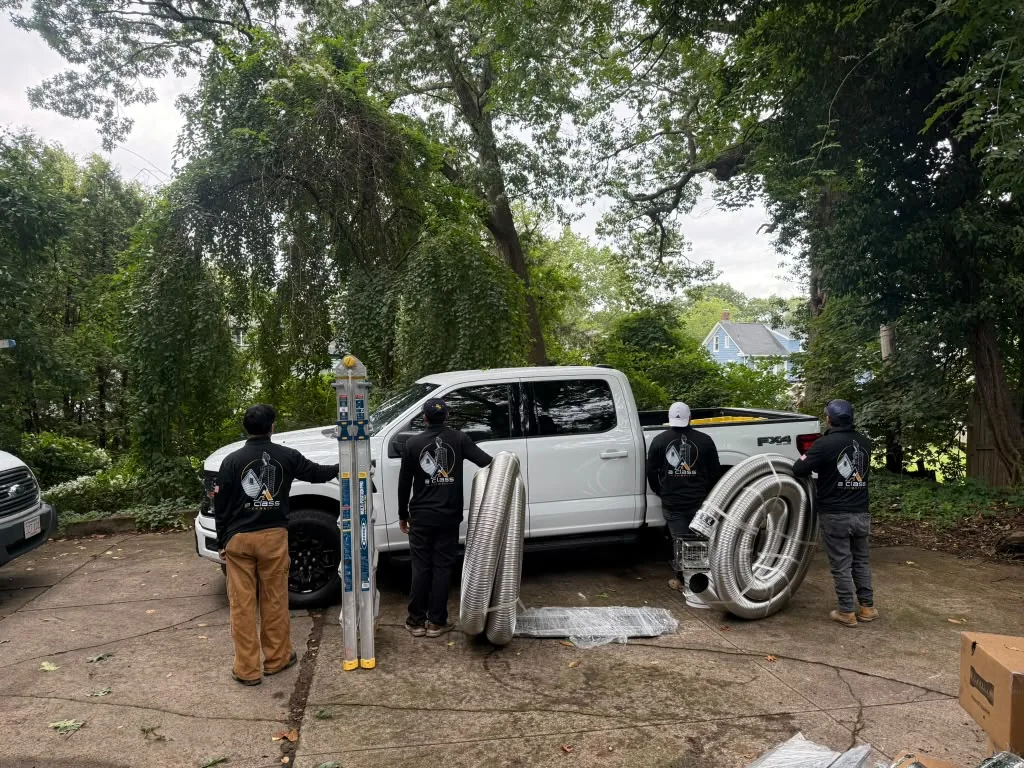
Call (203) 779-6787 and describe what’s happening: a leak, a stain, debris in the firebox, a fireplace you want to use. We’ll set a $59 inspection visit for a day when the roof can be reached safely, photograph the chimney top (a drone helps a lot when the roof is icy) and check the flue with a camera if needed.
Your written estimate will be clear about what we can do now and what should wait for warmer weather, so nothing gets rushed into the cold. Inside, we put down drop cloths and clean up before we leave; winter boots and soot don’t belong on your floors.
Prefer we call you?
Three quick taps and a real person from A Class Chimney calls you back to set up a $59 on-site inspection.
- $59 on-site visit and written estimate
- Photos of everything we find
- A written price before any work starts
- Licensed and insured in Connecticut
Sunday to Friday
What do you need?
When?
Where should we call you?
Free, no obligation. Privacy
Common questions
Have us take a look
$59 on-site visit, photos of what we find and a written price before any work. Licensed and insured in Connecticut.