Chimney Fire Damage Inspection & Repair in CT
A chimney fire can crack flue tiles and damage masonry even when the house looks untouched. Here is what to do next, what the inspection looks for, and how repairs are priced.
Sunday to Friday
After a chimney fire, stop using the fireplace or stove until the chimney has had a Level 2 inspection, which NFPA 211 recommends after any chimney fire. A camera checks the full flue for cracked tiles, warped metal and heat damage. Repairs range from a new cap or damper to a full stainless liner and are priced in writing after the inspection.
Get everyone out of the house and call 911. Don’t go on the roof and don’t pour water into the firebox. Close the fireplace screen or stove door on your way out only if you can do it without any delay, and wait for the fire department to tell you it is safe to go back inside.
How to tell a chimney fire happened
Some chimney fires are loud: a roar like a freight train or a low-flying plane, popping and cracking, thick smoke and an intense hot smell. Many are not. A slow-burning chimney fire can smolder through a creosote layer without anyone in the house noticing, and the first sign is something a sweep finds months later.
If you burned wood heavily last winter or had a smoky season, look for these clues from the ground and inside the firebox:
- Puffy, honeycomb-textured creosote in the firebox or lower flue
- Flakes of burnt creosote on the roof or in the yard below the chimney
- A chimney cap that looks warped, discolored or burned through
- A damper that has warped and no longer closes properly
- New cracks in the outside masonry, or smoke seeping through brick during a later fire
- Pieces of broken clay flue tile lying in the firebox
What a chimney fire does to the flue
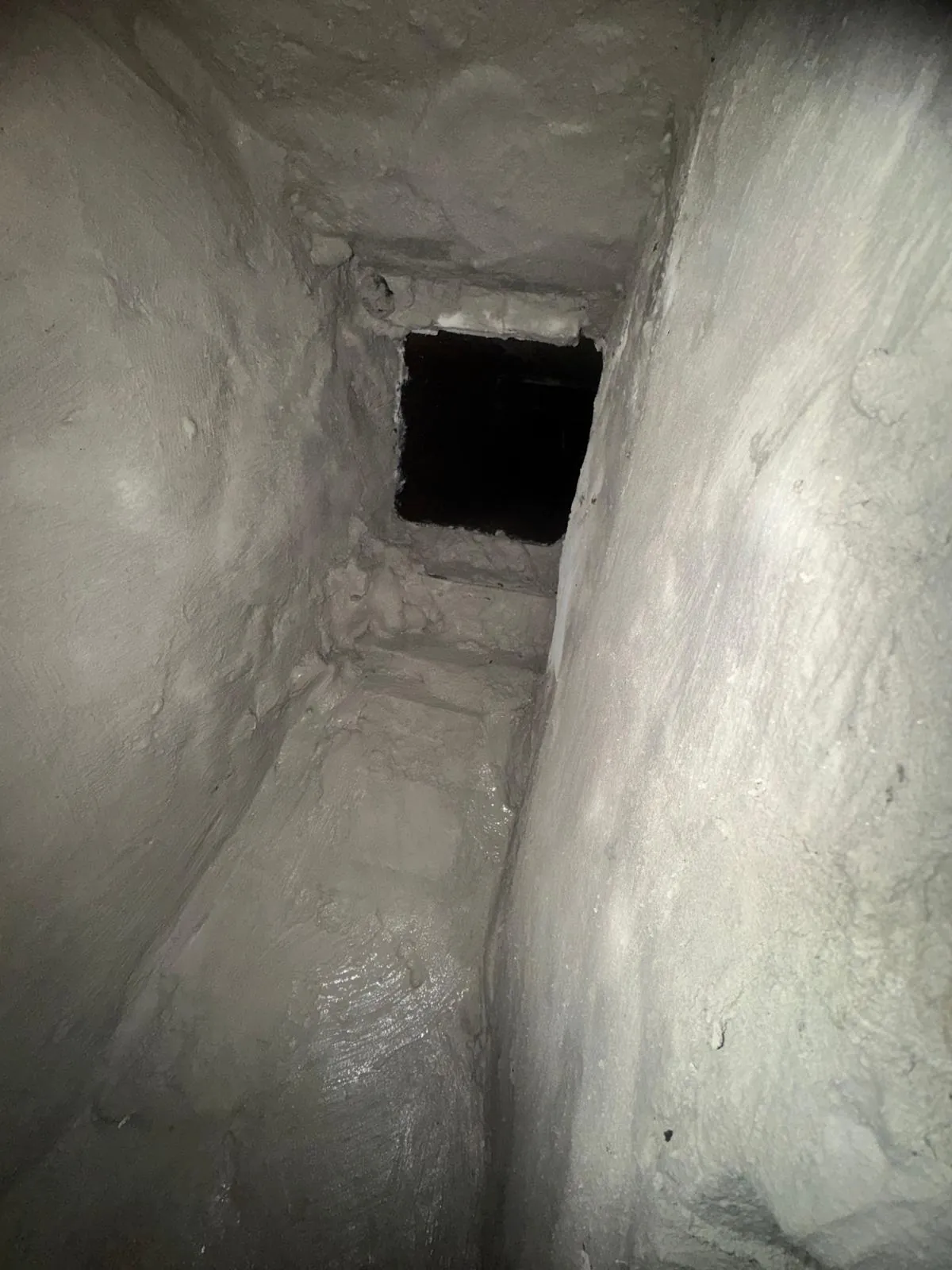
A chimney fire produces far more heat than the flue sees in normal use. Clay flue tiles expand unevenly in that heat and crack, sometimes in long vertical lines, and the mortar joints between tiles can open up. A cracked flue tile lets heat and smoke reach the surrounding brick and, in some houses, the wood framing built close to the chimney.
Metal suffers too. Stainless liners can warp or pull apart at the joints, caps can distort, and dampers can bow so they no longer seal. Outside, the sudden heat can crack the crown or loosen bricks near the top of the stack.
Wood stoves and inserts add their own weak points. The connector pipe between the stove and the chimney can warp or open at the seams, and an insert tied into an old clay flue without a full-length liner may have pushed heat into the smoke chamber. Those connections get a close look after any fire.
The danger is that almost none of this shows from the living room. The fireplace can look normal and still have a flue that would let the next fire’s heat and gases into the walls. That is why the standard advice is to stop burning until the chimney has been inspected.
Which inspection do you need?
Tick what applies and get the right inspection level.
Why a Level 2 inspection, and what it costs
NFPA 211, the national standard for chimneys, fireplaces and vents, recommends a Level 2 inspection after a chimney fire or any other event that could have damaged the chimney. A Level 2 includes everything in a basic inspection plus a camera inspection of the entire flue and a look at accessible attic and crawl spaces and the chimney top. Our article on Level 1 vs Level 2 inspections explains the difference in detail.
After a fire, the Level 2 is a paid, documented service, roughly $250–$500 as a Connecticut ballpark, because it produces a written report with photos you can use for repairs and for an insurance claim. If the camera shows signs of hidden damage that can only be reached by opening walls or structure, a Level 3 inspection may be recommended as the next step.
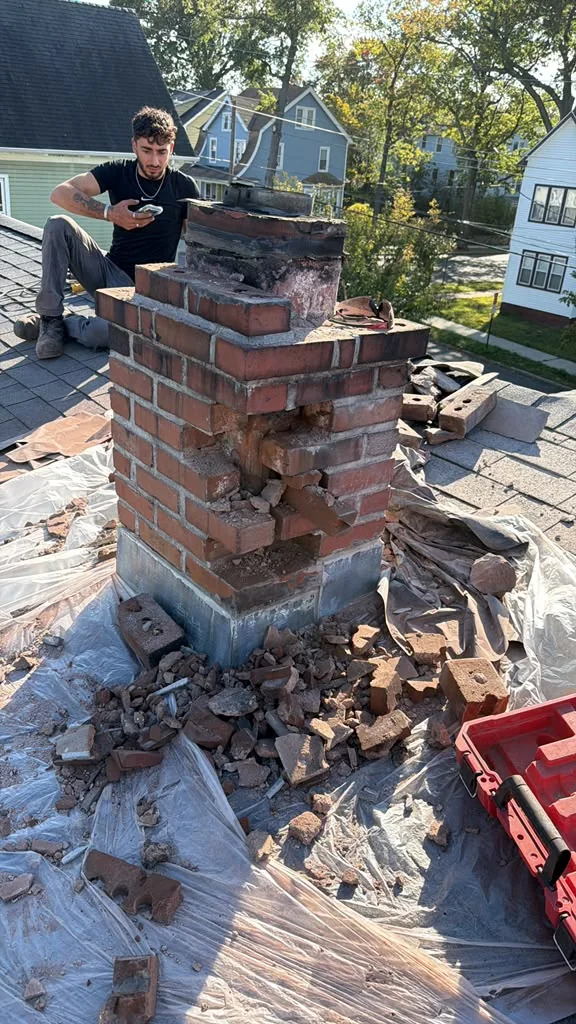
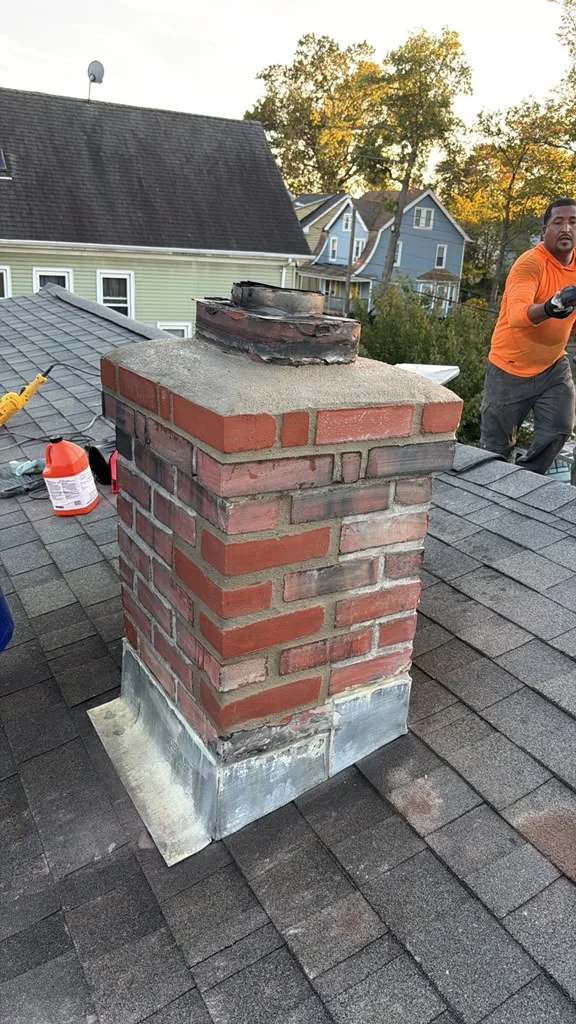
A real partial rebuild, before and after
The same chimney, during and after the work. The damaged top courses come down with the roof covered in tarps, then the top is rebuilt and finished with a new crown.
Common fire damage and the usual repair
Every figure below is a 2026 Connecticut ballpark. Your exact price is set in writing after the inspection, never before it.
| What the inspection finds | Typical repair | Ballpark cost |
|---|---|---|
| Cracked or separated clay flue tiles | A stainless-steel liner run the full height of the flue | $1,500–$4,000+ |
| Limited gaps and cracks in otherwise sound clay tiles | HeatShield flue resurfacing, where the damage qualifies | Priced after inspection |
| Warped or burned chimney cap | New stainless-steel cap | $150–$600 |
| Damper warped and no longer sealing | Top-sealing damper | $400–$900 |
| Crown cracked by heat | Crown repair or rebuild | $200–$1,200 |
| Cracked firebrick or refractory panels | Firebox repair | $500–$2,500 |
| Heat-cracked or loose brick near the top | Brick replacement, or a partial rebuild above the roof | $500–$2,500 or $3,000–$8,000 |
Dealing with insurance
Homeowners policies are often written to cover sudden events like a fire, but every policy is different, and damage from long-term wear or neglect is commonly excluded. Call your insurer early, before repairs start, and ask what documentation they want. Our article on whether insurance covers chimney repair works through the usual questions.
The Level 2 report helps here, because it records what the flue looked like after the fire, and the written estimate lists each repair with its price. Keep copies of both along with any fire department paperwork, and hold on to damaged parts like a burned cap until the adjuster says you can discard them.
Our process after a chimney fire
This is what to expect once the fire department has gone and you are ready to deal with the chimney itself.
- First callCall (203) 779-6787 and tell us what happened, what kind of fireplace or stove you have, and whether the fire department came out. We then book the Level 2 inspection.
- Camera and drone inspectionWe inspect the firebox, smoke chamber and the full length of the flue with a camera, check the attic where it is accessible, and photograph the chimney top with a drone.
- Report with photosYou receive a written report with photos of each crack, gap or warped part we found, ready to share with your insurer.
- Itemized written priceRepairs are priced in writing, item by item, so you and your adjuster can see exactly what each one costs.
- Repair and walk-throughAfter you approve, the crew makes the repairs, cleans up, and shows you the finished work before you use the chimney again.
Keeping it from happening again
Nearly every chimney fire starts in creosote, the tar-like residue that builds up when wood burns cool and smoky. Wet wood, overnight smoldering and a flue that is too large or too cold for the fire all speed it up. Our guides on what causes chimney fires and creosote and how it’s removed go deeper.
The practical routine is simple: an inspection every year, cleaning whenever the inspection shows buildup, seasoned wood, and hotter, shorter fires instead of long smoldering ones. If you heat mostly with wood through a long Connecticut winter, a mid-season check is worth it, because a stove run low and slow for days at a time builds creosote much faster than an occasional evening fire.
Prefer we call you?
Three quick taps and a real person from A Class Chimney calls you back to set up a $59 on-site inspection.
- $59 on-site visit and written estimate
- Photos of everything we find
- A written price before any work starts
- Licensed and insured in Connecticut
Sunday to Friday
What do you need?
When?
Where should we call you?
Free, no obligation. Privacy
Common questions
Have us take a look
$59 on-site visit, photos of what we find and a written price before any work. Licensed and insured in Connecticut.