
What Happens During a Chimney Sweep, Step by Step
A chimney sweep is more than a brush pushed up the flue. Here’s what happens from the moment the technician arrives, how to get ready, and what to ask before they leave.
Sunday to Friday
During a chimney sweep, the technician protects the area around the fireplace, brushes soot and creosote from the flue, smoke chamber and firebox, removes the debris, and inspects the chimney for damage. A single fireplace flue typically takes about one to two hours, longer for heavy buildup or several flues. You should end up with a clean flue, photos of what was found, and a clear explanation of any repairs.
How to get ready for the sweep
A little preparation makes the visit quicker and keeps your home cleaner.
- Stop using the fireplace or stove at least a day ahead so the ashes and flue are completely cold.
- Clear a path to the fireplace and a few feet of floor in front of it.
- Take photos, candles and anything fragile off the mantel.
- Keep pets in another room; the noise and open doors can upset them.
- Write down anything unusual to mention: smoke spilling, smells, odd noises, water stains, animal sounds.
- Know what else vents into the chimney, such as an oil boiler or gas water heater, since those flues may need attention too.
- If you have a stove or insert, keep the manual handy so the model and requirements are easy to check.
The sweep, step by step
Details vary with the chimney and the appliance, but a thorough sweep of a fireplace flue follows this order.
- Look before touchingThe technician starts with the firebox, damper and the area around the fireplace, and asks how you use it. Existing damage gets noted now, before any cleaning.
- Protect the roomDrop cloths go down around the hearth and along the path in. The fireplace opening is typically covered and a vacuum keeps dust drawn into the firebox, not the room.
- Brush the flueBrushes on rods, sized to the flue’s shape and liner, are run through its full length, working from the bottom, the top, or both.
- Clean the smoke chamber and damperThe sloped area above the damper collects heavy creosote and is easy to skip in a rushed job. It’s scraped and brushed, and the damper is cleaned and checked for smooth operation.
- Remove debris and clean upSoot and creosote are collected and bagged, the firebox is vacuumed, and the work area is cleaned.
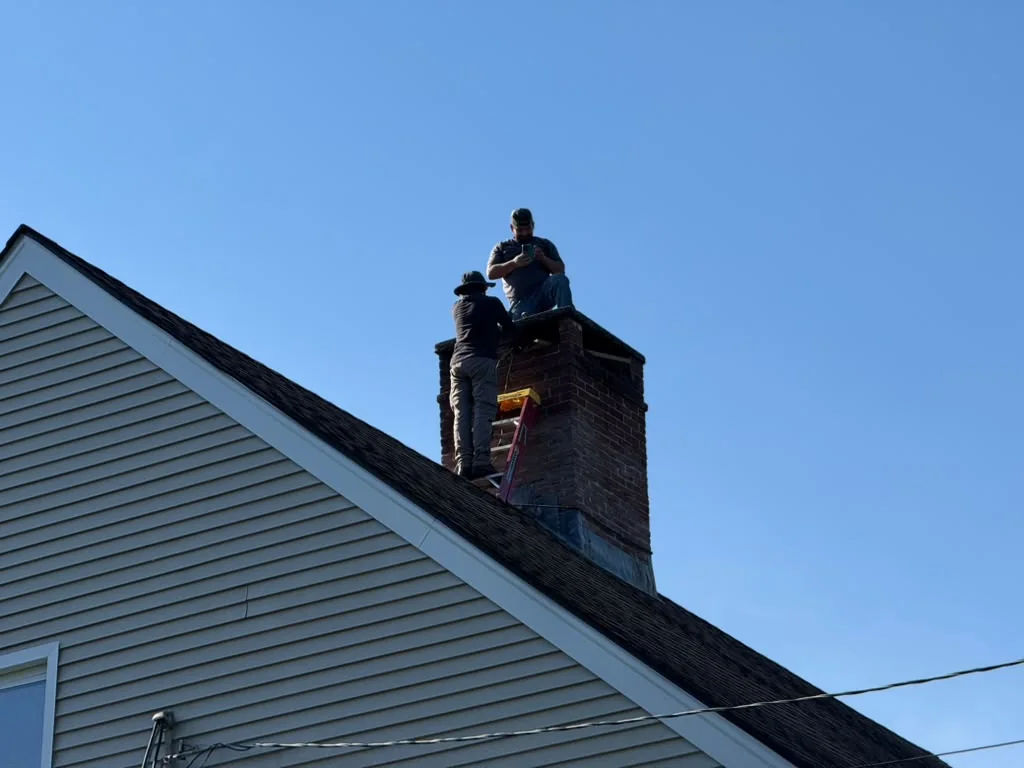
- Inspect and explainWith the flue clean, the liner, crown, cap, flashing and masonry can actually be evaluated. A camera shows the inside of the flue, and photos show the top.
Fireplace safety check
See how ready your fireplace is before the next fire.
What the technician is looking for
Cleaning is only half the job. A freshly swept flue is the one time you can see what’s really going on inside, which is why a sweep is paired with a Level 1 inspection of the readily accessible parts of the chimney, the flue and the appliance connection. Typical findings include:
- Cracked, gapped or missing liner tiles
- Glazed creosote that brushing alone won’t remove
- A rusted or warped damper, or one that doesn’t close tight
- Cracks in the crown and a missing or damaged cap
- Loose or spalled brick and failed mortar near the top
- Gaps in the flashing and signs of water inside the chimney
- Nests, debris or openings that let animals in
How long a chimney sweep takes
These are typical ranges for planning your day, not fixed appointments. The condition of the flue sets the real pace.
| Situation | Typical time | Why |
|---|---|---|
| One fireplace flue, normal buildup | About 1–2 hours | Covers setup, cleaning, inspection and clean-up. |
| Wood stove or insert | About 1–2 hours, sometimes more | Longer if the stove pipe has to come apart or the insert must be pulled to reach the flue. |
| Heavy or glazed creosote | Longer, sometimes a second visit | Hardened glaze needs extra removal steps beyond brushing. |
| Several flues in one chimney | More time per flue | Each flue is cleaned and checked on its own. |
| Oil boiler or furnace flue | Varies | Soot and scale collect at the base of the flue and need to be cleared out. |
What you should have when the sweep is done
Before the technician leaves, make sure you can tick off each of these. If something is missing, ask; it’s much easier to clear up on the spot.
- A clean firebox and hearth, with no soot left on floors or furniture
- A damper that opens and closes smoothly, or a clear note on why it doesn’t
- Photos of the inside of the flue and the chimney top
- A plain explanation of anything that needs repair and how urgent it is
- A written price for any recommended work, with no pressure to decide on the spot
- A sense of when the chimney should next be inspected, based on how you burn
Whoever sweeps your chimney, ask for photos of the flue and the chimney top. It’s the easiest way to know the job was done and to understand any repair recommendation. Be cautious of anyone who reports major damage but can’t show it to you.
How often, and when to schedule
NFPA 211 recommends a yearly inspection, with cleaning when the inspection finds buildup. How often you actually need sweeping depends on how much you burn and what you burn; our guide on how often to clean a chimney goes through it.
Early spring, right after the burning season ends, is a good time to book. The season’s deposits are fresh and come off more easily, and you have months to handle any repairs before the first cold night. If you burn heavily all winter, a mid-season sweep can make sense as well.
If an inspection turns up something that needs more than a Level 1 can show, such as possible damage after a chimney fire, the next step is a Level 2 inspection with a full camera survey.
What a sweep with A Class looks like
Book by phone or through the callback form and tell us what the chimney serves and roughly when it was last cleaned. As a 2026 Connecticut ballpark, a standard cleaning with a Level 1 inspection is $150–$350; you’ll have the confirmed price in writing before we start, and the visit to look at the chimney and price any work costs nothing. For more on what drives the number, see our chimney sweep cost guide.
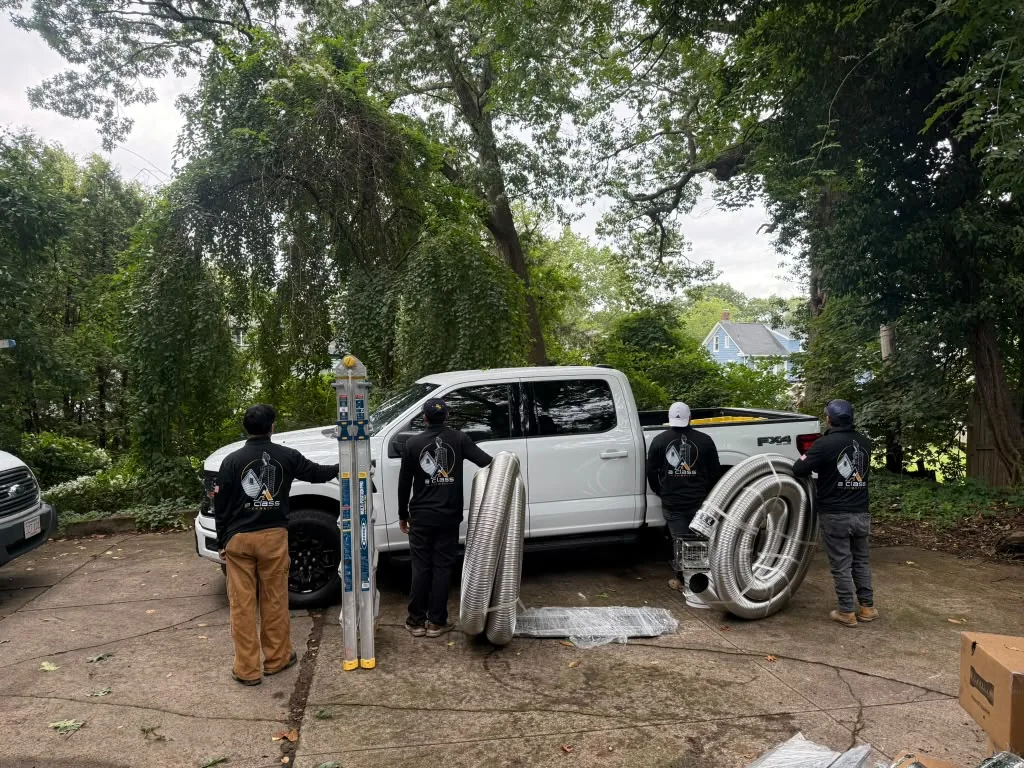
On the day, we lay drop cloths, keep the dust contained and clean up before we leave. We photograph what we find, inside with a camera and outside with a drone where that’s safer than standing on the roof, and go through the photos with you. If repairs are needed, they’re priced in writing and nothing extra happens without your OK. Our main chimney cleaning and inspection page has the full service details.
Prefer we call you?
Three quick taps and a real person from A Class Chimney calls you back to set up a $59 on-site inspection.
- $59 on-site visit and written estimate
- Photos of everything we find
- A written price before any work starts
- Licensed and insured in Connecticut
Sunday to Friday
What do you need?
When?
Where should we call you?
Free, no obligation. Privacy
Common questions
Have us take a look
$59 on-site visit, photos of what we find and a written price before any work. Licensed and insured in Connecticut.